
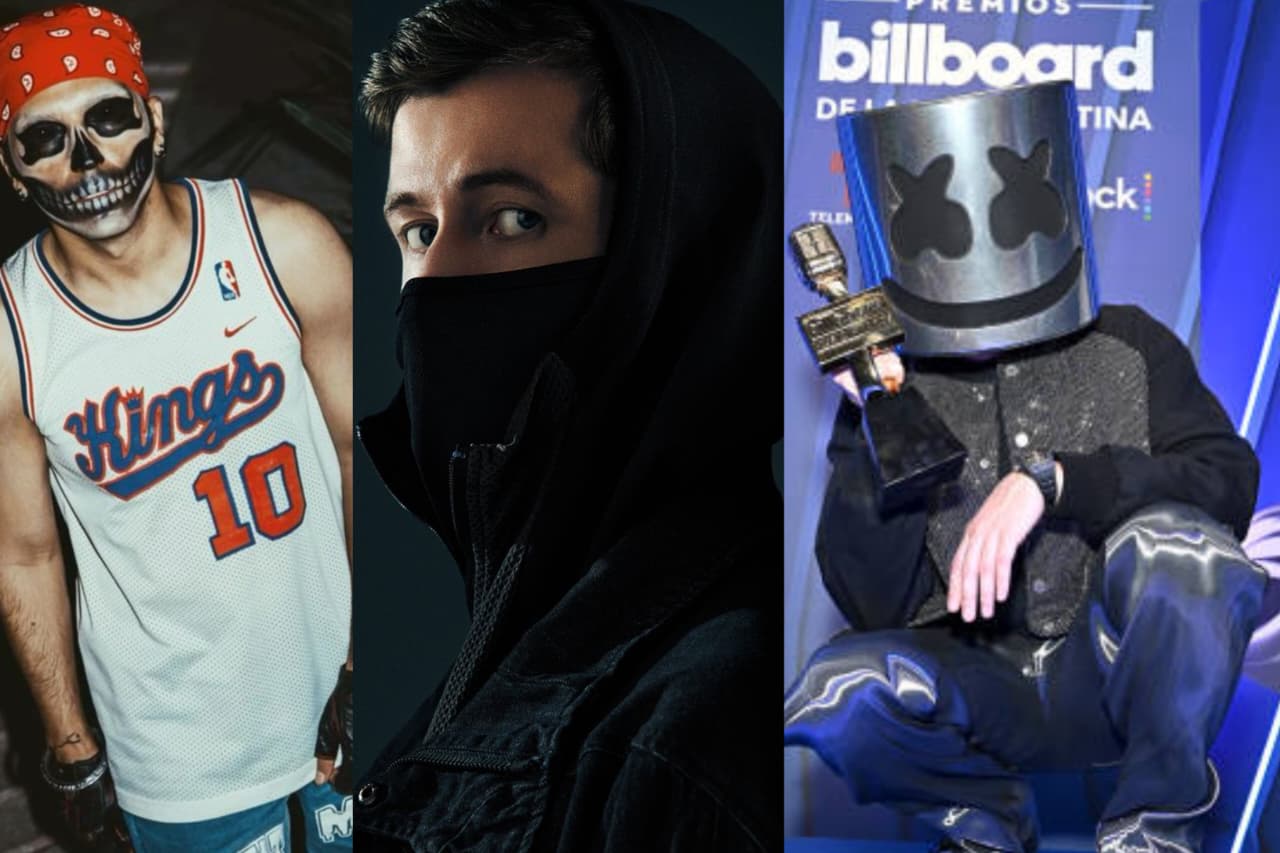
In a music industry obsessed with visuals, social media presence, and the need for public exposure, a few artists are going against the grain. Sia, Marshmello, Talwinder Singh, and Alan Walker are four artists who choose to conceal their faces in public yet continue to top music charts and gain loyal fans all over the world. Their achievements demonstrate that the element of surprise and secrecy still has room for development and appeal in the era of living through overexposure.
Talwinder Singh: Letting Sound Lead the Spotlight
Held from India, Punjabi singer Talwinder Singh keeps a low profile and thus, in his videos and live shows, you will see him wearing a cap with a face partially covered. His intention is to shift people’s focus to the unique sound and lyrics of the songs rather than the persona. For the listeners, this kind of situation makes a very personal connection with the music without the interruptions of celebrity.
Sia: Concealing Fame for the Sake of Creativity
Australian vocalist Sia is most commonly associated with her habit of performing while large wigs and bows cover her face. She has pointed out that being anonymous is a way of coping with fame, anxiety, and the pressure of the public. Without showing her face, Sia is in essence telling her fans that what they should really be focusing on is not her celebrity life or her look, but her voice, her songs, and her emotional honesty.
Marshmello: Making Anonymity a Worldwide Brand
The electronic music artist Marshmello decided to take the concept of anonymity even further by wearing a trademark white helmet. The mask very soon became a visual brand of its own, which made Marshmello the first thing you associate with the mask; the artist, being recognised instantly, was no longer dependent on the mask reveal of the person behind it. It also gave the artist an opportunity to create a huge fanbase all over the world while at the same time completely shutting off his personal life from his stage persona.
Alan Walker: Representing a Community, Not a Face
One of the characteristics of a Norwegian producer, Alan Walker, is wearing a hoodie and a mask when he goes up on stage for a performance. In an interview, he revealed that it is not to get individual fame but to create a community around his music. The faceless appearance is in harmony with his concepts of unity, digital culture, and collective identity, which have a great appeal to the youth.
Why Fans Still Connect
As a matter of fact, despite concealing their faces, the artists mentioned above have demonstrated that today, music fans are most interested in the genuineness and inventiveness of the artists rather than their being constantly available online. Besides being a good way to get noticed, the element of mystery also piques people’s interest, consolidates the brand, and, most importantly, the focus can be solely on music.
Read Also: Why Ladakh’s Skies Turned Red: Inside the Most Intense Solar Storm Since 2003