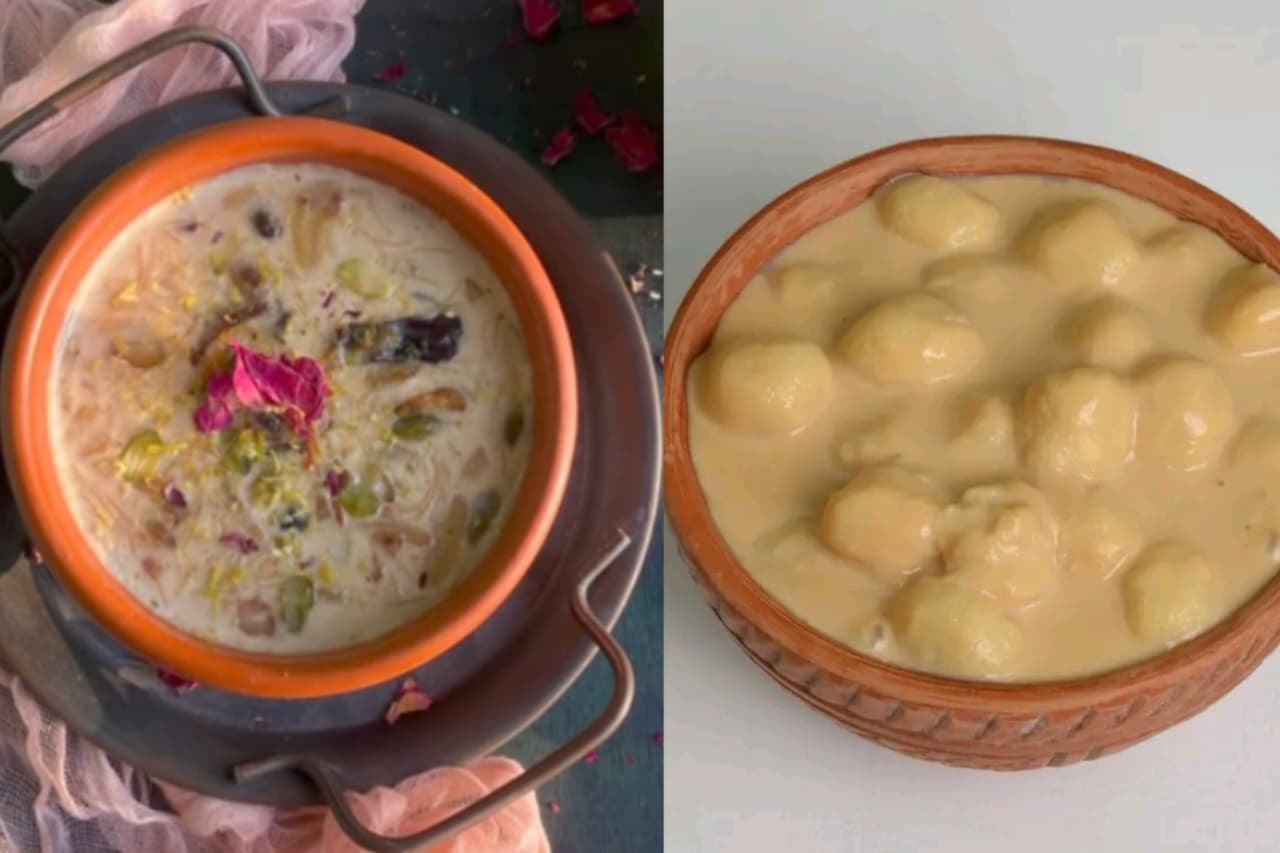
Eid used to be just as much about new clothes and getting together with family as it was about slow-cooked desserts. Before the sun came up, kitchens would come to life with the smell of milk simmering, sugar caramelising, and ghee slowly warming on the stove. Even though convenience has changed the way we celebrate, a few old recipes are still waiting to be found.
Balushahi, Sheer Khurma, and Rosomonjuri are some of the most beautiful examples of a more relaxed, deeply personal holiday tradition.
Balushahi: A Perfect Mix of Crunchy and Soft
Balushahi is a dessert that takes time to make. It’s golden, flaky, and soaked in syrup. The contrast between its crisp outside and soft, almost airy inside is what makes it beautiful.
Start by mixing together some flour, ghee, and a little yoghurt to make a soft dough. Once they have rested, shape them into small rounds and fry them slowly over low heat until they turn a deep golden colour. After that, they are put in a warm sugar syrup with cardamom, which lets them soak up just the right amount of sweetness without falling apart.
The result is more than just a sweet; it’s an experience that is subtle, textured, and indulgent without being too much.
The Soul of Eid Mornings: Sheer Khurma
Sheer Khurma is one of the few dishes that really captures the spirit of Eid morning. It is often the first thing served after prayers, a soft welcome to a day of celebration. It is creamy, smells good, and makes you feel good.
The milk is slowly simmered until it thickens, and then roasted vermicelli, dates, and a lot of dry fruits are added to it. A little bit of cardamom brings everything together, making a dessert that is both healthy and fun.
Sheer Khurma is rich but not too much. It can be served warm or cold.
Rosomonjuri: The Rose and Saffron Whisper of Bengal
Rosomonjuri is a dessert that is less well-known but just as enchanting. It feels almost like poetry. It comes from Bengali culture and is light, fragrant, and sweet.
Slowly, full-fat milk is reduced until it becomes soft and creamy. Adding sugar, saffron, and a few drops of rose water gives the dish a floral elegance. It tastes best when it’s cold and has pistachios on top. It’s a nice change from heavier sweets.
Bringing Back the Beauty of Tradition
It’s not just how they taste that makes these recipes special; it’s also the process of making them. These meals ask for time, and in return, they give you connection. In a world that often values speed, this is a good thing.
Making them this Eid is a quiet way to keep memories alive while making new ones.
FAQs
1. What makes these desserts “lost recipes”?
Because they are slowly being replaced by faster, store-bought options, even though they have deep cultural roots.
2. Which of these is the best for the morning of Eid?
Sheer Khurma is still the most traditional way to start the day.
3. Is it hard to make Rosomonjuri?
Not at all; it just needs to be cooked slowly and with care to get the right texture.
4. Is it possible to make Balushahi ahead of time?
Yes, you can keep Balushahi for a few days, and it will still taste great.
5. How can I make these recipes more real?
Use desi ghee, whole milk, and fresh ingredients. Most importantly, give yourself time to cook slowly.
Read Also: Best Mosques in Chittagong for Laylatul Qadr Prayers: Top Spiritual Spots for a Blessed Night