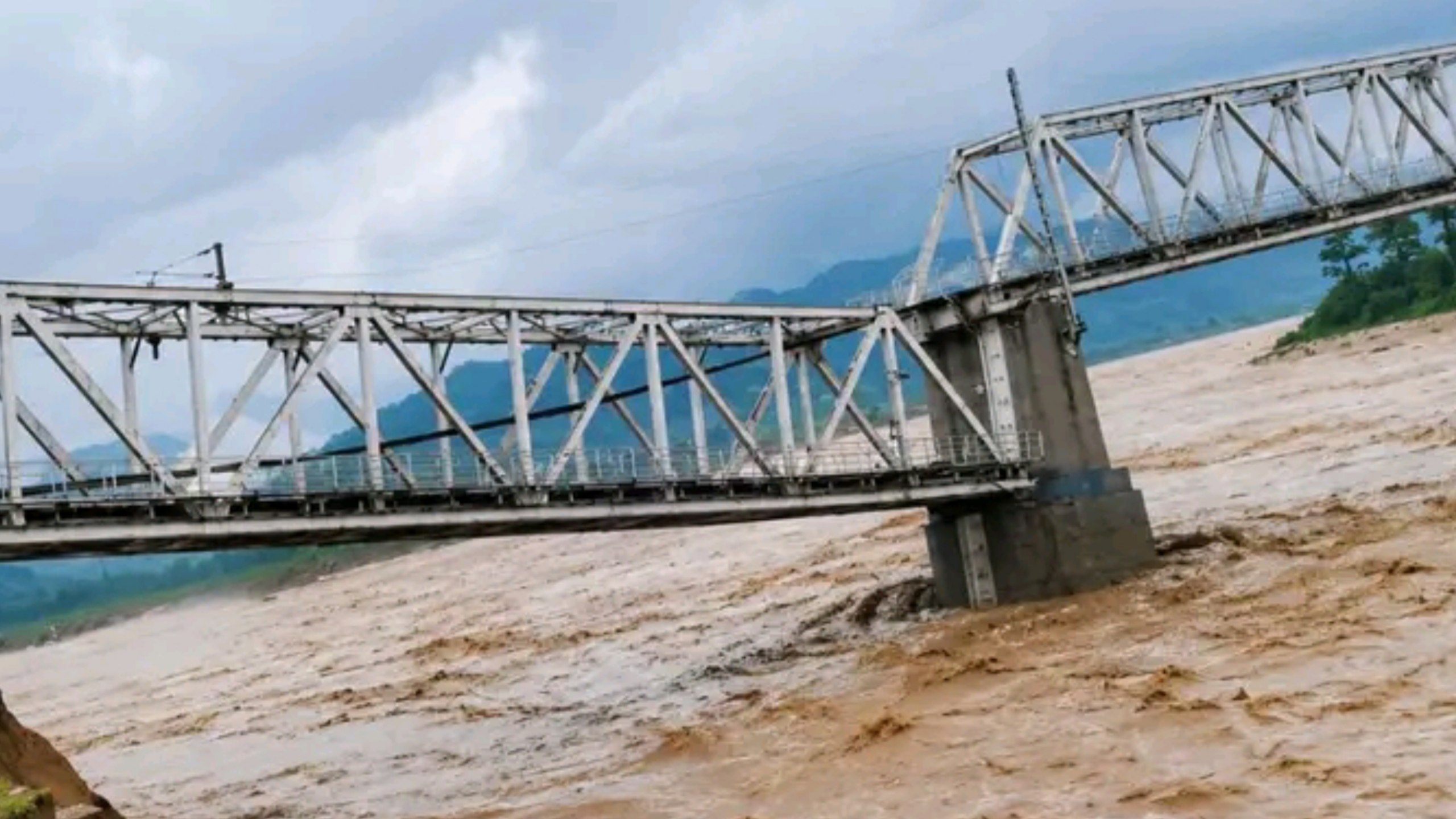
Assam is once again underwater. As of July 25, the state’s flood death toll has climbed to 61, with 14 fatalities recorded in a single 24-hour period, according to the Assam State Disaster Management Authority. More than seven lakh people across a dozen districts, from Sivasagar to Dibrugarh, Nagaon to Karbi Anglong, are affected, with over three lakh sheltering in relief camps and nearly 57,000 hectares of cropland submerged.
This is not an isolated disaster. It is the latest chapter in a recurring monsoon crisis that plays out almost every year along the Brahmaputra basin, a crisis that experts increasingly argue cannot be understood, or solved, within India’s borders alone.
A River That Answers To No Single Country
The Brahmaputra begins its journey in Tibet as the Yarlung Tsangpo, crosses into Arunachal Pradesh as the Siang, becomes the Brahmaputra through Assam, and finally enters Bangladesh as the Jamuna before draining into the Bay of Bengal. Three countries, one river system, and until now, no binding trilateral agreement governing how much water flows where, or when.
That absence of a treaty has taken on new urgency because of what China is building upstream. In late 2024, Beijing approved construction of what will become the world’s largest hydropower project, a dam in Medog County near the eastern Himalayas with a planned capacity of roughly 60 GW, surpassing even China’s Three Gorges Dam. Construction began in 2025, with commercial operations expected within the next decade.
Why Downstream Nations Are Alarmed
China has released little technical detail about the project, and that opacity is precisely what worries India and Bangladesh. Arunachal Pradesh’s chief minister has warned the dam could drain up to 80 per cent of the river’s flow within Indian territory during parts of the year, only to release it suddenly during heavy rain, turning a controlled river into an unpredictable one. Assam Chief Minister Himanta Biswa Sarma has separately flagged that the dam risks drying up the riverbed and making the entire river system fragile, a concern he says has already been communicated to the central government.
“The dam will pose a big problem for us as the riverbed will dry up and the entire river system will become fragile,” Sarma said, adding that Arunachal Pradesh’s leadership has raised similar concerns with New Delhi.
Bangladesh’s Stake Is Existential
If India worries about flow disruption, Bangladesh’s exposure runs deeper still. The country depends on the Brahmaputra-Jamuna system for roughly 55 per cent of its irrigation needs, alongside drinking water and fisheries that sustain millions of livelihoods in the delta. Sitting at the tail end of the basin, less than five meters above sea level in places, Bangladesh absorbs the cumulative effect of everything that happens upstream: heavier flash floods when China or India release water during monsoon, and sharper water scarcity when flows are throttled during the dry season.
With no seat at the table when China approved the Medog project, and no institutional mechanism binding Beijing to consult New Delhi or Dhaka, Bangladesh’s vulnerability is structural rather than incidental. The Helsinki Rules on the Uses of the Waters of International Rivers call for exactly this kind of consultation among nations sharing a river system, but they remain a guideline, not an enforceable obligation.
India’s Response Is Adding To The Complexity
New Delhi’s answer to China’s dam has been to accelerate its own hydroelectric ambitions in Arunachal Pradesh, aiming to secure a claim over the river’s flow before Beijing’s project comes fully online. China has objected to India’s infrastructure plans in the region in turn. The result is a slow-building arms race of dam construction on a single river system, with each capital acting to protect its own interests rather than negotiating shared rules, even as Assam’s villages flood and Bangladesh’s farmers watch the skies.
Border Disputes Make Cooperation Harder
Complicating any path toward a trilateral framework is the long-standing territorial dispute over Arunachal Pradesh itself, which Beijing claims as part of southern Tibet while New Delhi insists it is integral Indian territory. A river governance agreement between two countries that cannot agree on where their border lies is, unsurprisingly, difficult to negotiate.
What A Regional Reckoning Would Require
Water policy experts have repeatedly pointed to the same missing pieces: real-time hydrological data sharing between China, India, and Bangladesh, joint early warning systems for flash floods, and a formal consultative mechanism before any nation approves major upstream infrastructure. None of these requires resolving the underlying territorial dispute; they require treating the river as a shared resource whose mismanagement carries costs for all three nations, not just the one holding the dam controls.
The Cost Of Continued Inaction
Every monsoon that Assam counts its dead in the dozens and Bangladesh counts its submerged acres in the thousands, the argument for a binding, trilateral water-sharing framework grows harder to dismiss as merely aspirational. The Brahmaputra does not recognise the border checkpoints that separate Tibet from Arunachal Pradesh from Assam from Bangladesh. Until the three governments that depend on it start treating it the same way, the flood season will keep arriving as a surprise it was never actually meant to be.
Summary: Assam’s 2026 monsoon floods have killed at least 61 people and displaced over seven lakh residents, even as China presses ahead with a 60 GW mega-dam on the Yarlung Tsangpo, the river that becomes the Brahmaputra in India and the Jamuna in Bangladesh. With no trilateral water-sharing treaty in place, experts warn that unilateral upstream decisions could worsen both flood and drought cycles for two already vulnerable downstream nations.