Bangladesh’s handloom industry carries centuries of heritage, from Jamdani to Tangail sarees, but weavers face high yarn prices and power loom competition. Festival demand and revival efforts bring hope, while exports and policy support will decide the sector’s future.
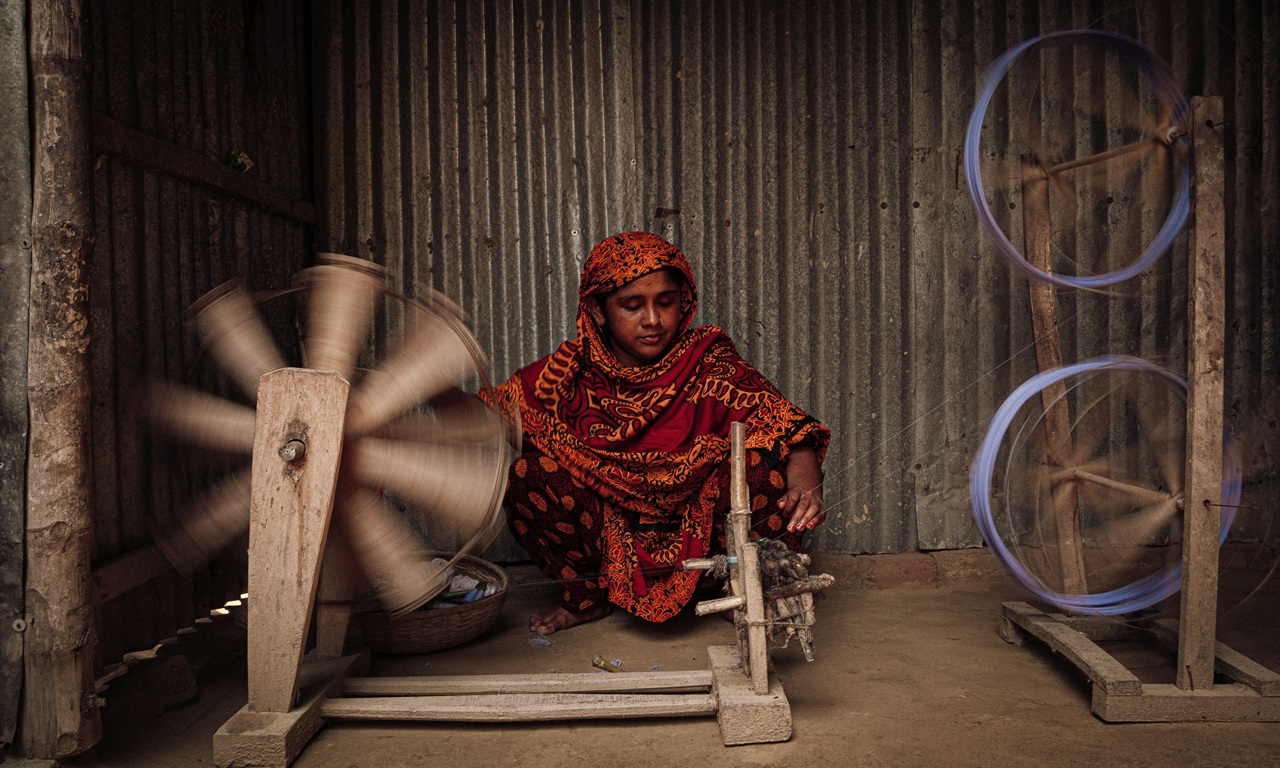
In villages across Bangladesh, the rhythm of the loom is still heard. But the craft that once clothed the world is now fighting to stay alive.
A Heritage Worth Protecting
Bangladesh’s handloom story goes back to the famous muslin weavers. Tangail saree weavers are described as descendants of the muslin tradition. The Bangladesh Handloom Board, set up in January 1978, oversees about 1.5 million handloom workers and works to preserve techniques such as Jamdani and muslin. Jamdani and Tangail sarees also carry Geographical Indication (GI) registration.
Revival Efforts
A nine-day handloom exhibition and fair was held at Bengal Shilpalay in Dhaka in March 2026, with direct sales from weavers. The Handloom Board’s muslin recovery project also rediscovered the long-lost Phuti Karpas cotton.
The Struggle on the Ground
Reports from Tangail paint a harder picture. Rising yarn prices and competition from power looms have pushed many weavers to leave their looms. Machine-made sarees are faster to produce and cheaper to sell. Ranjit Kumar Das, who has worked in the trade for 50 years, said a Jamdani saree takes about a week to weave and earns him Tk2,500 in wages. Agricultural labourers can earn Tk800 to Tk1,000 a day in the paddy harvest.
Festival Demand Brings Hope
Ahead of Durga Puja, traders in Tangail expect sales of 80,000 to 90,000 sarees. Buyers still prefer handloom for intricate designs and comfort, so demand has not disappeared.
The Road to Global Markets
Weavers say loans alone will not revive the industry. They want exports of Tangail sarees to neighbouring countries through land routes to be sustained. Experts often point to better yarn supply, design support and online selling as ways to reach global buyers.
What Needs to Happen
- Stable yarn prices and easier access to raw materials
- Fair wages that keep young weavers in the trade
- Stronger GI protection against machine-made imitations
- Export and online marketing support
Final Thoughts
Bangladesh’s handloom industry has the story, skill and recognition to compete globally. Whether it does so depends on keeping its weavers at the loom.