
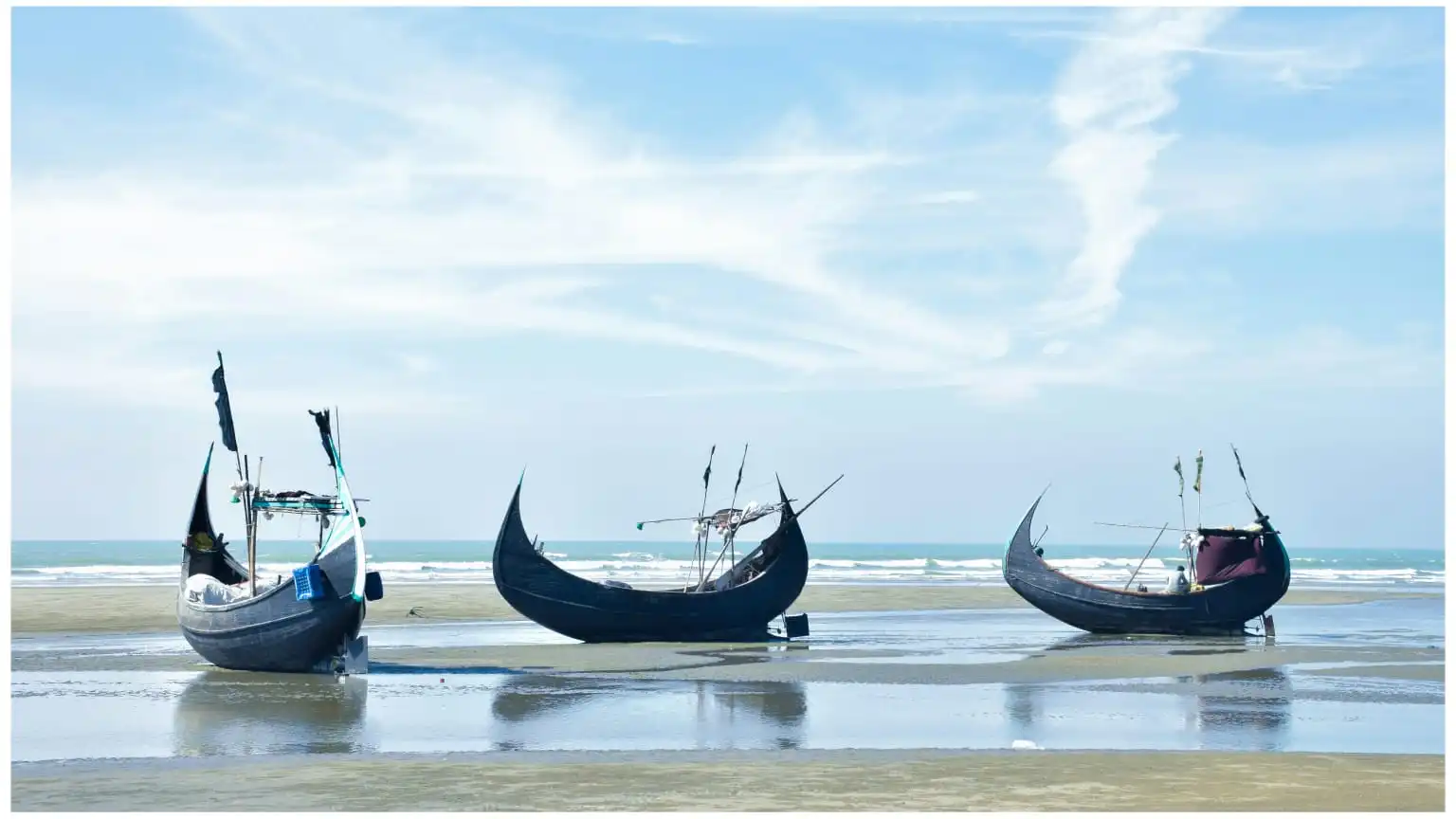
Picture a beach so long that you could walk for hours and still not reach the end. That is Cox’s Bazar, a coastal town in southeastern Bangladesh with roughly 120 kilometres of unbroken sand. This Cox’s Bazar travel guide is for visitors from anywhere in the world who want a smooth, affordable trip. Choosing the best time to visit, deciding where to stay and learning a few budget tips before you arrive will save you money, time and worry.
Best Time to Visit Cox’s Bazar
November to February
Skies are mostly clear, the sea is calm and evenings are cool. The downside is crowds. Hotels fill quickly and prices rise around holidays and weekends.
March to May
It is hot and humid, but room rates drop. Spend mornings and late afternoons outdoors and rest at midday.
June to October
Heavy rain and rough water are common. Authorities often raise warning flags and may stop swimming, and boat trips get cancelled. Stay flexible if you travel then.
Where to Stay in Cox’s Bazar
Kolatoli, Laboni and Sugandha
These beach points sit side by side in the town centre. You can walk to the water, find meals easily and book tours quickly. They suit first-timers and families.
Inani and Himchari
Drive south along Marine Drive for calmer sand. Inani has a rocky shore, and Himchari National Park offers a short forest walk and a small waterfall. Resorts cost more here, but the quiet is worth it.
Budget Guesthouses
Small hotels a few streets from the sea often cost far less. A tuk-tuk gets you to the sand.
Budget Tips for Cox’s Bazar
Book Early, Bargain Politely
Reserve rooms early in the cool season. For rickshaws and souvenirs, agree on the price before you start.
Carry Cash
Mobile wallets like bKash and Nagad are popular locally but usually need a Bangladeshi phone number. Carry taka in small notes, since stalls and taxis rarely take cards.
Eat Like a Local
Grilled fish, prawns and crab at beachside stalls cost far less than restaurants. Choose busy stalls and ask the price first.
Travel Smart
Flights and buses link Dhaka and Cox’s Bazar daily, and night buses are cheapest. For Saint Martin’s Island, check current rules and ferry schedules first, as access changes.
Respect Local Customs
Dress modestly away from the water, ask before photographing people and take your rubbish home.
Discover Cross-Border Nepal Floods, Bangladesh Aid and Regional Power Supply With Pulse
1. Why did Bangladesh provide $1 million to Nepal after the Himalayan floods?
Bangladesh provided $1 million in assistance to support Nepal’s disaster response and recovery efforts following devastating floods in the Himalayan region. The aid reflects regional cooperation and humanitarian support during natural disasters. Read more about Bangladesh’s $1 million assistance to Nepal after the Himalayan floods.
2. How have Nepal’s floods affected electricity exports to Bangladesh?
Flood damage in Nepal has disrupted key hydropower infrastructure and affected electricity exports to Bangladesh. The disruption highlights the challenges of depending on cross-border power supplies during extreme weather events. Explore our report on Nepal floods halting key power exports to Bangladesh.
3. Why could Nepal’s floods create risks for Bangladesh?
Floods in Nepal can have wider regional consequences through disruptions to energy supplies, transport networks, trade and cross-border cooperation. Such events also highlight the vulnerability of South Asian countries to climate-related disasters. Read more about the risks Nepal’s floods pose for Bangladesh.
4. How are Himalayan floods connected to flooding risks in Bangladesh?
The Himalayan region and Bangladesh are connected through major river systems. Heavy rainfall, rapid snowmelt and upstream flooding can influence river flows downstream, although the impact depends on rainfall patterns, river conditions and local geography. Discover more in our report, From Himalayan Villages to Flooded Coasts.
5. What does Nepal’s flood crisis reveal about climate risks in South Asia?
Nepal’s flood crisis highlights how extreme weather can affect communities, energy infrastructure, regional economies and disaster preparedness across South Asia. It also underlines the importance of regional cooperation, early-warning systems and climate resilience. Explore how Nepal’s floods raise risks for Bangladesh.