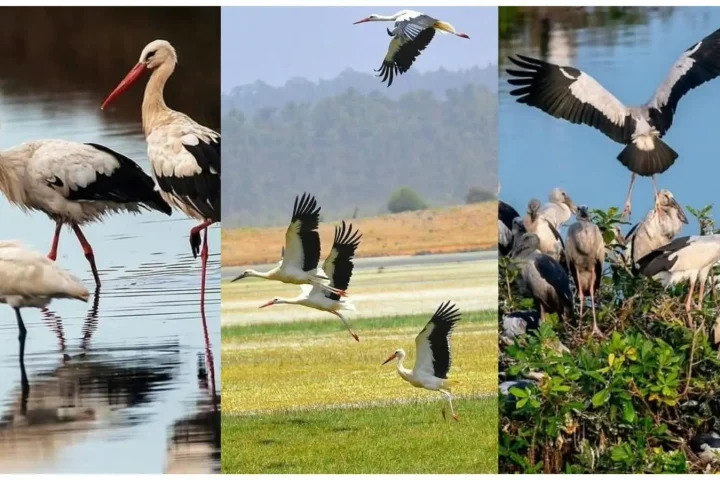


Every winter, Bangladesh turns into a haven for migratory birds. They arrive in the haors, the swampy wetlands of the north-east, and on coastal islands in the south, escaping the harsh cold of their northern homes. Here are ten you may be lucky enough to see.
Spoon-billed Sandpiper
This tiny shorebird, with its spoon-shaped bill, is one of the world’s rarest and is critically endangered. Bangladesh’s coastal mudflats are among its important wintering grounds, which makes protecting them vital.
Curlew Sandpiper (Gulinda Batan)
A graceful wader with a long, curved bill, it feeds in flocks on the mudflats of Nijhum Dwip. Look for it probing the soft mud for small creatures.
Common Redshank (Lal Pa Piu)
As the name says, this bird has bright reddish legs. It is a noisy and alert wader, often the first to sound the alarm when something disturbs the flock.
Common Greenshank (Pati Shobuj Pa)
Tall and slender, with greenish legs and a slightly upturned bill. It wades through shallow water to catch small fish and insects.
Bar-tailed Godwit
A large wader known for its long migrations. Godwits feed in the coastal mudflats and also on shallow freshwater bodies in the haors.
Lesser Sand Plover
A small, quick runner on sandy and muddy shores. It is a regular visitor to the coastal areas of the south.
Garganey
A small duck that is often seen in large flocks in the haors. The males have a bold white stripe above the eye.
Ferruginous Duck
A chestnut-coloured diving duck. It is recorded at Tanguar Haor and prefers calm, weedy water.
Common Pochard (Rangamuri)
A familiar sight at Hakaluki Haor, one of the largest wetlands in South Asia. The male has a rusty-red head and a grey body.
Northern Pintail
An elegant duck with a long, pointed tail. It gathers in big groups on the open water of the haors in the cold months.
Where to See Them
For ducks, head to the haors, especially Tanguar Haor in Sunamganj and Hakaluki Haor. For waders and shorebirds, the coastal areas are best. Nijhum Dwip in Noakhali is sometimes called the busiest airport for migratory birds, and Sonadia Island in Cox’s Bazar is another top spot. Early morning is usually the best time for birdwatching.
Why These Visitors Need Our Care
Bangladesh sits on important flyways, and its wetlands are a lifeline for the birds. But researchers and locals say the numbers at some sites, including Tanguar Haor, have been falling, and they point to habitat loss, changing weather and weak monitoring. Many more tiny migrants pass through unnoticed as well.
Tips for Responsible Birdwatching
Keep a good distance and use binoculars. Do not make loud noises, use drones or chase the birds. Never buy or support the hunting or sale of wild birds, and take your rubbish back with you.