
As the monsoon withdraws from northeastern Bangladesh, Tanguar and Hakaluki Haor begin their yearly transformation. The huge inland seas of the rainy months slowly shrink into shallow beels, open mudflats, golden paddy fields and misty mornings, just as thousands of migratory birds arrive from Central Asia and Siberia.
A Landscape Emerging From Water
During the monsoon, the haors swell into vast sheets of water, with only homesteads, raised paths and scattered trees showing above the flood. When the rains retreat, the water level drops and the land turns into a mosaic of shallow lakes, marshes, canals, grasslands and farmland.
At Tanguar Haor in Sunamganj, the falling water exposes the banks of the beels, locally called kandha, and opens walking routes through villages and fields. Flooded edges turn into green and golden rice fields, and cattle graze on land that was underwater only weeks before.
Hakaluki Haor, which spreads across Moulvibazar and Sylhet, changes in a similar way. Its deeper beels hold their water, while wide mudflats and shallow wetlands appear around them. These areas become rich feeding grounds for fish, amphibians and waterbirds.
The Arrival of Winter Guests
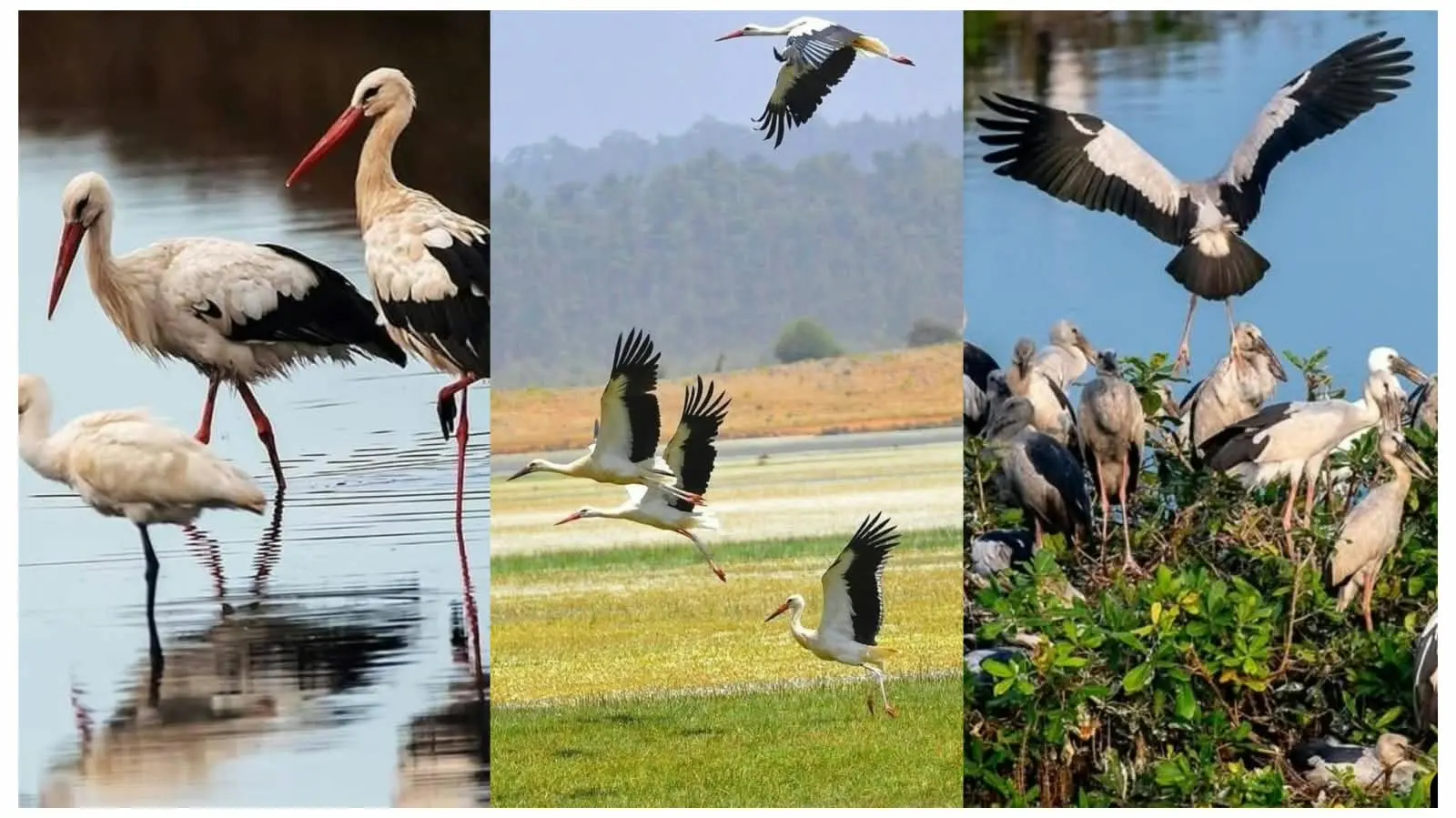
From November to February, both haors become two of Bangladesh’s most important winter refuges for migratory waterfowl. Ducks, geese, grebes, waders, herons, egrets and storks gather in the remaining wetlands to feed and rest before flying north again.
Tanguar Haor has recorded bar-headed geese, ferruginous ducks, tufted ducks, garganey, northern pintails, common pochards, great crested grebes, purple swamphens, pied kingfishers and lesser adjutant storks. More than 135 bird species have been noted there, including the globally threatened Baer’s pochard.
Hakaluki is just as striking. At dawn, when mist hangs over the water and flocks lift off from the beels, the haor looks like a living painting. It draws birdwatchers, photographers and nature lovers.
Two Haors, One Seasonal Rhythm
Though they differ in location and shape, the two haors follow the same pattern. Tanguar is a vast inland sea surrounded by hills and wetlands in the monsoon. In winter it turns into shallow lakes, marshes, dry beel banks and paddy fields. Hakaluki is a seasonally flooded basin that becomes a mix of mudflats, shallow wetlands and remaining deep beels. Both are best for birding from November to February, and Tanguar is especially good in December and January. At Hakaluki, the wider dry season lasts into April.
Why the Retreat of the Rains Matters
The falling water is not just the end of the monsoon. It marks the start of another ecological season. Fish and other aquatic life become concentrated in shrinking beels and feed the birds, while exposed mudflats support grasses and sedges that give birds food and nesting cover.
For local communities, winter changes how people live and move. Boats still matter, but fields, paths and villages become easier to reach. For visitors, the haors are calmer, clearer and easier to navigate than during the peak flood.
A Season Worth Witnessing
The best time to see both haors is November to February. Early mornings bring mist, bird calls and soft light over the water. Midday shows wide skies, reed beds and distant flocks. Evenings spread warm colours across the shallows.
As the rains retreat, Tanguar and Hakaluki do not become quieter. They come alive in a different way. The water recedes, the land reappears and the winter visitors arrive, turning these seasonal wetlands into one of the country’s great natural spectacles.
Discover More Stories Worth Your Time
1. Which venomous snakes are a real threat in Bangladesh, and how can people identify them?
From cobras and kraits to vipers, discover the venomous snakes found across Bangladesh and why they remain a serious concern.
2. Did you know a new island has emerged in the Sundarbans?
Explore the story behind the new island in the Sundarbans and what its appearance could mean for this fragile ecosystem.
3. Why are Bangladesh’s wild birds increasingly at risk from poaching?
Take a closer look at the illegal bird trade and poaching threatening the country’s wildlife.
4. What makes Sundarbans honey collectors enter one of the world’s most dangerous forests?
Their search for honey can bring them face-to-face with Royal Bengal Tigers. Discover why these collectors continue to risk their lives.
5. Is there more to the Sundarbans than science can explain?
From mysterious stories to local beliefs, explore the fascinating debate between science and superstition in the Sundarbans.