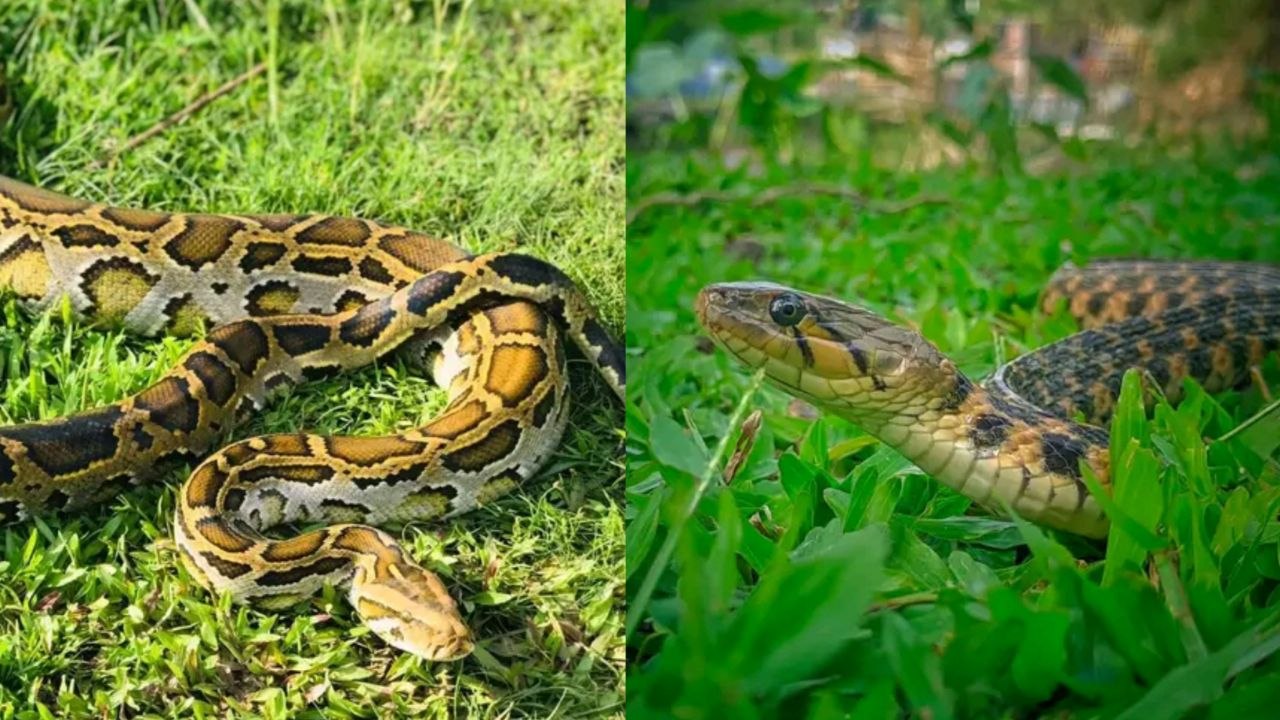
About 103 species of snakes exist in the Bangladesh country, of which 33 are poisonous and 13 can be fatal to humans. Bangladesh is at the junction of the Indo-Himalayan and Indo-Chinese biodiversity hotspots. The rich diversity means that the risk and type of snake encounter can vary greatly depending on what part of the country you’re in.
Cobras: Common but prominent in bite cases
Bangladesh has 2 true cobra species – monocled cobra (Naja kaouthia) and Indian cobra (Naja naja), and the king cobra (Ophiophagus hannah) all in the Elapidae family. The most commonly occurring venomous snakebite in humans is the cobra bite. It accounts for about 12% of yearly snakebite records. Most bites occur during the rainy season.
Kraits: Five Species
Found Throughout the Country Bangladesh is home to five krait species: the Common Krait, Banded Krait, Lesser Black Krait, Greater Black Krait and Wall’s Krait. The Banded Krait is the most common of the five, and the Lesser Black Krait the rarest. Krait bites are not seasonal like in the case of cobras. Older surveys note the distribution of the Common Krait to be throughout the country except for Madhupur and Saint Martin’s Island.
Vipers: A Geographical Division
Vipers show the most pronounced geographic division of any venomous group in Bangladesh. The Russell’s viper (Daboia russelii) is restricted to the western part of the country and offers in that part a special problem. However, green pit vipers are common, found everywhere from the central plains to the hills of south-eastern Bangladesh.
Discover More Stories Worth Your Time
Explore Avengers’ Box Office Journey?
Discover how Avengers: Endgame performed worldwide, including domestic and re-release earnings.
Discover 5 Hilsa Recipes To Try?
Explore five delicious ways to enjoy Bangladesh’s iconic hilsa before the season ends.
See How Cox’s Bazar Airport Expands?
Learn how the new terminal supports Bangladesh’s growing aviation ambitions and regional connectivity.
Uncover What Happens After Islands?
Discover how mangroves could become the first colonisers when new land emerges in the Sundarbans.
Check Why Rooppur Shipment Was Disrupted?
Explore how Pakistan’s airspace clearance decision affected the planned nuclear fuel shipment to Bangladesh.
Where Snakebites Are Most Common
Research in the southeast of the country has shown the extent of the problem. Researchers estimate there are about 200,000 snakebite incidents every year in south-eastern Bangladesh alone. Future climate modelling suggests that the overall incidence of snakebite may not substantially reduce by 2070, although the risk may shift and increase in the hilly areas of the country.
FAQs
What is the most common venomous snake bite in Bangladesh?
Cobras account for the highest percentage of recorded venomous snakebites, with around 12 percent of all snakebites occurring annually, most of them during the monsoon.
Where in Bangladesh is Russell’s viper found?
It is more limited to the west of the country than the green pit vipers, which are much more widespread.
Are krait found throughout Bangladesh?
“Largely, yes. The Common Krait has a wide historic range, covering almost the whole country, although some species such as the Lesser Black Krait are much rarer and more localised.
Are there seasons when snakebites are more common?
Cobra and green pit viper bites are more frequent in the rainy season but krait bites occur any time of the year.
Which part of Bangladesh has the highest burden of snakebite?
The estimated burden is especially high in south-eastern Bangladesh, where researchers calculate that there are about 200,000 events each year in this zone alone.