
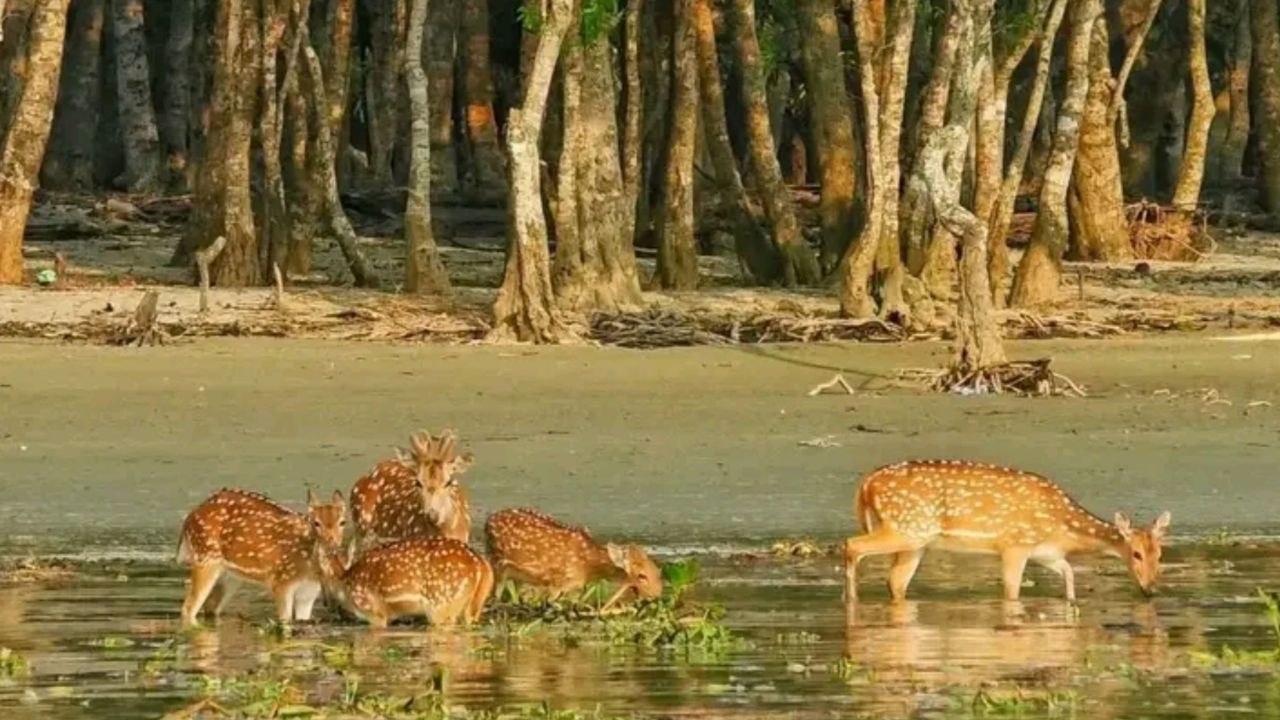
The Sundarbans is not a fixed landscape. It sits on the delta of the Ganges, Brahmaputra and Meghna rivers, and its islands are constantly formed and reshaped by sedimentation and erosion. Studies of the forest describe hundreds of islands, from tiny mud banks to large tracts of dense forest, all separated by tidal creeks. Satellite observations suggest parts of the forest are still growing, with new sediment building up into new land.
How a New Island Forms
Rivers carry enormous quantities of silt down from the Himalayan region. When that sediment settles in slower, sheltered stretches of water, mudbanks slowly rise above the tide line. In the local language, such land is often called a char. At first it is only bare, salty, waterlogged mud, a harsh place for most plants.
Why Mangroves Arrive First
Mangroves are built for exactly this kind of ground. Pioneer species, whose seeds or seedlings float in on the tides, can take root in soft, salty mud where few other plants survive. Reports on the delta note that recently formed islands are often colonised almost immediately by such pioneers, which starts a cycle of ecological succession that has continued for thousands of years.
Their roots and breathing roots trap more silt and slow the flow of water. Fallen leaves add organic matter, and the ground slowly firms up and rises. This makes it possible for other mangrove species, and eventually crabs, fish, birds and other wildlife, to settle in.
What Changes Over Time
Early colonisers are usually tolerant of salt and frequent flooding. As soil builds and conditions shift, other species can follow, and the mix of trees may change. Research on the Sundarbans suggests that salt-loving species such as Gewa, Keora and Kankra may spread, while freshwater-loving species such as Sundari and Goran may decline as salinity rises across the region.
Discover More Stories Worth Your Time
Explore Can River Diplomacy Survive?
Uncover Why Cyber Scams Growing?
Discover Tarique’s Key UNGA Priorities?
See Why Kushtia’s Raft Race?
Explore Hilsa’s Delhi Cultural Spotlight?
Learn how Bangladeshi hilsa and cultural heritage took centre stage at a festival in Delhi.
Why New Land Matters
New islands offer a small measure of hope in a delta under heavy pressure. Sea level rise, stronger cyclones, salinity and human activity all threaten the forest, and the Sundarbans has an average elevation of only about one to two metres above sea level. Reports also estimate that the Indian side has lost more than 28 per cent of its land over the past four decades.
Young mangroves on new land can act as natural barriers against storm surges and wind, protecting nearby villages, and they provide breeding grounds for fish, crabs and shrimp that local communities depend on for their livelihoods.
The Road Ahead
New islands cannot replace what is being lost, and their future depends on continued sediment supply, healthy river flows and careful protection. Scientists stress that global action on emissions remains the most urgent step, but local efforts such as safeguarding new mangrove growth and avoiding disturbance to young islands can help nature do what it has done here for millennia.