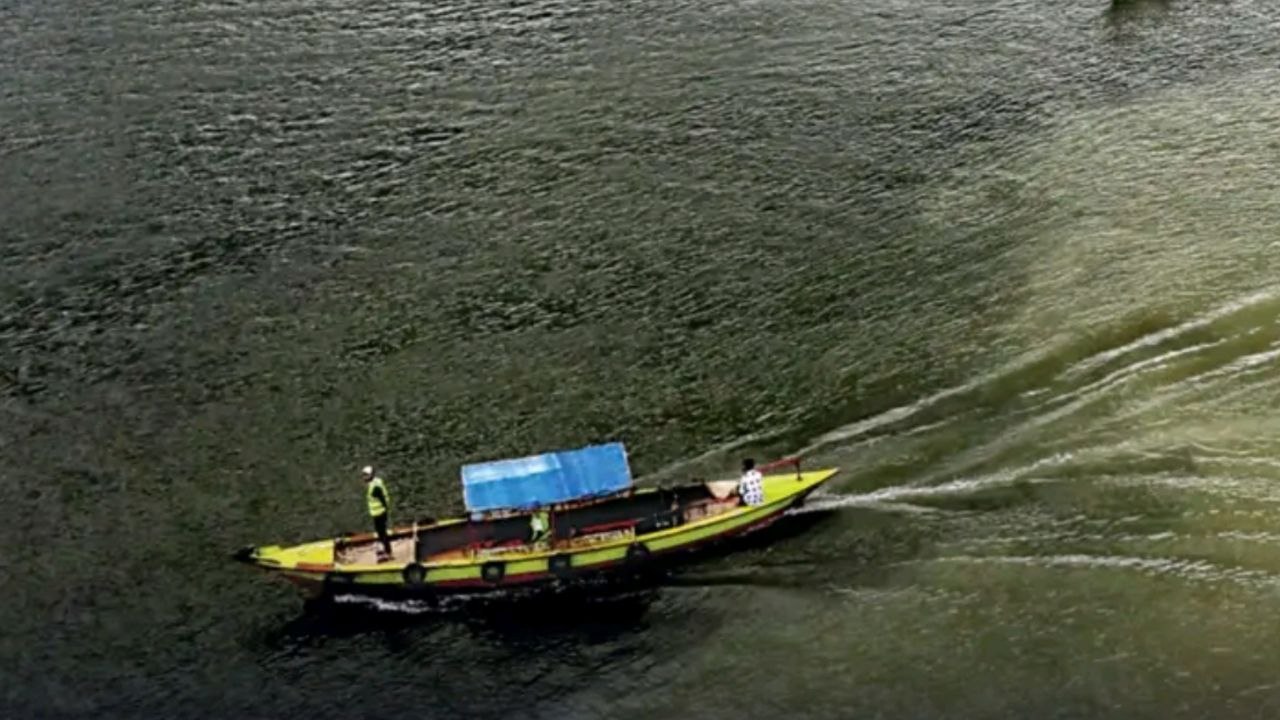
For generations, the rivers around Gazipur fed families, carried boats and watered fields. Today, many locals say they barely recognise them. Boatman Hashem Ali ferries passengers across the Turag at Konabari. The river he works on was once surrounded by farmland and used mainly for fishing and transport. Now it runs dark past rows of dyeing and finishing factories.
What Is Happening to Gazipur’s Rivers?
Gazipur is one of Bangladesh’s busiest industrial districts, and its waterways are paying for it. One river-conservation study counted around 296 pollution sources on the Turag, 145 on the Lobondoho and 56 on the Chilai. These include factory discharge, sewage outlets, markets and households.
A separate inspection of the Turag between Tongi and Kodda found 96 spots where toxic liquid waste was entering the river along a 40-kilometre stretch.
Why Are the Fish Disappearing?
The fish are the clearest warning sign. Recent reporting says native fish have nearly vanished from the Turag, and mostly an introduced “sucker fish” that feeds on waste survives. Farmers see the damage on land too. One farmer along the Balu River said there are no fish left because of toxic factory wastewater.
The Treatment Plant Problem
Factories are legally required to treat their waste. The trouble is that many don’t, or don’t do it properly. A Gazipur environment official has acknowledged that most factories have effluent treatment plants (ETPs), but many don’t keep them running. Activists give a starker picture. One estimate says only 556 of 2,220 factories in the district have ETPs, and only on paper.
Enforcement is thin as well. An activist argues that the local Department of Environment office is badly under-resourced for an industrial area this large. He also points the finger beyond factories, saying city corporations, municipalities and union parishads share responsibility for waste management.
Discover More Stories Worth Your Time
Explore Avengers’ Box Office Journey?
Discover how Avengers: Endgame performed worldwide, including domestic and re-release earnings.
Discover 5 Hilsa Recipes To Try?
Explore five delicious ways to enjoy Bangladesh’s iconic hilsa before the season ends.
See How Cox’s Bazar Airport Expands?
Learn how the new terminal supports Bangladesh’s growing aviation ambitions and regional connectivity.
Uncover What Happens After Islands?
Discover how mangroves could become the first colonisers when new land emerges in the Sundarbans.
Check Why Rooppur Shipment Was Disrupted?
Explore how Pakistan’s airspace clearance decision affected the planned nuclear fuel shipment to Bangladesh.
Why It Matters Beyond Gazipur
This isn’t only a local story. Gazipur sits upstream of the capital, and the Turag eventually joins the Buriganga. As one river campaigner put it, if Gazipur’s situation turns critical, Dhaka can’t be saved either. The health and farming risks are real too:
- Heavy metals: Activists report lead, chromium and cadmium levels crossing safe limits.
- Farmland: A survey in Sreepur and Shyampur found pollution about 10 times above permitted levels.
- Livelihoods: Crops and pond fish are being destroyed, hitting small farmers and fishers first.
- Public health: Workers and residents near factories face the worst health effects.
Is Anything Being Done?
Authorities say they penalise violators heavily, and officials have talked about sensors at discharge points to detect violations automatically. The government has also stepped up efforts to revive Dhaka’s rivers, with the initial focus on the Buriganga and Turag. Critics say raids and fines haven’t been enough. Commentators have long warned that drives alone don’t discourage polluters. They argue that real recovery needs every factory to comply, plus a change in public attitudes toward dumping waste.
FAQs
1. Which rivers in Gazipur are most polluted?
The Turag, Lobondoho and Balu are repeatedly named, along with the Tongi canal and Shitalakshya.
2. What is the main cause of the pollution?
Untreated industrial waste, mainly from garment, dyeing and washing units. Sewage and household waste add to it.
3. Why are fish dying?
Toxic effluent and low water quality make it hard for native species to survive.
4. Is the river water safe for irrigation?
Researchers have said that several Dhaka-area rivers, including the Turag, are seriously contaminated and shouldn’t be used for irrigation.
5. Why does Gazipur’s pollution affect Dhaka?
Gazipur is upstream. Its polluted water flows into the Turag and then the Buriganga.