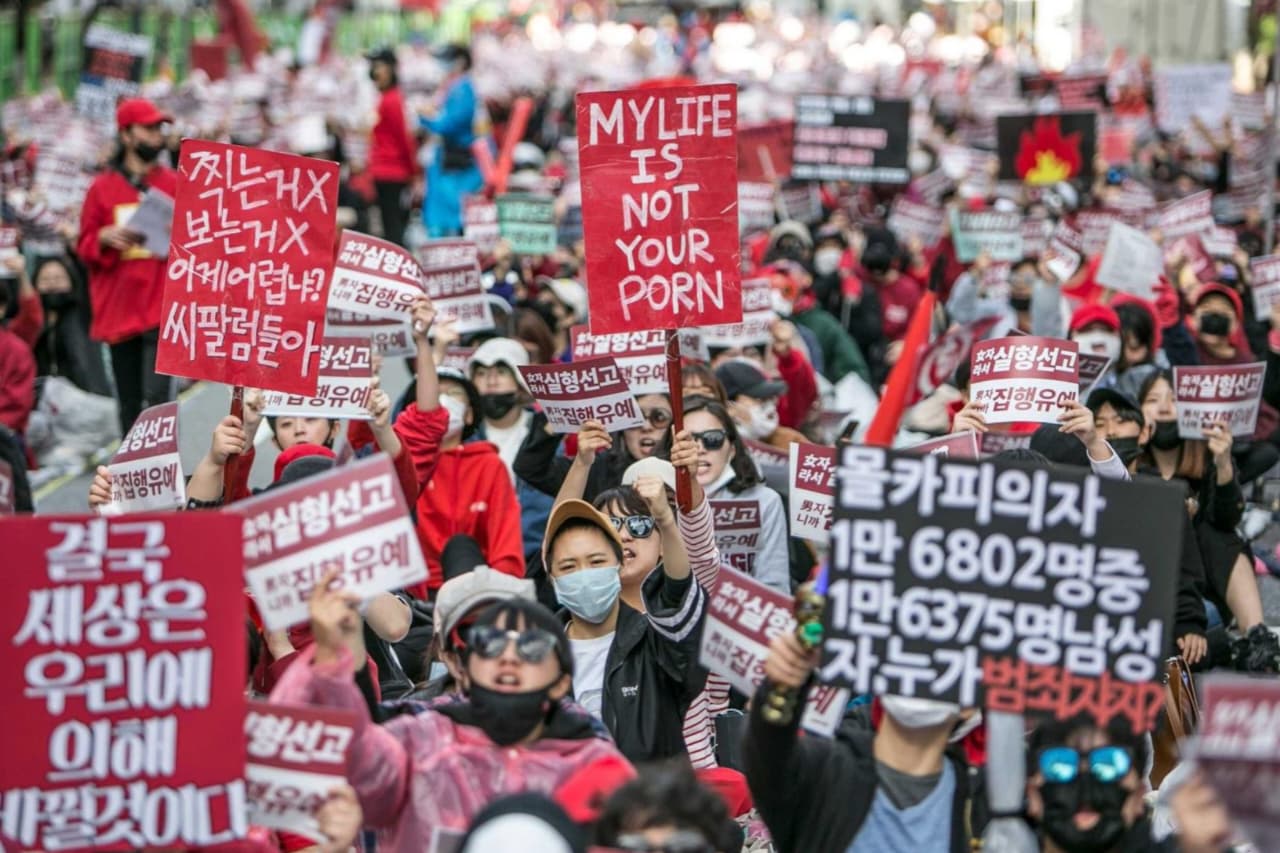
The Korean 4B Movement is a radical feminist initiative from South Korea rejecting traditional heterosexual norms through four key refusals. It emerged amid widespread frustration with misogyny, gender inequality, and patriarchal pressures.
The 4 Nos Explained
These “bi” (no) principles form the core of 4B, each starting with “bi” in Korean.
- Bihon (no marriage): Women reject heterosexual marriage to escape unequal partnerships and societal expectations.
- Bichulsan (no childbirth): Opting out of having children due to the heavy burden on women, including career penalties and childcare costs.
- Biyeonae (no dating): Avoiding romantic relationships with men to prioritize personal safety and autonomy.
- Bisekseu (no sex with men): Refraining from heterosexual sex as a form of self-protection against exploitation and violence.
Historical Context
Originating around 2015-2017 on platforms like Twitter and WOMAD, it gained momentum after events like the 2016 Gangnam Station murder. It reflects deeper issues such as South Korea’s OECD-worst gender pay gap and high domestic violence rates.
Current Relevance
By 2026, South Korea’s fertility rate remains critically low at around 0.72, partly linked to 4B amid economic woes and anti-feminist backlash. The movement has spread globally, inspiring trends in the US post-2024 elections and beyond.
Summary
The Korean 4B Movement consists of four complete refusals: dating, marriage, physical relationship, and childbirth. It is much more than a protest; it is a lifestyle decision that has been influenced by inequality, economic hardship, and the growth of feminist thinking. No matter if it is beloved or disliked, 4B has made it possible for society to face the disturbing issues of gender, liberty, and choice in this day and age.
Read Also: Single, Sparkling, and Unstoppable: Redefining Valentine’s Day on Your Own Terms