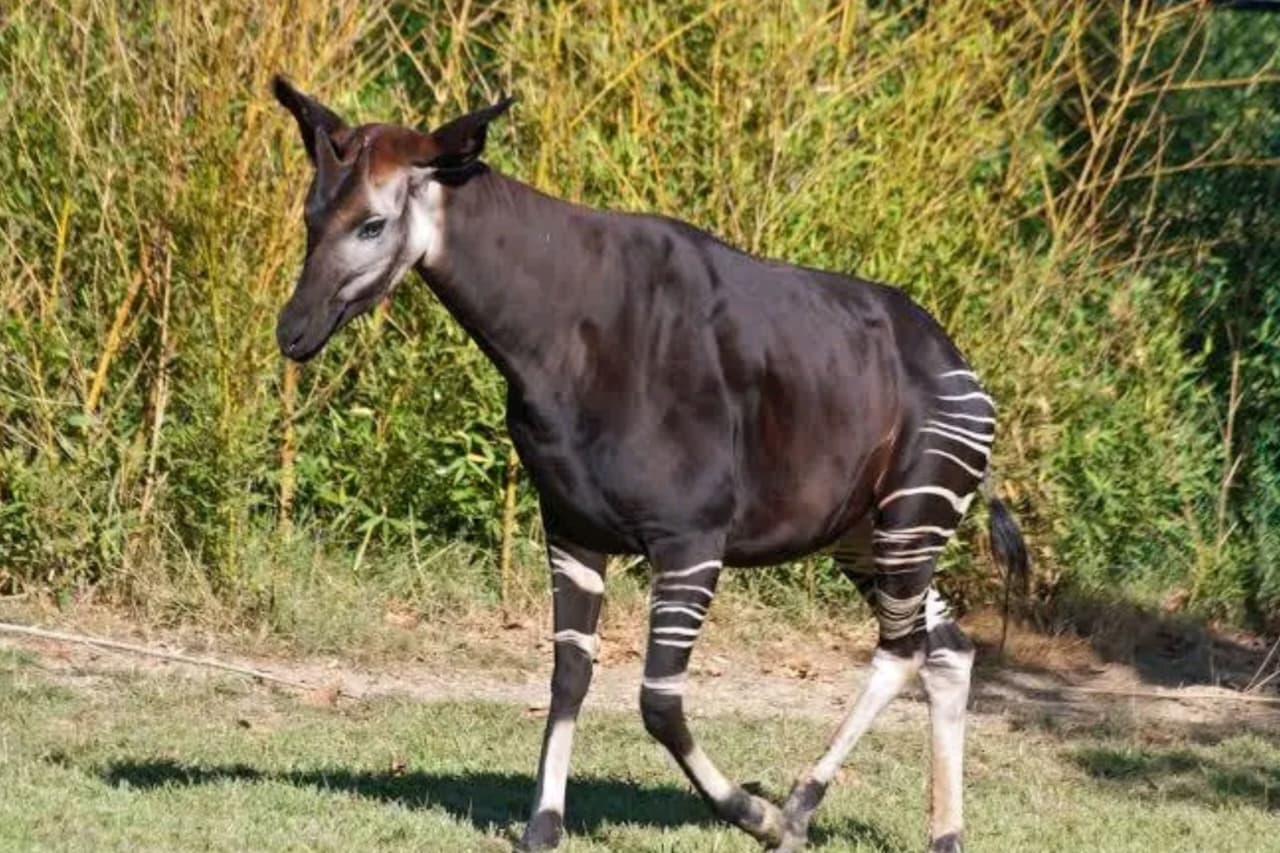
The okapi, often called Congo’s “zebra-giraffe,” has received the highest international protection under CITES Appendix I. The decision, announced on November 28, 2025, prohibits all commercial international trade of the endangered species, aiming to curb poaching and illegal trafficking in its native habitat, the Ituri Forest.
Unique Rainforest Icon Facing Serious Threats
The okapi (Okapia johnstoni), the only living relative of the giraffe, is endemic to the Democratic Republic of Congo’s dense rainforests. Its distinctive reddish-brown coat and zebra-like stripes make it instantly recognisable. Despite its elusive nature, the species faces severe threats from habitat loss, hunting, and the illegal wildlife trade. Current estimates suggest only 4,500–10,000 individuals survive, primarily in the 13,700 km² Okapi Wildlife Reserve, a UNESCO-protected site within the Ituri Forest.
Appendix I: What It Means for Conservation
Listing the okapi under CITES Appendix I closes legal loopholes, enforces stricter border checks, and strengthens Congolese protection via the Institut Congolais pour la Conservation de la Nature (ICCN). The Wildlife Conservation Society (WCS) has backed the move, promoting anti-poaching patrols, monitoring programs, and community partnerships with local Mbuti and Efe populations. These initiatives emphasise sustainable forestry and conservation-led livelihoods.
Global and Local Conservation Impact
Experts highlight that this listing not only protects the okapi but also safeguards a biodiversity hotspot crucial for climate regulation and carbon storage. Expanded patrols, scientific monitoring, and community involvement are expected to bolster survival chances in the Ituri core habitat, while smaller populations remain in Maiko and Lomami National Parks. Conservationists emphasise that global cooperation is vital to secure the long-term future of this rainforest flagship species.
Summary
By elevating the okapi to Appendix I protection, CITES strengthens both legal and practical frameworks against wildlife crime. The move underscores the importance of preserving Congo Basin biodiversity while highlighting the okapi as a symbol of rainforest conservation.
Read Also: Managing Depression Symptoms During Heat Waves: Tips for Mental and Physical Well-being