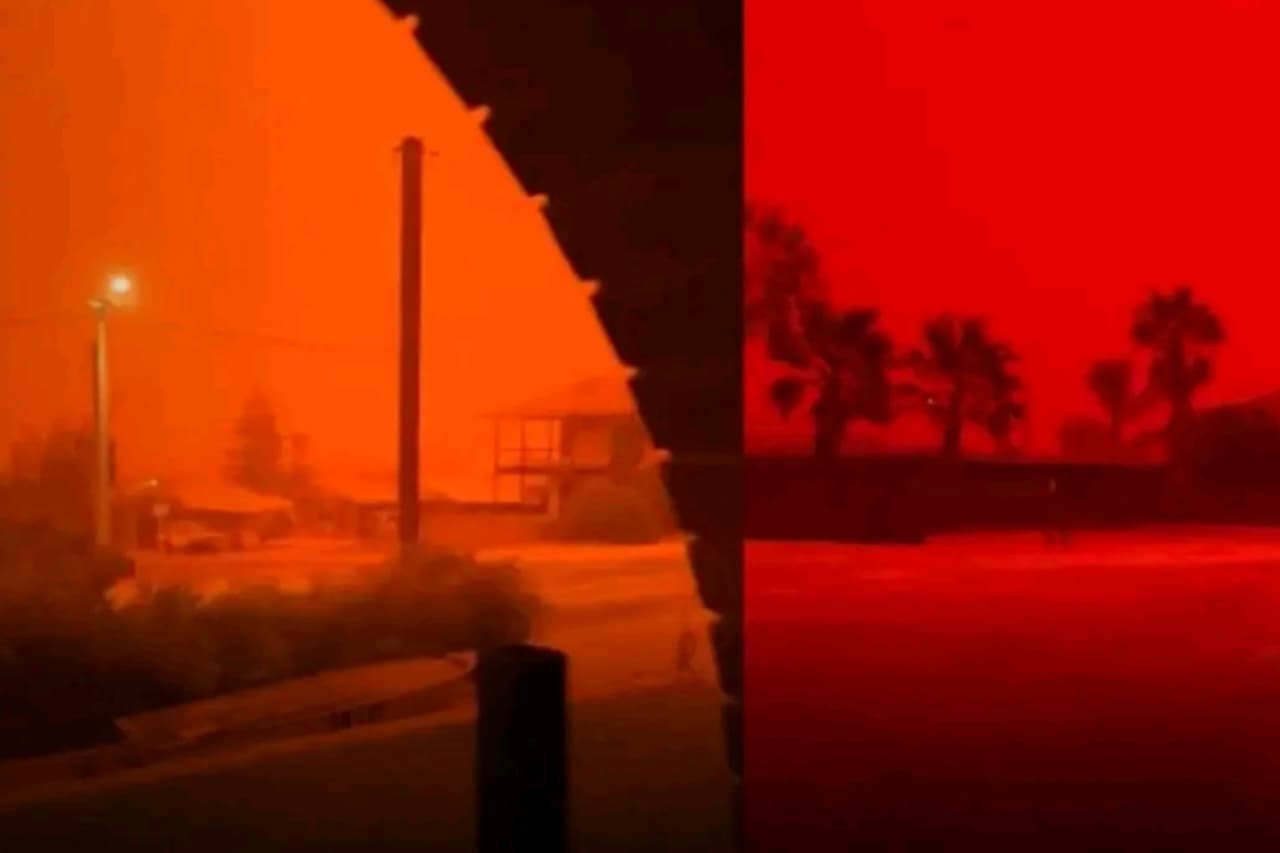
The rapid spread of news about Cyclone Narelle, which is located over 9000 km away from Bangladesh, has shown the emergence of a growing misinformation epidemic in Bangladesh. The ‘red skies’ caused by Cyclone Narelle have left some social media users in South Asia panicking with fear.
The Science Behind the “Red Sky”
The original images of the blood red sky in Australia should have generated legitimate scientific interest but instead spread like wildfire across social media due to their lack of context and misinterpreted nature.
The ‘red sky’ in Australia is caused by iron oxide rich dust being swept up into the air by Cyclone Narelle, which combined with Mie Scattering to filter out the blue light – creating the appearance of an intense red coloured sky.
How Misinformation Crossed Borders?
Although alarming and unusual to see as a phenomenon, this is common and well documented; however, the lack of knowledge about this phenomenon allowed misinformation to flourish.
While users in Bangladesh took the opportunity to share images from Australia depicting a blood-red sky as evidence of local occurrences (coinciding with an unmonitored developing weather system in the Bay of Bengal that may develop into Cyclone Arnab), the occurrence of these two different phenomena has led to numerous instances of misinformation and the blurring of the lines between them.
The Role of Social Media in Amplifying Fear
Misinformation has spread more quickly than verified facts due to social media, especially when accompanied by short videos or emotionally charged text that lead users to believe they’re seeing an imminent, local threat based on the image of a “red sky.”
There is a great deal of concern that, as the speed at which information travels increases relative to the speed at which that information can be verified, the more frequent and egregious instances of misinformation will occur, particularly when the information is represented visually or in a way that creates an emotional response.
Real Risks vs. Viral Distractions
In addition to gaining a large amount of attention while people were focused on sharing viral video clips from Australia, a weather event was generating and forming closer to the people who were sharing the clips. This focus on a more distant “imagery” took away from the people’s focus on the real threats close to home, in this case, in the Bay of Bengal.
This type of misdirection can lead to major consequences, due to people not being prepared for imminent and real threats.
The Need for Scientific Literacy
The Narelle cyclone incident emphasizes the need for basic scientific literacy. Understanding basic concepts, such as how light is scattered in the atmosphere, will reduce misinterpretation of events that occur in nature.
A clear and accessible means of communicating science through the collaboration of educational institutions, media outlets, and governmental agencies will create a more informed public.
Strengthening Information Verification
To reduce misinformation, individuals and institutions should enhance their ability to verify. For example, checking with official weather sources or credible sources is essential; also avoiding sharing information that cannot be verified through reputable sources is vital.
A Wake-Up Call for Digital Responsibility
The incident serves to remind everyone that digital platforms experience responsibilities. Sharing unconfirmed content, even if it is done accidentally, will create a great deal of fear and confusion in many areas. Due to the increasing connectivity of Bangladesh, it is important to establish a culture of responsible sharing of information so that the population can stay safe.
In short, Cyclone Narelle not only created a beautiful natural phenomenon, but it has also demonstrated how quickly misinformation can cross international water borders. Together, we must all work together to put a priority on fact-based information, education, and responsible digital use.
FAQs
Was the red sky seen in Bangladesh?
No, the red sky was only seen in Australia and was not seen in Bangladesh.
What caused the red sky during Cyclone Narelle?
It was caused by the presence of iron oxide dust and Mie Scattering (an understanding of the scientific laws of the universe).
Is there an existing cyclone threat to Bangladesh?
There is currently a weather system defined as a potential cyclone; however, it does not relate to Cyclone Narelle.
Why did many people believe the red sky was in their area?
There have been many social media posts that show the same video clips that were taken during the red skies, but there was no indication that those videos had any relation to Bangladesh’s red sky.
How do you prevent the spread of false information?
Ensure that you verify your content from legitimate sources before you share it and to not only share unquantified sources from social media.
Read Also: BYLC programs for youth leadership training