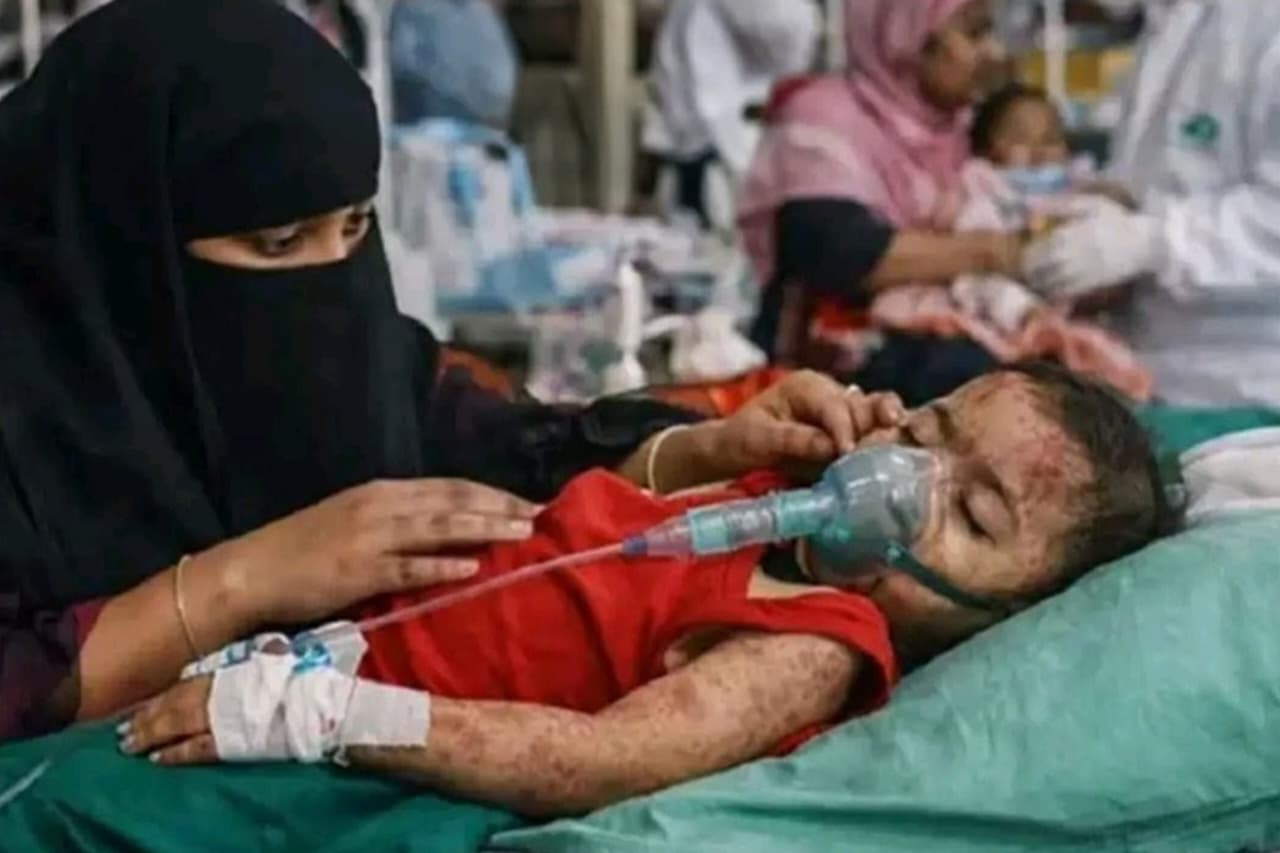
In Bangladesh, there is currently an alarming resurgence of the disease Measles, which had previously been close to elimination. The current Measles Outbreak in Bangladesh has resulted in thousands of suspected cases of Measles and an increasing number of children who have died from this disease.
Despite improvements in the immunisation programme, the recent increase in cases demonstrates the major gaps in vaccination in Bangladesh.
Rapid Spread of Measles
The measles outbreak has now spread to 56 of Bangladesh’s 64 districts. There are only a limited number of districts—Rangamati, Bagerhat, Meherpur, and Joypurhat—that have reported no cases of Measles.
The remaining districts with the greatest concentration of Measles cases are concentrated within the major divisions of Dhaka, Rajshahi, Mymensingh, and the Barishal region. Urban areas with very high population densities, as well as rural areas with low accessibility to services, are emerging as key hotspots.
64 Districts, Cases, and Death Toll have been reported
Recent estimates indicate there are currently approximately 5,800 suspected cases of measles in the United States, with the highest burden falling upon children younger than five years old.
Although the exact number of children who have died from measles so far has been reported as varying from about 38 confirmed deaths to likely over 110, and possibly even greater than 130
Altogether, these statistics highlight the severity of the current measles outbreak and the need for immediate action.
Emergency Vaccination Campaign Launched by the Government of Bangladesh
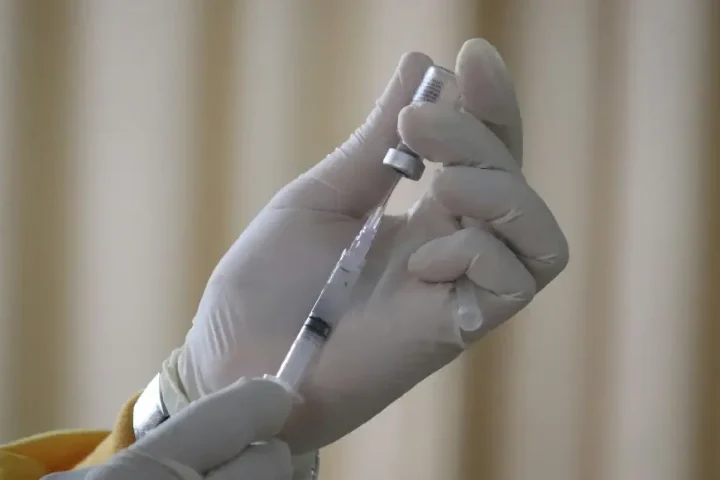
The Government of Bangladesh has initiated an emergency vaccination program targeting high-risk communities to contain the current measles outbreak. The program runs every day between the hours of 10:00 AM and 5:00 PM until the 21st of May, 2026.
The Vaccination Campaign will focus on 30 upazilas within 18 districts deemed to be at high risk, rather than using an entire district as a target area, based on low immunisation coverage and high rates of increasing incidence.
List of 30 High-Risk Upazilas
Below is a structured table for clarity
| Division | District | High-Risk Upazilas |
| Barishal | Barguna | Barguna Sadar, Mehendiganj |
| Barishal | Barishal | Bakerganj |
| Chittagong | Chandpur | Chandpur Sadar, Haimchar |
| Chittagong | Cox’s Bazar | Maheshkhali, Ramu |
| Dhaka | Dhaka | Nawabganj |
| Dhaka | Gazipur | Gazipur Sadar |
| Khulna | Jashore | Jashore Sadar |
| Barishal | Jhalokati | Nalchiti |
| Dhaka | Madaripur | Madaripur Sadar |
| Dhaka | Munshiganj | Munshiganj Sadar, Srinagar, Louhajang |
| Rajshahi | Natore | Phulpur |
| Mymensingh | Netrokona | Atpara |
| Rajshahi | Naogaon | Porsha |
| Rajshahi | Chapainawabganj | Chapainawabganj Sadar, Shibganj, Bholahat |
| Rajshahi | Pabna | Ishwardi, Pabna Sadar, Atgharia, Bera |
| Rajshahi | Rajshahi | Godagari |
| Dhaka | Shariatpur | Jajira |
| Mymensingh | Mymensingh | Mymensingh Sadar, Trishal |
Discover More Stories Worth Your Time
Why Tourism Booming Bangladesh 2026?
Explore why 2026 is a landmark year for Bangladesh tourism growth.
How Track NASA Artemis II?
Check how to follow Orion spacecraft live from Bangladesh.
Which IT Firms Lead Exports?
Explore top IT companies driving Bangladesh’s ICT export growth globally.
Will Banks Open Boishakh 2026?
Check if banks remain open during Pohela Boishakh in Bangladesh.
What Shobhajatra Route This Year?
Discover the complete route, timing, and guide for 2026 celebrations.
Why has immunisation coverage been low over the Past Decade?
The revival of measles is not an isolated incident, but rather the result of overlapping, interconnected problems:
I. Lack of Regular Immunisations
Research suggests that anywhere between 16% to 20% of children are not properly immunised; thus, their immunity gaps will allow quick measles transmission when exposed.
II. Supply Issues
Healthcare system problems continue to make it difficult or impossible to access vaccines for the following reasons:
- Distance from service delivery points
- Poor cold chain systems
- Frequent vaccine supply shortages
Inconsistency of services provided through the Expanded Immunisation Programme (EPI)
The barriers above are more pronounced in rural and remote areas.
III. Demand Barriers
Even when vaccines are available to the population, not all individuals will actually get them based on a variety of reasons, including:
- Limited knowledge of vaccines among parents
- Low maternal education
- Fear of side effects associated with vaccination
- Cultural/religious hesitancy
- Financial difficulties
When considered together, these factors will slow down the rate of timely vaccinations for individuals.
IV. Overcrowding and Malnutrition
Malnutrition will diminish the immune system of children, making them more susceptible to infectious diseases like measles. In addition, crowded conditions—especially within urban areas, such as slums—lead to the rapid spread of vaccines. The two will cause isolated cases of measles to accelerate into epidemics.
Government Response and Outlook
The emergency MR campaign, which is a part of the interim government led by Muhammad Yunus, is the first and foremost priority for controlling the outbreak, with assistance from global partners. The health authorities are making efforts to close the immunity gap and rapidly vaccinate as many people as possible.
However, the outbreak represents a setback. The number of measles cases has increased from 1 case per million (2022-2025) to 16.8 cases per million in 2026; this brings Bangladesh’s goal of eliminating measles/rubella transmission by 2026 into serious doubt.
Conclusion
The current measles outbreak in Bangladesh illustrates that all progress in public health can be very fragile. While emergency vaccinations are critical, developing strong routine immunisation systems is the only way to have long-term success; improving access to healthcare; and addressing social barriers to vaccination is essential to eliminate these types of outbreaks from affecting the most vulnerable population in the country—children.