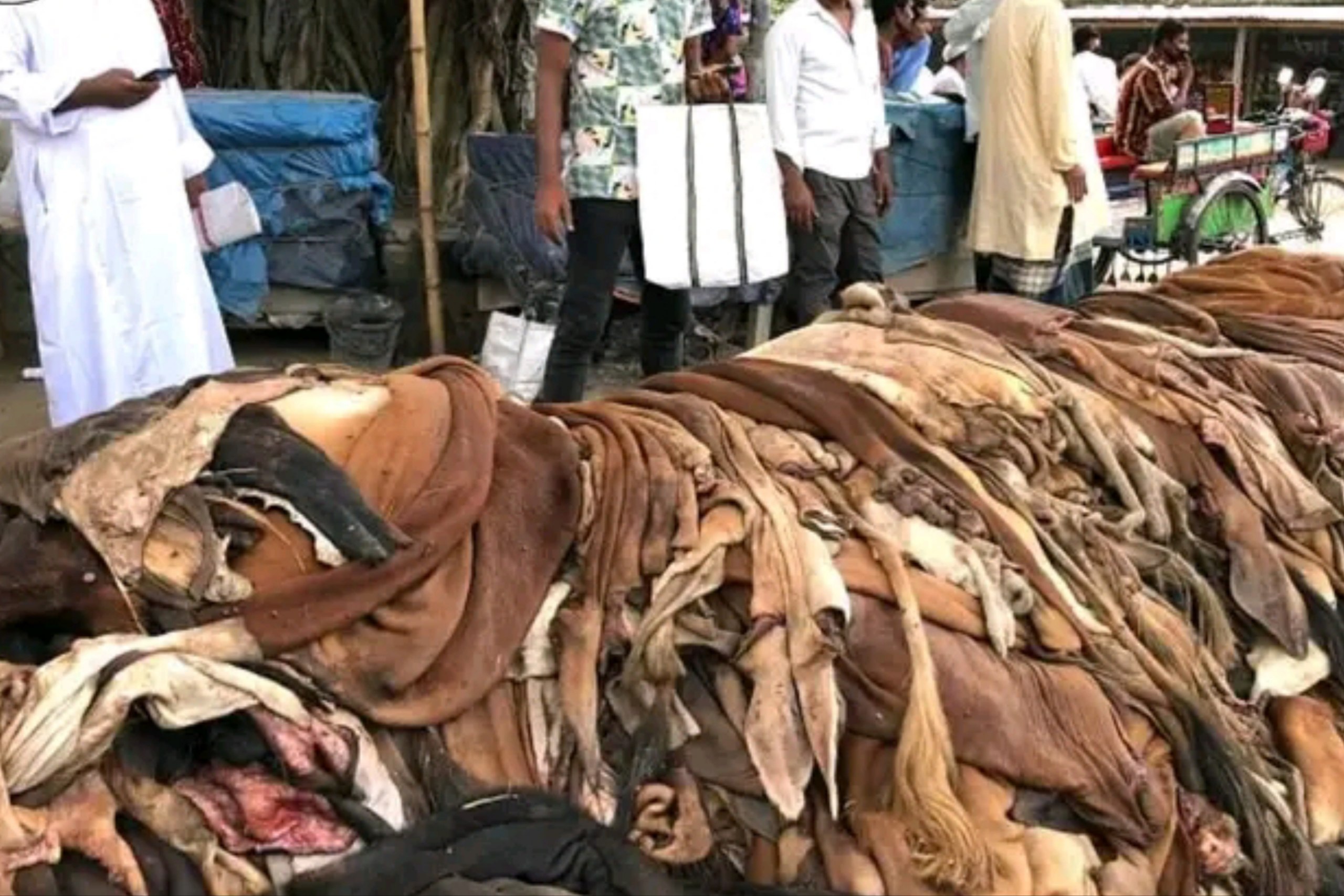
Today, the government increased the prices for rawhide procurement for Eid-ul-Azha — cowhide now fixed at around Tk 60–65 per sq ft in Dhaka (Tk 55–60 outside Dhaka), while goat and sheep skins are up by a couple of taka per sq ft — you can expect to earn between Tk 1,150 and Tk 1,350 for a typical cowhide and around Tk 20–27 per sq ft for sheep hides depending on type and location.
Fast facts: What the new rates mean
Cowhide (salted) Dhaka rate ~Tk 60–65/sq ft Outside Dhaka ~Tk 55–60/sq
Cow hide floor minimum per-piece Dhaka ~Tk 1,350; outside Dhaka ~Tk 1,150. footwearexchange+Goat/sheep hides (salted): goat Tk 20–27/sq ft, sheep Tk 20–27/sq ft, depending on class; small increase vs last year.
How to work out your Qurbani Leather Income
- Usable hide area measure: Average large cowhide ~35-45 sq ft (small cows ~20 sq ft, large cows up to ~45 sq ft).
- Location Area x per sq ft rate for your location. 40 sq. ft. x Tk 62/sq. ft. = Tk 2,480 gross (salted skin).
- The government sets a per-piece minimum. Use the higher of the two numbers (area * rate vs minimum floor price).
Less preservation and salt costs (around Tk 50-200), local collection/transport charges and storekeeper commission to get net cash to the seller (often Tk 250-1,000 per hide varies by channel).
3 worked examples
Large cowhide, Dhaka, 40 sq ft at Tk 62/sq ft 40 × 62 = Tk 2,480 gross; after salt/handling (~Tk 200) → ~Tk 2,280 net.
Average cowhide, outside Dhaka 30 sq ft @ Tk 57/sq ft = 30×57=Tk 1,710 gross, after costs (~Tk 200) → ~Tk 1,510 net (but check per-piece floor of Tk 1,150).
Goat hide, 10 sqft Tk22/sqft: 10×22=Tk220 gross; after salt/collection(~Tk30)→~Tk190 net.
Discover More Stories Worth Your Time
Explore Why QR Verification Matters?
Discover why digital verification is now mandatory for all bank statements and visa processing.
Check How To Apply Visa?
Explore the complete Indian e-Visa and e-Arrival card process for May 2026 applicants.
Find How To Skip Approvals?
Discover how the new provisional license helps businesses avoid lengthy approval delays.
See Which Cattle Markets Trusted?
Explore the cheapest and most reliable Qurbani cattle markets across Bangladesh.
Learn How Rail Travel Speeds Up?
Discover how the new railway upgrade could cut Dhaka-Rajshahi travel time significantly.
Things that lower your paycheck
- Quality/tearing: damaged or torn hides sell for a lot less; usable area cuts down with cuts.
- Middlemen/storekeeper cuts: storekeepers are sometimes below the govt floor on seasonal so negotiate or sell to tannery agents.
- Salt and preservation: Cost and poor salting fetch price or rejection at the tannery.
- Syndicate pressure or market gluts: in past seasons, prices have sometimes fallen at the point of sale, due to local market power.
Tips to get the best out of Qurbani hides
- Salting correctly: the required amount of salt and drying procedure to prevent rot. Well salted hides fetch better prices.
- Know the floor rate: Insist on the government fixed per piece minimum. Collect receipts and weigh/measure hides in the open.
Sell to licensed agents of tanneries or official collection points, not to informal middlemen. Tanneries tend to pay nearer to declared rates.
Combine hides. Small sellers can combine hides with neighbours to access tannery pickups and avoid extra transport costs.
Policy & market context
The seasonal Qurbani window accounts for a large share of the year’s rawhide and is crucial to tanneries and leather exports. Small rate hikes are intended to improve returns to seasonal sellers and ensure the flow of leather to tanneries. Temporary export relaxations sometimes accompany the season to support the industry. However, enforcement gaps and pressure from middlemen can mean that ground payments differ from announced rates.
What to do now
- Measure the hide area. Compare the area times rate versus the per-piece floor. Demand the higher amount.
- Photograph and salt properly hides and keep the salt receipts.
- Ring nearby agents or official collection points before dropping off. Note pickup fees.
- Keep documentation of sales for any dispute or later tannery payment reconciliation.
Let me know your animal type (cow/goat/sheep), estimated hide size and if you are in Dhaka or outside and I will work out an estimated net earning for your hide with realistic cost deductions.