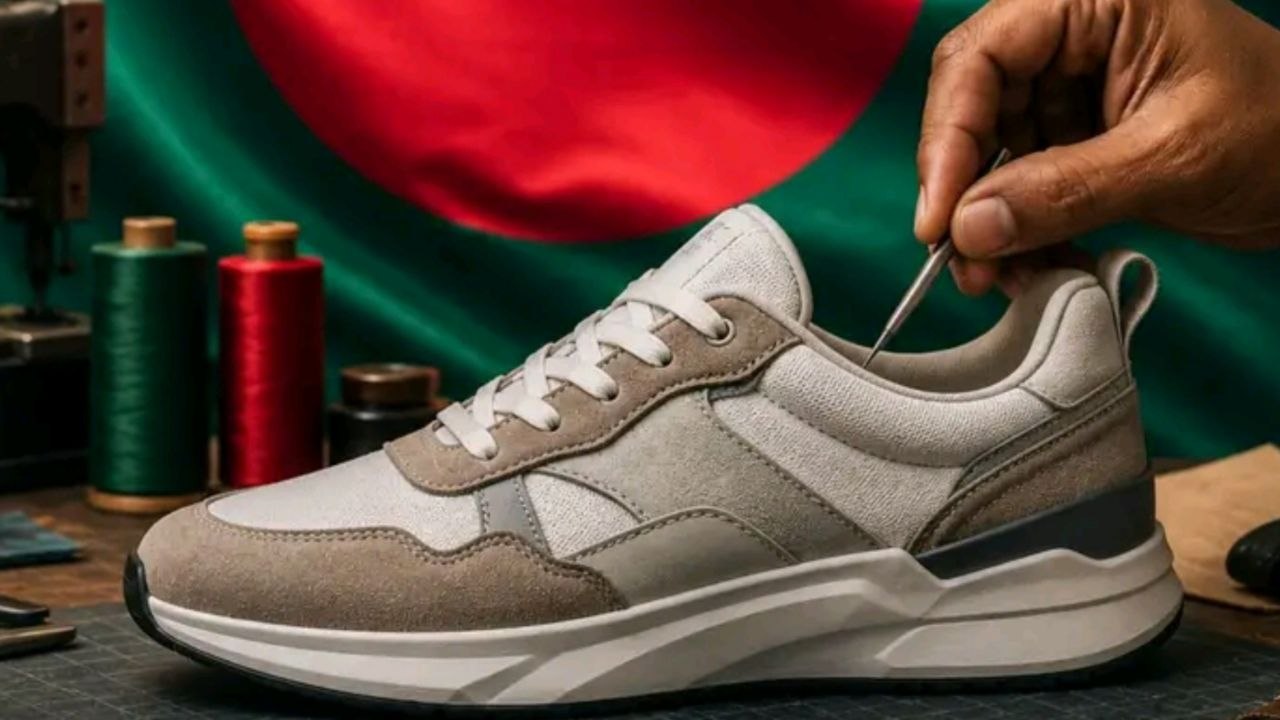
Bangladesh’s footwear industry is capturing new ground in the United States as shifting American trade patterns open space once dominated by China. US Department of Commerce data show the country imported 226.9 million dollars worth of footwear from Bangladesh between January and July this year, up 9 per cent from the same period last year. Over the same stretch, US footwear imports from China fell by around 38 per cent, a decline that suppliers in Bangladesh, Vietnam, Indonesia, Cambodia, and India are now moving to fill.
The US remains Bangladesh’s single largest footwear export destination, accounting for more than 30 per cent of the country’s total leather and footwear earnings, according to Nasir Khan, vice president of the Leathergoods and Footwear Manufacturers and Exporters Association of Bangladesh.
Export Earnings Climb Across the Board
Export Promotion Bureau figures show Bangladesh earned 258.45 million dollars from leather and non-leather footwear in July and August of the current fiscal year, up 11.5 per cent from the same period a year earlier. Leather footwear exports rose 8.91 per cent to 151.03 million dollars, while non-leather footwear, which includes sports and synthetic shoes, grew faster still, climbing 15.29 per cent to 107.42 million dollars.
The momentum builds on a record fiscal year. Leather and non-leather footwear exports reached 1.2278 billion dollars in the last full fiscal year, a rise of 2.35 per cent, while total earnings including raw leather and other leather goods touched 1.757 billion dollars.
Shoemakers See a Path to 5 Billion Dollars
Industry leaders now say Bangladesh could double or more its current footwear export earnings within a short window. Nasir Khan said the country could push annual footwear exports to 5 billion dollars within two years if it manages to capture even 2 to 3 per cent of the market share China has lost in the US, provided the right policy support is in place. Apex Footwear COO Md Nasrullah said the sector has already seen increased buyer interest as international brands look to diversify their sourcing beyond China.
Moving Beyond a Garment-Dependent Economy
The push comes as Bangladesh works to reduce its heavy reliance on ready-made garments, which still account for roughly 81 per cent of total merchandise export earnings. That concentration left the economy exposed when political instability, US tariff changes, and shifts in regional transhipment arrangements converged in recent years, prompting policymakers and manufacturers to look more seriously at footwear and leather as a second major export engine.
Long Road, But Real Momentum
Footwear exports had stayed close to the 1 billion-dollar mark for nearly two decades even as competitors like Vietnam expanded rapidly, but recent fiscal years have finally broken that pattern, with earnings growth in the double digits. With more than 3,500 small and medium manufacturers and around 90 large-scale firms now producing shoes domestically, and international buyers actively rerouting orders away from China, the sector’s shift from a garment industry side note to a genuine second export pillar appears to be gathering real momentum, even as the industry works to meet compliance standards that major markets increasingly demand.