
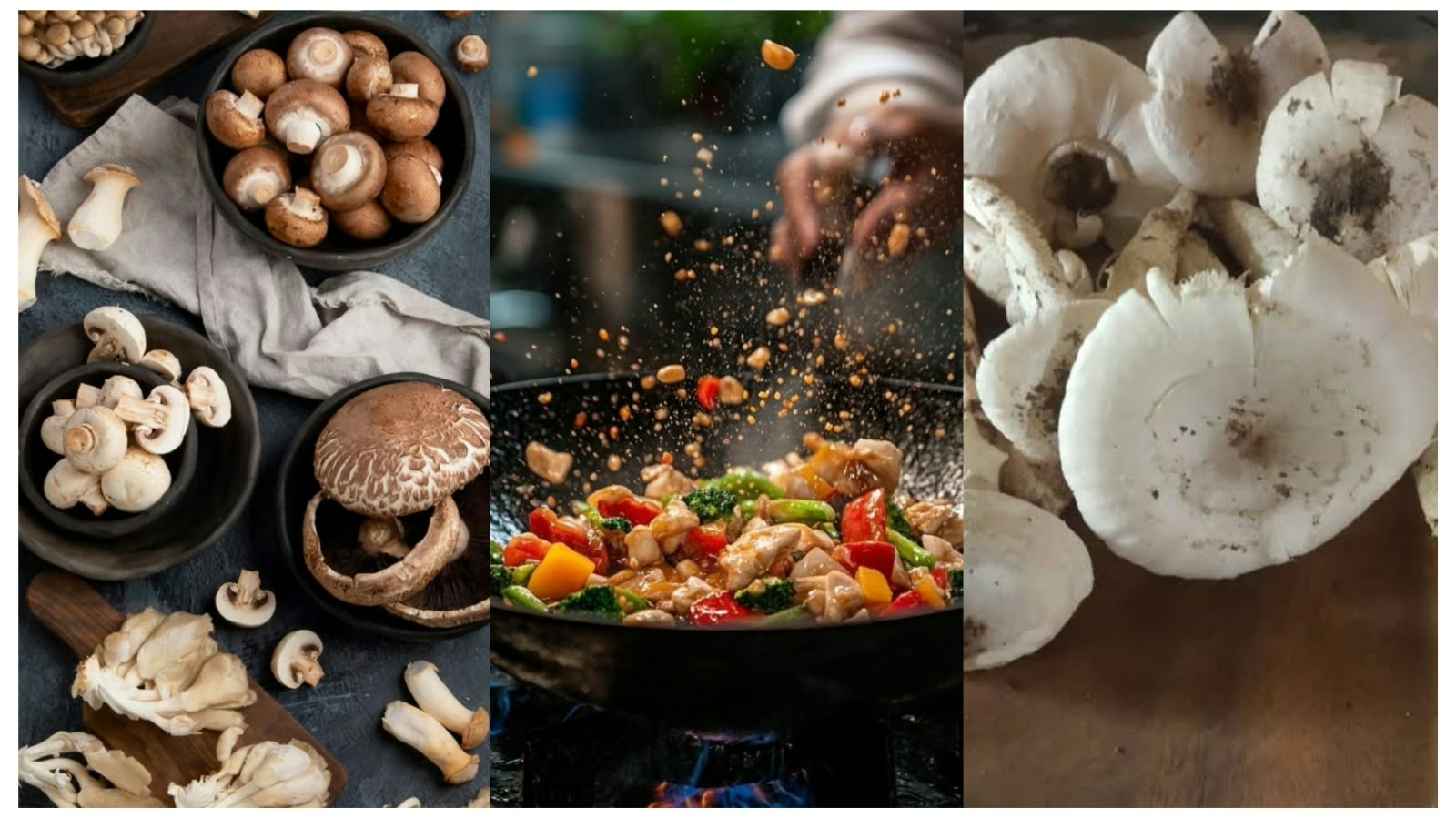
Every year, as the late monsoon rains soak the forests, a rare delicacy appears on village paths and in local markets. Durga Chatu, also called Durga Chhatu or Karhan Chhatu, is a wild mushroom that people eagerly wait for around Durga Puja. It is closely linked to Termitomyces heimii and is celebrated for its rich, earthy taste.
What Is Durga Chatu?
Durga Chatu grows in sal forests and other wooded areas, usually between June and October. Peak interest comes around Durga Puja, when the soil is damp and the mushrooms push up in clusters. Because it grows in association with termites, it cannot be farmed easily, which is why it is treated as a seasonal treat.
How People Cook It
The traditional method is simple. Locals boil the mushroom first, then cook it with mustard oil and spices. It is usually served with hot rice. Some communities also use it in folk medicine. Popular reports claim it has around 25 to 35 grams of protein per 100 grams, but this figure is approximate and depends on moisture, species, and preparation.
Straw Mushroom: A Safer Everyday Option
Straw mushroom, known scientifically as Volvariella volvacea, is often confused with wild varieties, but it is a cultivated mushroom. It grows on paddy straw and is widely produced in Bangladesh during warm months. It works well in curries, soups, stir-fries, and rice dishes. When bought from a reliable grower, the risk is much lower than with wild picks.
Protein-Rich Alternatives
Mushrooms can add useful protein to meals, but they cannot fully replace legumes, eggs, fish, or dairy. Oyster mushrooms grown in Bangladesh have been reported to contain roughly 23.5 to 33.2 grams of crude protein per 100 grams of dry weight, along with low fat and good fibre. Button mushrooms are also grown commercially. For a balanced diet, pair mushrooms with lentils, chickpeas, beans, eggs, or yoghurt.
Foraging Safety Tips
Wild mushrooms can be dangerous. Several unrelated species share similar local names, and poisonous look-alikes cause serious illness every year. Follow these rules:
- Eat wild mushrooms only if a qualified mycologist or experienced local expert has identified them.
- Never rely on a folk name alone.
- Avoid mushrooms from roadsides, industrial areas, or polluted soil.
- Always cook wild mushrooms thoroughly.
- Buy Durga Chatu only from trusted collectors during its known season.
Final Thoughts
Durga Chatu remains a beloved seasonal delicacy, deeply tied to the monsoon and festival traditions of the region. Still, enjoying it safely matters more than chasing the taste. For everyday protein, cultivated oyster and straw mushrooms are the smarter, safer choices, while Durga Chatu is best kept as an occasional treat from a trusted source.
Discover More Stories Worth Your Time
1. Wondering which traditional Bangladeshi dishes are slowly disappearing from our kitchens?
Take a delicious trip into the past with these lost recipes and forgotten traditional dishes of Bangladesh.
2. Love Ilish but want to move beyond the usual preparation?
These classic Ilish recipes bring some of Bangladesh’s favourite fish dishes to your kitchen.
3. Think you know Bangladeshi cuisine? You may be missing these hidden gems.
Discover lesser-known Bangladeshi dishes that deserve a place on every food lover’s list.
4. Looking for something warm, comforting and seasonal when the monsoon arrives?
Try these healthy monsoon comfort food recipes inspired by homestyle flavours.
5. Weekend plans but no idea what to cook? Why not make biryani?
From familiar favourites to exciting variations, here are 7 biryani recipes to try this weekend.