
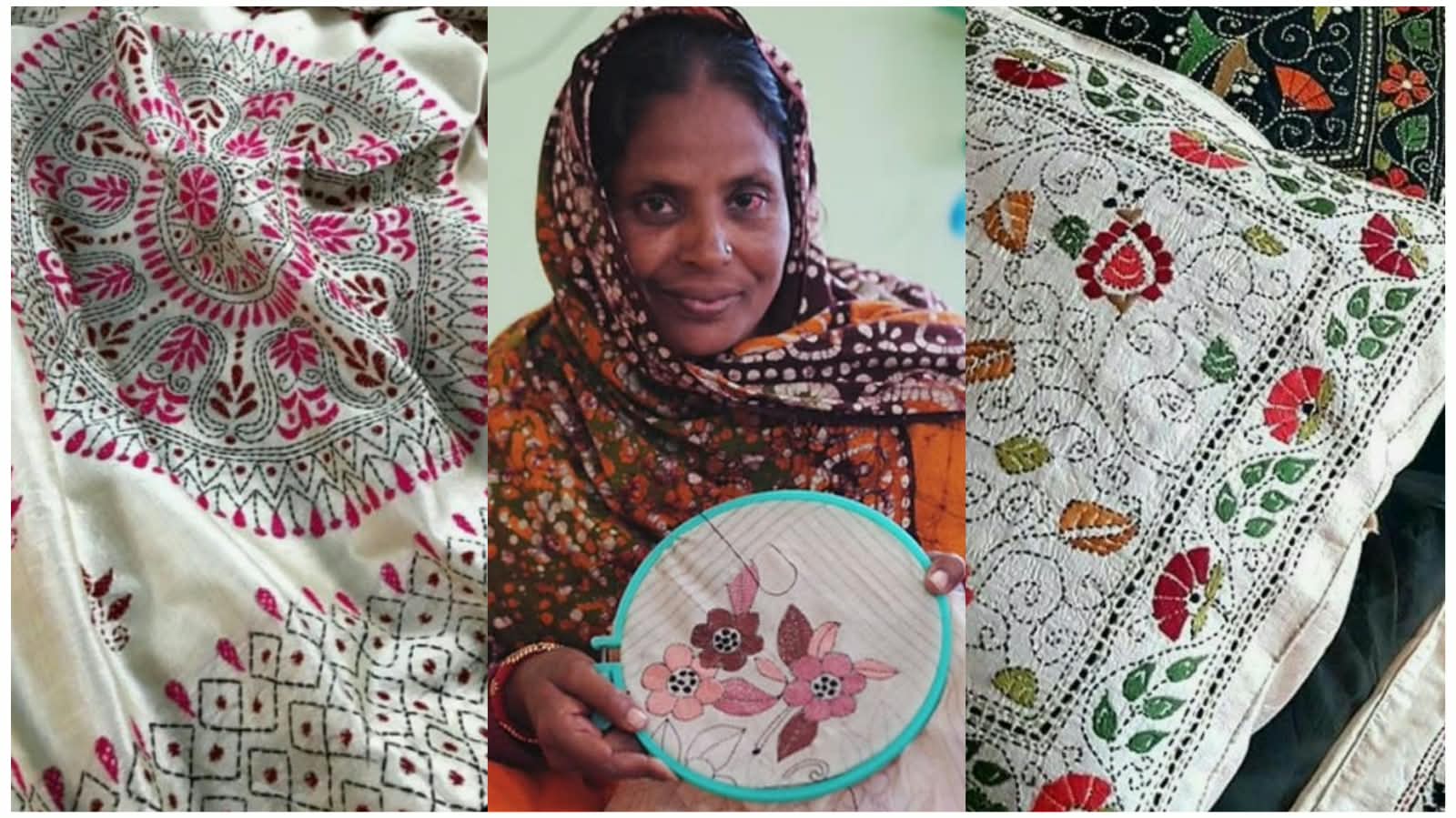
The word kantha refers to a quilt or coverlet, while nakshi means decorative design. Traditionally, women layered discarded saris and dhotis and joined them with running stitches. They embroidered motifs using thread pulled from sari borders, which made the craft both practical and resourceful.
What began as a household need became an art of remembrance. Boats on rivers, flowering plants, birds, animals, village scenes and spiritual symbols appear across kanthas. Often they reflect the maker’s surroundings, beliefs and personal experiences.
A Craft Passed Through Women
Nakshi kantha has long been a women-led tradition. Mothers taught daughters, and grandmothers shared patterns from memory. Each finished quilt became a family heirloom rather than a product made for sale.
The embroidery also gave women a rare public voice. Through motifs and scenes, they expressed joys, sorrows, longing and hopes. In this way, private domestic work became a powerful form of storytelling.
Tradition Meets Modern Fashion
Today, nakshi kantha has moved beyond winter quilts and household use. It appears in contemporary fashion, home décor, art exhibitions and designer collections, while keeping its roots in Bengal’s rural craft traditions.
The revival has also created livelihoods. In Bangladesh, women who once stitched kantha in their spare hours increasingly use the skill as a source of income. Training programmes help preserve traditional techniques and support local artisans.
Why It Still Matters
Nakshi kantha survives because it adapts without losing its soul. Its hand-stitched imperfections, reused fabrics and personal symbols stand in contrast to mass production. They remind us that heritage is not kept only in museums. It also lives in the hands of women who continue to stitch.
Discover Traditional Art and Craft of Bengal with Bangla Pulse
What is Dhakai muslin, and how is Bangladesh reviving this historic textile?
Dhakai muslin is a traditional fine cotton fabric known for its exceptional lightness and delicate weaving. Efforts to revive this historic textile focus on preserving traditional weaving skills and supporting skilled artisans. Learn more in this report on the revival of Dhakai muslin in Bangladesh.
What are the traditional Jamdani motifs, and what do their names mean?
Jamdani sarees feature intricate woven motifs inspired by flowers, leaves, geometric patterns and other traditional designs. These motifs contribute to the cultural identity and artistic value of Jamdani textiles. Explore this guide to Jamdani motifs, their names and meanings.
How did British colonial rule contribute to the decline of Dhaka muslin?
The decline of Dhaka muslin is associated with several factors, including colonial economic policies, changes in textile markets and competition from machine-made fabrics. Read this historical report on British East India Company rule and the decline of Dhaka muslin.
Where can buyers find authentic Rajshahi silk sarees from Bangladesh?
Buyers interested in Rajshahi silk sarees can explore specialist sellers and online platforms offering traditional Bangladeshi textiles. Checking fabric details, seller credentials and product descriptions can help buyers assess authenticity. Find more information in this guide to buying authentic Rajshahi silk sarees online.
Where can women in Bangladesh find crochet websites and online resources?
Women interested in crochet can explore online resources for patterns, tutorials, handmade products and craft-selling opportunities. The right platform depends on whether they want to learn crochet, purchase supplies or sell their creations. Discover more through this guide to crochet websites for women in Bangladesh.