
Walk through any fish market in Dhaka during the rains and you will hear one word again and again: ilish. Hilsa is the national fish, and people talk about it the way others talk about football. Wedding feasts, New Year breakfasts, a grey afternoon of heavy rain, hilsa fits them all. Here is why Bangladesh holds it so close, and how an ordinary kitchen turns it into dinner.
Why Hilsa Is Loved So Deeply in Bangladesh
Start with the taste. Hilsa carries a lot of natural oil, so every bite is soft and a little sweet, and the flavour hangs around. Ask any fish seller and he will tell you the best ones come from the Padma River, and he will price them that way too.
Money matters as well. A huge number of families live off the catch, and since 2017 the country has held a geographical indication tag, which officially ties hilsa to Bangladesh.
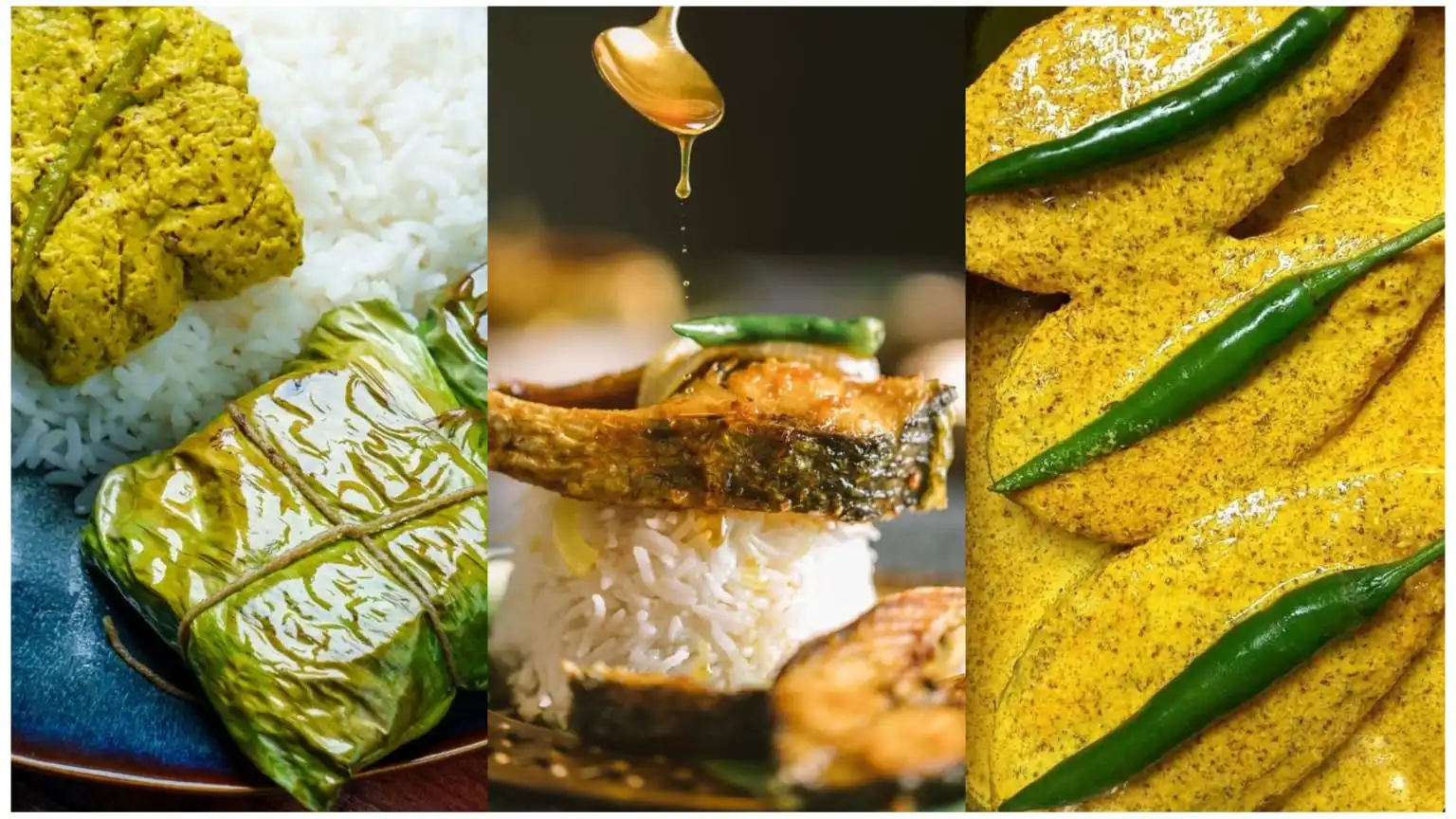
Then there is tradition. A big fish is a common gift when two families meet after a wedding. On Pohela Boishakh, the Bengali New Year, plenty of homes eat panta bhat, which is rice soaked overnight in water, with fried hilsa, raw onion and green chilli.
How Hilsa Is Cooked at Home
Most people keep it simple. Here is shorshe ilish, the mustard curry, for two or three people. You will need four thick steaks, two tablespoons of mustard seeds, three green chillies, turmeric, salt and four tablespoons of mustard oil.
- Wash the steaks, then rub them with turmeric and salt. Let them rest for ten minutes.
- Soak the mustard seeds in warm water for fifteen minutes. Grind them with one chilli and a pinch of salt. Stop early, because over-ground mustard turns bitter.
- Warm three tablespoons of oil on low heat. Pour in the paste and a cup of warm water, and stir for two minutes.
- Lay the fish in gently, add two slit chillies, cover and simmer for eight to ten minutes. Shake the pan rather than stirring, or the steaks will break.
- Finish with a spoon of raw mustard oil and serve with hot rice.
Want something crunchy? Rub pieces with turmeric and salt, then fry until golden. That is ilish bhaja. Hilsa has lots of fine bones, so thick steaks are easier to eat.
To protect the fish, the government bans catching it for about 22 days in autumn and limits young hilsa, called jatka, for several months. Fishing families receive rice support meanwhile.