
What if you could create a vegetable garden that floats? By simply creating a buoyant plant structure, floating garden allow crops to be grown on top of the water. This very basic technique has been used for centuries across the world from South Asia to Mexico. This simple method is now getting fresh attention as floods become harder to predict.
How a floating garden works
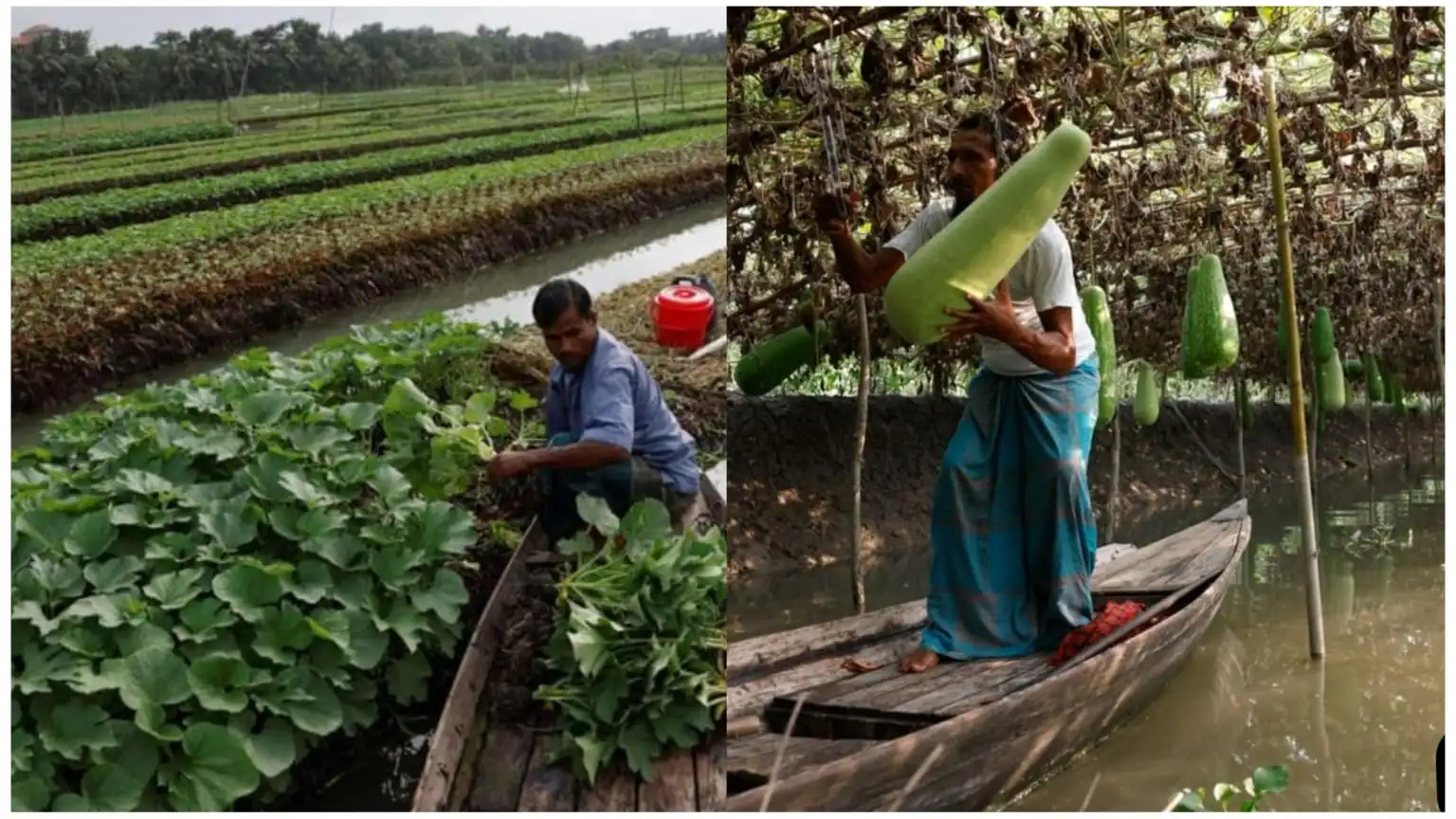
A buoyant raft is created using thick plant matter. In southern Bangladesh these are known as Baira or ‘dhap’. The farmers layer water hyacinth (a quick spreading weed) and bind them together using bamboo sticks. Over a few weeks the plants will begin to break down and create a soft rich compost.
The seeds or seedlings can then be planted directly into the bed. As no dirt is required this is a type of hydroponic farming. The raised bed will move up and down with the water level keeping the roots damp but not flooded.
Floating gardens around the world
This tradition is thought to be between 300-400 years old and is most popular in Gopalganj, Barishal and Pirojpur. The farmers will grow leafy vegetables, gourds and spices to eat as a family and sell locally.
However, Bangladesh is not the only country to use this technique. Other countries include the chinampas of Mexico, the kaing of Myanmar and the radh of Kashmir. Each community will have their own names and styles but all follow the same principle of using the water.
Floating gardens today
Many areas are experiencing longer periods of flooding. Having fields flooded for months means nothing can be grown. However, using a floating garden means farmers can continue to earn an income. In 2015 the FAO recognised the Bangladeshi system as a Globally Important Agricultural Heritage System. This means it is a traditional agricultural practice which has long term importance.
It is also a cost effective and eco-friendly method. Everything is taken from the local area and minimal/ no chemical fertilisers are used. Many women are involved in this work giving many households a reliable additional income.
Limitations and future
Floating gardens work best in still or slow moving water. Farmers also need training and a consistent supply of plant matter. Since the 1990’s charities such as Practical Action and BRAC have helped support farmers. Due to it being recognised globally this has helped spread the idea. With increasing flooding this ancient local knowledge may provide valuable lessons on a much larger scale.