
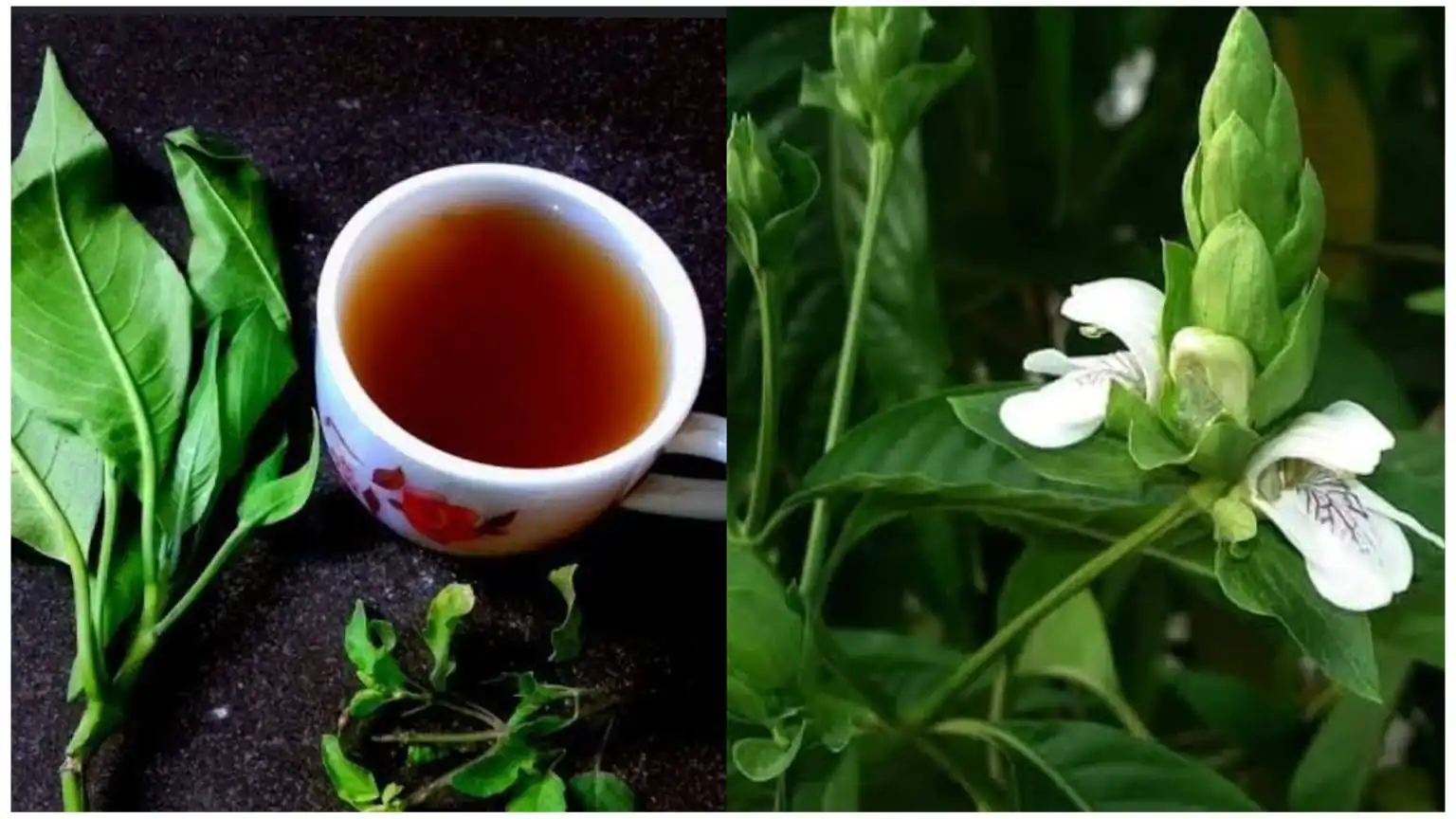
When the season changes, a stubborn cough and a sore throat often follow. Many Bengali households reach for basok pata, the leaf of Adhatoda vasica, also called Justicia adhatoda or vasaka. Paired with tal misri, or palm candy, it makes a simple tea that families have used for generations.
Why Basok Pata?
Basok has a long place in Ayurveda, where it is used mainly for coughs, bronchitis and asthma. Its leaves contain alkaloids called vasicine and vasicinone, which are linked to its effect on the airways and on loosening mucus. This is why it appears in many traditional cough remedies.
What You Need
Take five or six fresh basok leaves, one cup of water and a small piece of tal misri, about a teaspoon when crushed. You can add a pinch of black pepper for better absorption.
How to Make Basok Tea
Wash the leaves well and boil them in the water for five to seven minutes. Strain the liquid into a cup and add the crushed tal misri. Stir until it dissolves and sip it warm. The tea is naturally bitter, and the mild sweetness of tal misri helps balance the taste.
What Does the Evidence Say?
Reports describe some clinical studies, including trials on chronic bronchitis, but they are small, and some sources note that most evidence still rests on traditional use and lab research. Tal misri is a traditional soothing sweetener, and I did not find clinical studies on it. So the tea may bring comfort, but it is not a proven cure.
Who Should Avoid Basok
Pregnant and breastfeeding women should avoid basok, because vasicine may stimulate the uterus. People with low blood pressure should be careful. Large amounts may cause nausea, vomiting or diarrhoea. Check with a doctor before giving it to children or if you take asthma medicines.