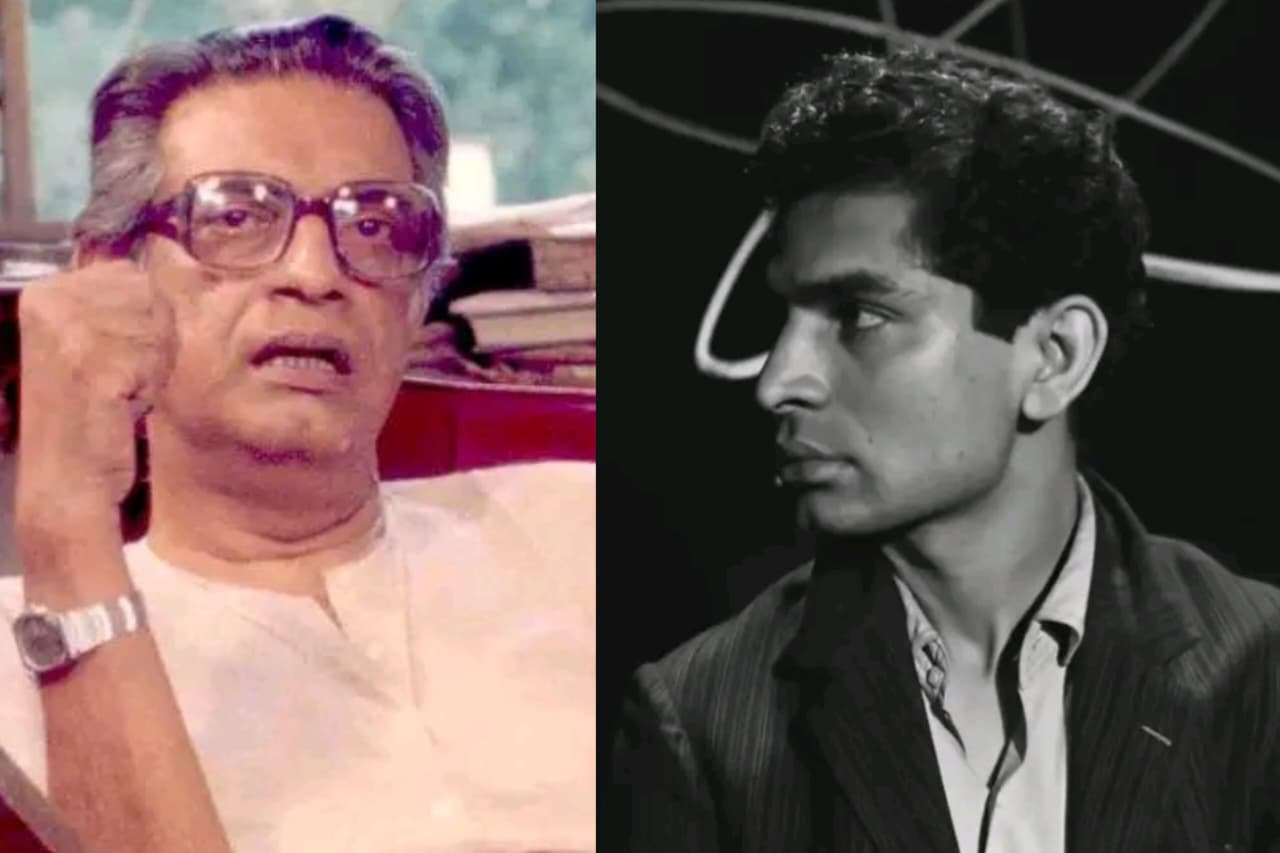
The partition of Bengal is one of the great historical tragedies, and the suffering of future generations included dislocation from the motherland and being forced to recreate one’s identity. Satyajit Ray and Ritwik Ghatak were the two preeminent filmmakers documenting the fractured, displaced Bengal.
While Ray documented the brutality, disorder, and violence of Bengal with a compassionate, tender, self-aware lens, Ghatak was more aggressive, explosive, and confrontational in his approach. Nonetheless, both portrayed the same universal truth about partition, which is more than just a political act; rather, it is a wound that has never healed.
How Did They Depict the Event in Film?
The way Ray portrayed the chaos and violence of Bengal through the lens of metaphor illustrates his artistic style. In films such as “Ashani Sanket”, “Pratidwandi”, and the “Calcutta Trilogy”, there is a constant echo of the psychological and social turmoil that resulted from the scarcity of resources, civil unrest, youth and hope lost, and an inability to create a sense of community.
On the other hand, Ghatak did not shy away from the raw consequences of partition and its aftermath and took a much more direct route in the depiction of it. The films “Meghe Dhaka Tara”, “Komal Gandhaar”, and “Subarnarekha” contain haunting images of families being separated, refugee settlers, and the continuing movement to find a place to call home.
Ray and Ghatak have created a visually, emotionally, and historically accurate record of a divided, grieving nation that continues to exist today.
The Silent Historian of Bengal’s Social Upheaval – Ray and Humanism Over Outcry
Though Ray treated the issue of Partition indirectly, it is nonetheless an important theme that appears throughout his films. Ray’s focus included shattered families, increasing urban unemployment, post-war poverty, and a struggling society attempting to re-imagine itself.
In both Pratidwandi and Calcutta 71, the youthful characters express feelings of frustration that mirror the chaos caused by both migration and political instability.
Ray’s films provide us with an understanding of the emotional landscape created by trauma that does not always manifest itself in loud noises; it can also be felt through whispers. The loss of a home, the dread of losing one’s dignity, and the sense of hopelessness associated with survival are expressed in Ghatak’s works loudly and powerfully, while Ray does so in a more subdued manner.
The Revolutionary Voice of Ghatak – The Personal Pain of Partition
Unlike Ray, Ghatak was not afraid to confront the tragedy of Partition head-on. As a refugee himself, Ghatak’s films express the pain and longing of a refugee with great intensity and passion. The character of Neeta in Meghe Dhaka Tara embodies the pain and suffering experienced by millions of refugees, and in Subarnarekha, he linked the refugee issue to the issues of poverty, caste, and the cycle of helplessness that accompanies the refugee experience.
Both directors utilized a variety of innovative techniques, including broken sound design, ethnic music, and a great deal of emotional intensity to illustrate the destruction of Bengal’s cultural rapport between individuals and groups. In many of Ghatak’s shots, we feel as though we are witnessing memories that have suddenly burst into being at this point in time.
Ray and Ghatak Convergence
Both directors had similar objectives for their work, even though they used different aesthetics. Ray and Ghatak each wanted to remember the lost Bengal, document the lost lives resulting from political decisions, and provide a platform to those who lost everything.
Their films are crucial for understanding the historical and psychological impact of the Partition on India.
Why Ray and Ghatak Matter Today
Today, we see an increase in migrations of people, disputes over borders and identities, etc. Due to current affairs, Ray and Ghatak’s films are very relevant to the world today. Ray and Ghatak show us that displacement is not just a physical act. It is also mental, social and generational.
The films tell a story of a fractured Bengal but also of resilience, strength and a willingness to create new narratives out of old stories.
Read Also: Growing Pains for T20: Unresolved Issues Continue to Limit the BPL