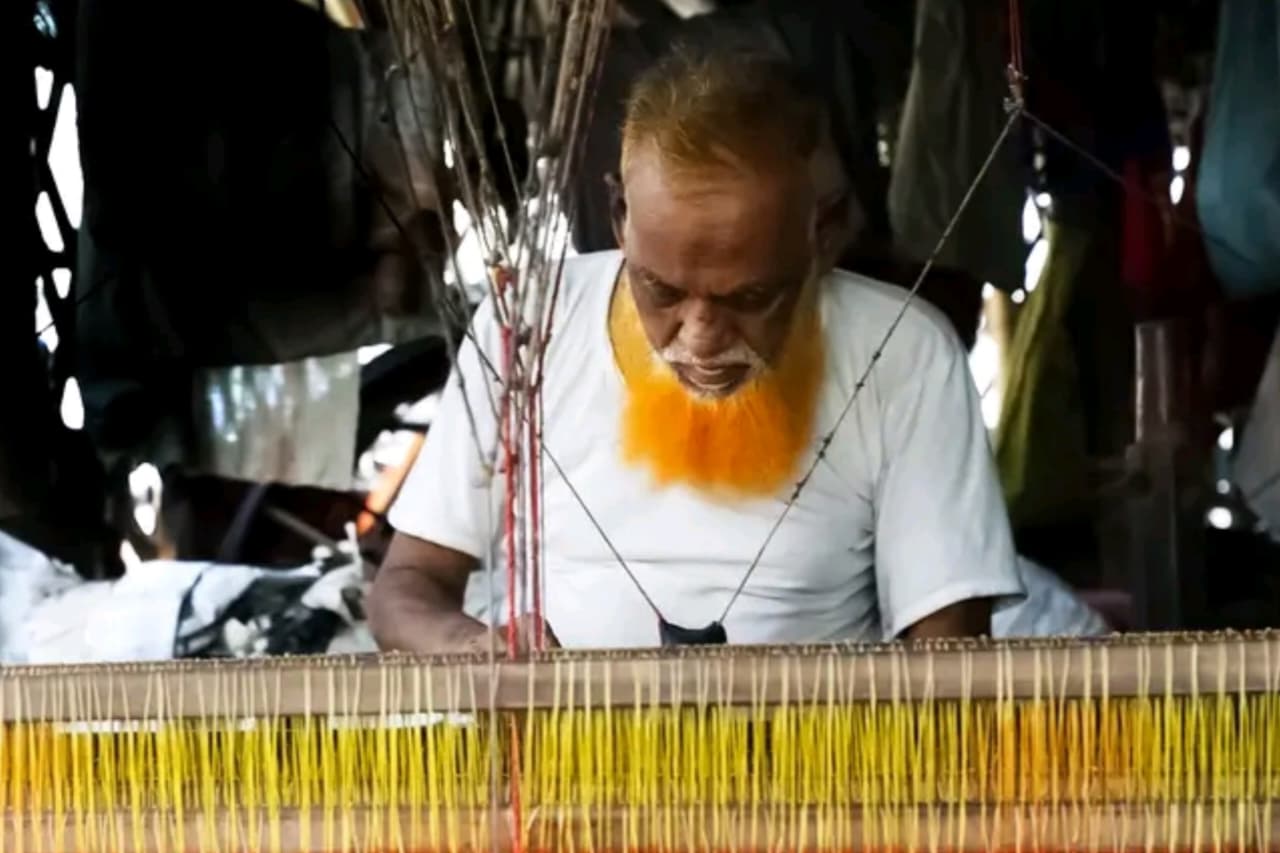
The handloom textile tradition of Bangladesh is one of South Asia’s oldest and most culturally rich textile traditions, which has also seen a great deal of economic success, exploitation, decline, and rebirth over the centuries. Its progress from the Mughal to Colonial to Post-Independence eras tells of the changing nature of both the economic and the cultural aspects of the area to which it pertains.
Mughal Era: The Golden Age of Handloom Weaving
During the Mughal period (16th–18th centuries), Bengal rose to prominence on the global textile market as Bengal was the primary location for the production of Muslin, a fine fabric so light and delicate that it was referred to as “woven air.” Dhaka, Sonargaon, and Pabna were the three cities of Bengal responsible for producing muslin, silk, and jamdani textiles, which eventually found their way to Europe, Persia, and the Middle East. Craftsmanship was encouraged and supported by royal patronage, enabling skilled weavers to develop the techniques passed down through the generations and allowing specialised families to refine their particular type of weaving over extended periods. Weaving of jamdani was considered a luxury textile of choice for the elite since it represented the height of artistry, skill, and creativity in producing textiles of a quality no other manufacturing region could equal.
Colonial Period: Decline of the Handloom Industry due to British Rule
The British East India Company caused Bengal’s handloom industry to decline when it brought machine-made goods from England to Bengal, creating a market where machine-made goods were cheaper than handmade goods. Additionally, heavy taxes were imposed on local weavers, and they were required to grow the raw materials that would be used to produce the textiles, disrupting traditional ways of life. A number of reports from the 18th and 19th Centuries document that many weavers left their work because of poverty and exploitation. Many of the weaving families that had been engaged in producing Muslin during the period of British rule turned to agriculture and low-wage jobs because the Muslim markets had collapsed. Today, this period has been called the most dark and devastating period for the development of Bangladesh’s handloom heritage.
The Revival of Handloom Crafts and Identity After Bangladesh’s Independence in 1971
After the independence of Bangladesh, many organisations, NGOs, and cooperatives started working to revive the different types of handloom craftwork that existed prior to 1971. These organisations work directly with artisans to provide them with the resources, training, and market access needed to further their craft. In particular, the craft of Jamdani weaving has received a great deal of attention, and in 2013, UNESCO recognised the art form as an Intangible Cultural Heritage. Today, the regions of Tangail, Rangpur, and Narshingdi continue to produce outstanding handloom products (Saris, Gamchas, and Nakshi Kantha). Modern-day designers are combining both traditional and contemporary design elements, leading to increased demand, both locally and globally. Even though rising production costs and increased competition from power looms have presented many challenges to the handloom industry, the industry represents resilience and cultural identity and continues to serve millions of rural artisans, many of whom are women.
FAQs
1. What makes Bangladeshi handloom textiles unique?
Their intricate designs, fine weaving techniques, and centuries-old cultural heritage make them globally admired.
2. Why did the handloom industry decline during colonial rule?
Machine-made British textiles, heavy taxes, and unfair trade practices pushed local weavers into poverty.
3. What is the most famous traditional textile of Bangladesh?
Jamdani and the historic Muslim are considered the country’s most iconic fabrics.
4. Is the handloom industry still important today?
Yes. It remains a major source of rural employment and cultural preservation in Bangladesh.
Read Also: Bangladesh Secures ‘Intangible Cultural Heritage’ Tag for Tangail Saree at UNESCO Meet