
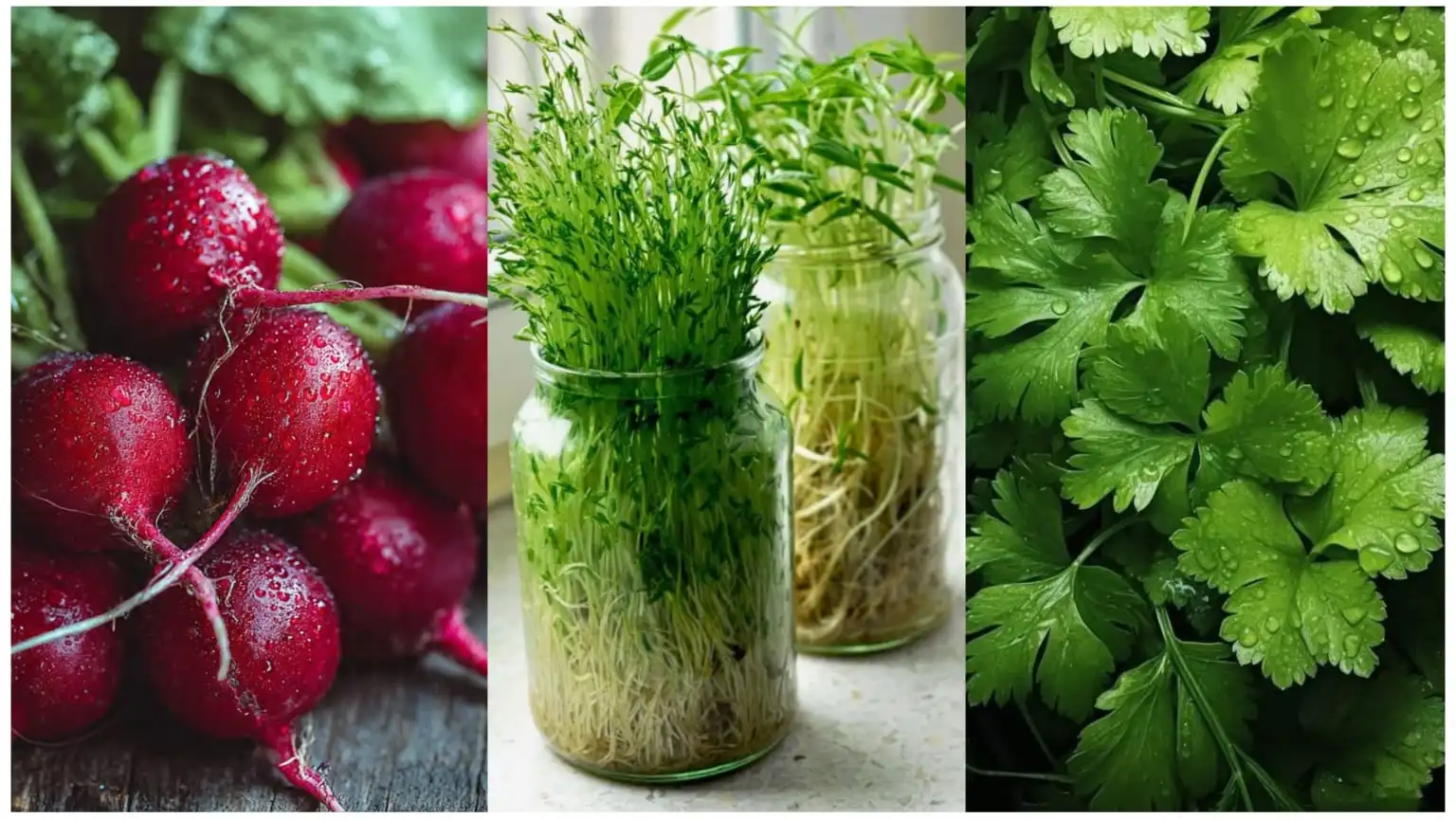
There is something special about stepping out to a balcony or rooftop, snipping a handful of tender palak or methi and having it in the pan within minutes. No plastic bags, no wilted market bundles, no wondering how many days old the leaves are. Just fresh, fragrant shaak that tastes as it should.
The best time to start is winter. In Bengal, most leafy greens grow fastest in the cool, mild season. All you need is a few pots, a bucket or an old crate near a sunny window. Palak, methi, lal note, mulo shaak and dhone pata are ready to harvest in just three to six weeks. Pui and kolmi are slower starters and will reward your patience as the weather warms.
If you are yearning for a simple shaak bhaja with rice, methi dal or chochchori, you can grow the greens for it yourself. Here are seven Bengali shaak to try at home, with simple steps to get each one growing.
1. Spinach (Palak)
How: This is every gardener’s winter must. Plant seeds ½ inch deep in a pot at least 8 inches deep. Keep soil evenly moist. After 4 to 6 weeks, pick the outer leaves and leave the center to continue growing.
Light: 4-6 hours of sun.
2. Methi (Fenugreek) Leaves
How: Soak the seeds overnight. Scatter them thickly in a shallow pot. Cut stems at the base and harvest in 3 to 4 weeks.
Tip: Snip once for tender leaves or allow some to grow back for a second harvest. Methi paratha and aloo methi are good.
3. Pui Shaak (Malabar Spinach)
How: From stem cuttings or seeds (soak seeds overnight first). It’s a climbing vine so provide it with a stick or railing. Pick leaves and tender tips often.
It likes warmth and humidity so grows slower in the cooler weeks. Put it in the sunniest place and it will warm up and take off again.
4. Lal Note (Amaranth Red)
How: Sow the tiny seeds mixed with a little sand or dry soil so they are evenly spaced. Barely cover them and keep soil moist. Thin seedlings to eat, or harvest whole young plants in 3-4 weeks.
Light: Full Sun It is hardy and fast and it gives the lovely red color to curries.
5. Mulo Shaak (Radish Leaves)
How: Beginner-friendly and a must-have. Plant radish seeds in a container at least 6 deep, ½ inch deep. In 2-3 weeks you will have the tender greens and in 4-5 weeks the radishes.
Tip: Harvest some greens early, but leave enough on each plant for the root to form.
6. Dhone Pata (Coriander Leaves)
How: A bit hard to germinate. Lightly crush seeds before sowing. Sow directly in the pot as coriander does not like transplanting. Harvest in 3-4 weeks.
Tip: Sow thick, cut often and re-sow every 2 weeks for a steady supply.
7. Kolmi Shaak (Water Spinach)
How: Root a cutting of a stem in water then pot it in a wide pot or bucket. Keep the soil constantly wet, even soggy, the opposite of most other greens. Snip the tips often to promote branching.
Like pui shaak it likes the heat so winter growth will be slow. Keep in full sun, protected from cold breezes.
Quick Tips
- Fast winter crops: methi, palak, lal note, mulo and dhoné pata. Try these.
- Winter: Pui and kolmi slower. Consider them long-term pots that will start to pick up as the weather warms.
- Apart from kolmi, which enjoys constant moisture, all need drainage holes.
- Use loose, rich compost soil and feed lightly every 2-3 weeks.
- Plants continue to produce when harvested regularly.
Discover Gardening, Flower Bulbs and Rooftop Gardens in Bangladesh With Bangla Pulse
1. Which plants are suitable for gardening during the Rabi season in Bangladesh?
The Rabi season is suitable for growing many winter vegetables, herbs and flowering plants. Gardeners can choose crops and flowers according to local temperatures, sunlight and available space. Read our guide to Rabi season gardening in Bangladesh.
2. Can Dutch tulip and lilium bulbs help farmers earn more during winter in Bangladesh?
Dutch tulip and lilium bulbs offer opportunities for specialised flower cultivation and premium winter flower production. However, profitability depends on bulb costs, suitable growing conditions, temperature management and market demand. Learn more about Dutch lilium and tulip bulbs and their potential to boost winter agricultural profits in Bangladesh.
3. How can beginners create a rooftop flower garden in Bangladesh?
Beginners can start with suitable pots, well-draining soil, adequate sunlight and flowers adapted to local conditions. Regular watering, proper drainage and seasonal plant selection help maintain a healthy rooftop garden. Explore our guide to creating a rooftop flower garden.
4. How can gardeners grow healthy roses during winter?
Healthy roses need sufficient sunlight, well-draining soil, appropriate watering and regular monitoring for pests and diseases. Seasonal pruning and balanced fertilisation can also support healthy growth and flowering. Find practical advice in our rose gardening guide with care tips for healthy blooms.
5. What are the benefits of winter gardening in Bangladesh?
Winter gardening allows people to grow seasonal vegetables, herbs and flowers in home gardens, balconies and rooftops. It can also encourage household food production, improve green spaces and create opportunities for small-scale flower cultivation. Discover more about Rabi season gardening in Bangladesh