
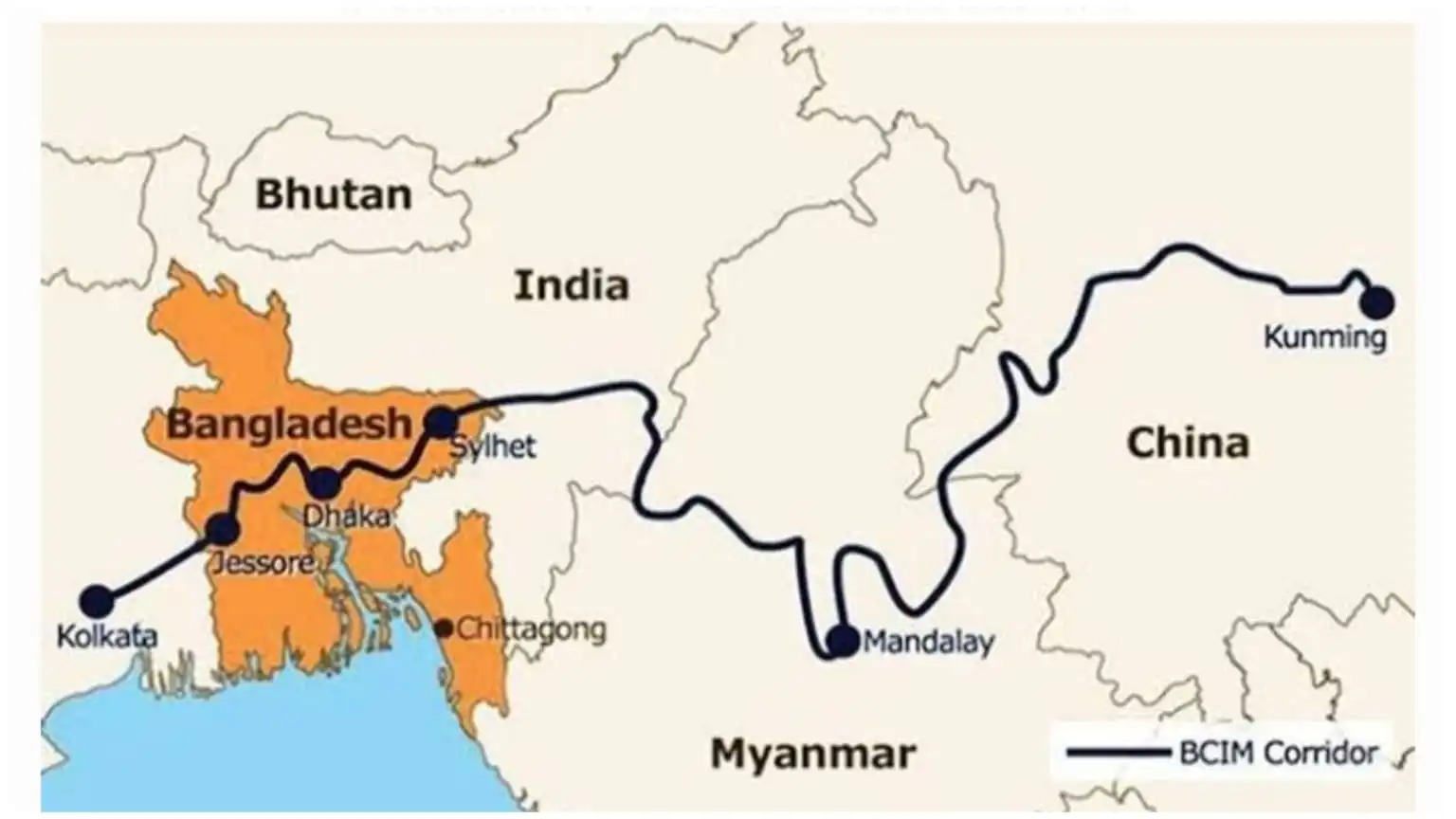
A road, rail and port link connecting Bangladesh, China, India and Myanmar remained mostly a dream for more than two decades. Beijing offered a thinner version in June 2026. The question now is whether it can become real.
From BCIM to three-nation plan
The idea of a Bangladesh-China-India-Myanmar (BCIM) corridor was floated in 1999 but was held up when India opposed China’s Belt and Road Initiative. On 26 June in Beijing, President Xi Jinping offered Prime Minister Tarique Rahman a China-Myanmar-Bangladesh corridor. This time India is not part of the arrangement, but analysts say Beijing is keeping the door open for India to come in later.
What the Route Will Be Like
The preliminary plan is for a land network that goes from Kunming via Ruili, Muse and Mandalay to Kyaukphyu in Rakhine State. The link from Kyaukphyu to Bangladesh would be predominantly maritime, but other reports refer to roads and railroads to Chattogram and Cox’s Bazar. The corridor would also give China overland access to the ports of Chattogram and Mongla.
Why Dhaka Cares
Supporters say the corridor could open up western China, improve relations with Southeast Asia and cut transport costs. Bangladesh welcomes the idea and views it as an opportunity for stability in Rakhine that may open the way for repatriation of Rohingya, State Minister for Foreign Affairs Humaiun Kobir said. Any overland route will depend on peace returning to Rakhine, he added.
The Rakhine Problem
Security is the biggest challenge. The Arakan Army controls about 14 of Rakhine’s 17 townships and its fighters have reportedly closed in on key junta positions around Kyaukphyu. The progress on the Mandalay-Kyaukphyu railroad has been slow going. As one analysis noted, “You can’t draw a route on a map and build a corridor.
India’s Shadow on the Corridor India is watching intently The route would run near its sensitive northeastern states and a corridor linked to the Belt and Road has long been a concern for Delhi. Dhaka will have to walk a tightrope in its ties with both neighbors.
What’s coming next
The most likely path is a gradual, phased one. Three things to watch out for. One, peace or a stable understanding in Rakhine. Two, funding and feasibility studies for specific projects. Three, how India responds. Some experts also point out that China already has the port and pipelines at Kyaukphyu and does not need Bangladesh for a presence in the bay, giving Dhaka some leverage in any bargain.
Bangladesh has real opportunities from the corridor but each is contingent on factors outside Dhaka’s control. This is a plan to follow until Rakhine settles down, not a project to count on.
Discover Rajshahi Durga Puja, Silk Sarees and Tourism
1. How much rice was allocated to Durga Puja mandaps in Rajshahi?
Rajshahi received rice allocation for 489 Durga Puja mandaps.
2. Why is Rajshahi famous for silk sarees?
3. Where can visitors buy authentic Rajshahi silk sarees online?
4. What are the main attractions to explore in Rajshahi?
5. Why should tourists visit Rajshahi during Durga Puja?