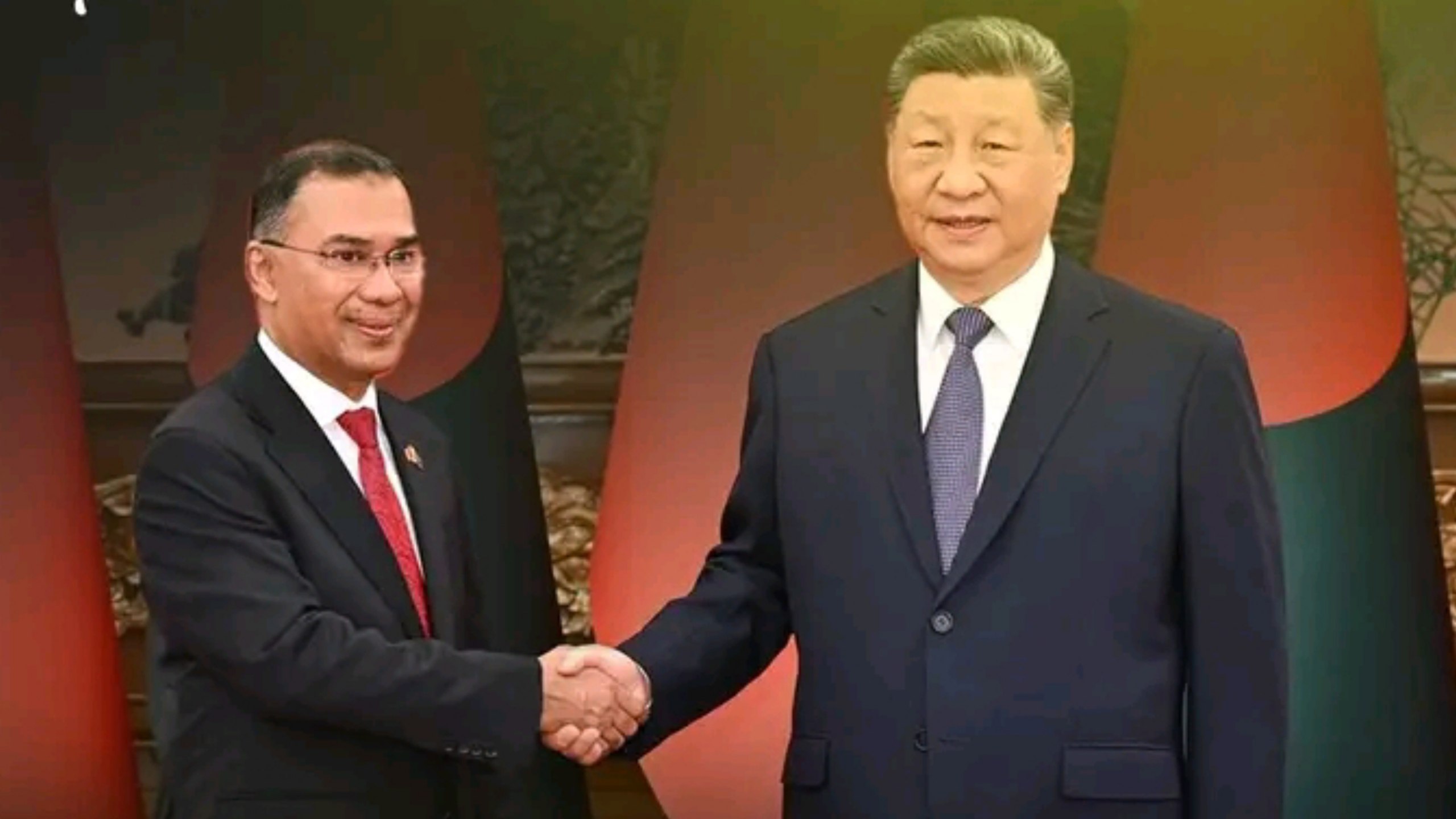
China has revived one of the most ambitious regional connectivity ideas in South Asia, a land corridor linking its landlocked southwest to the Bay of Bengal through Myanmar and into Bangladesh. The proposal resurfaced during Prime Minister Tarique Rahman’s four-day visit to Beijing in June 2026, when President Xi Jinping raised the idea directly with him at the Great Hall of the People. Here is a breakdown of what the corridor would involve, what is being invested, and why its future remains far from certain.
What Is the China-Bangladesh-Myanmar Corridor
The China-Myanmar-Bangladesh Economic Corridor, sometimes referred to as the CMBC, is envisioned as a multidimensional connectivity network built on top of the existing China-Myanmar Economic Corridor. It would extend that roughly 1,700-kilometre route, which already runs from Kunming in Yunnan Province to Myanmar’s coast, further west into Bangladesh, giving China direct overland access to the ports of Chittagong and Mongla. The idea itself is not new. It traces back to a 1999 connectivity forum involving Bangladesh, China, India, and Myanmar, which stalled after India pulled back over strategic concerns tied to the Belt and Road Initiative and worsening relations with Beijing. The current proposal effectively revives that older vision, minus India.
The Proposed Route
The corridor’s backbone would run from Kunming through Myanmar via the Muse-Mandalay railway, a planned 431-kilometre line, and onward toward the Kyaukphyu deep-sea port on Myanmar’s Rakhine coast. From there, connectivity would extend overland into Bangladesh, feeding into upgraded port and industrial infrastructure at Chittagong and Mongla. On the Bangladesh side, this would tie into projects like the newly approved Chinese Economic and Industrial Zone in Anwara, near Chattogram, positioning Bangladesh as the coastal terminus of the network rather than merely a transit point. No official total distance or finalised alignment for the full corridor has been published, and much of the Myanmar section remains at the planning or partially built stage rather than under active construction.
Investment on the Table
The most tangible piece of the corridor so far is the Kyaukphyu deep-sea port, developed through a joint venture between China’s CITIC Group and the Myanmar government. Negotiations date back to 2009, with an international tender awarded in 2015 at an original value of 7.3 billion US dollars. Myanmar’s then-civilian government renegotiated the terms in 2018, scaling the project down to roughly 1.3 billion US dollars over debt sustainability concerns. Construction has made limited visible progress since, despite the junta signalling renewed momentum around the recent Beijing talks.
The rail link is an even larger financial commitment on paper, with the Muse-Mandalay railway estimated to cost close to 9 billion US dollars. A feasibility study was completed in 2019, and Myanmar’s Financial Analysis Committee sought a soft loan from China in 2024 to help fund it, though no financing agreement has been made public. Junta officials have claimed construction began, a claim independent observers have disputed given that parts of the proposed route pass through territory controlled by armed groups opposed to the military government.
Beyond the corridor itself, China and Bangladesh signed a broader set of agreements during the June visit, including cooperation on Teesta River management, flood mitigation, dredging, and irrigation, along with commitments spanning trade, healthcare, and people-to-people exchange. These bilateral projects do not depend on Myanmar and can move forward independently of the corridor’s fate.
The Central Risk: Myanmar’s Conflict
The corridor’s biggest obstacle is the security situation inside Myanmar, particularly in Rakhine State, through which the route would have to pass. The Arakan Army, an ethnic armed organisation, now controls a significant majority of Rakhine’s townships, while the military junta formally retains only a handful, including Kyaukphyu itself, the state capital Sittwe, and the island of Manaung. Even those junta-held areas are far from secure. Reports indicate Arakan Army forces have been fighting within roughly two kilometres of key naval infrastructure near Kyaukphyu, making the area contested rather than stable.
That instability has already disrupted Chinese investment on the ground. A 140-million-dollar China-backed power plant at Kyaukphyu was progressively dismantled and relocated starting in late 2024 as fighting drew closer, after having already been suspended over unpaid electricity bills and gas supply shortfalls. Nationally, independent assessments estimate the junta controls only about one-fifth of Myanmar’s territory, with resistance forces and ethnic armies holding a much larger share and the rest contested. A Chinese-brokered ceasefire with one armed group in early 2025 has not produced a broader political settlement, and the Arakan Army was not a party to it.
Why Bangladesh Is Moving Cautiously
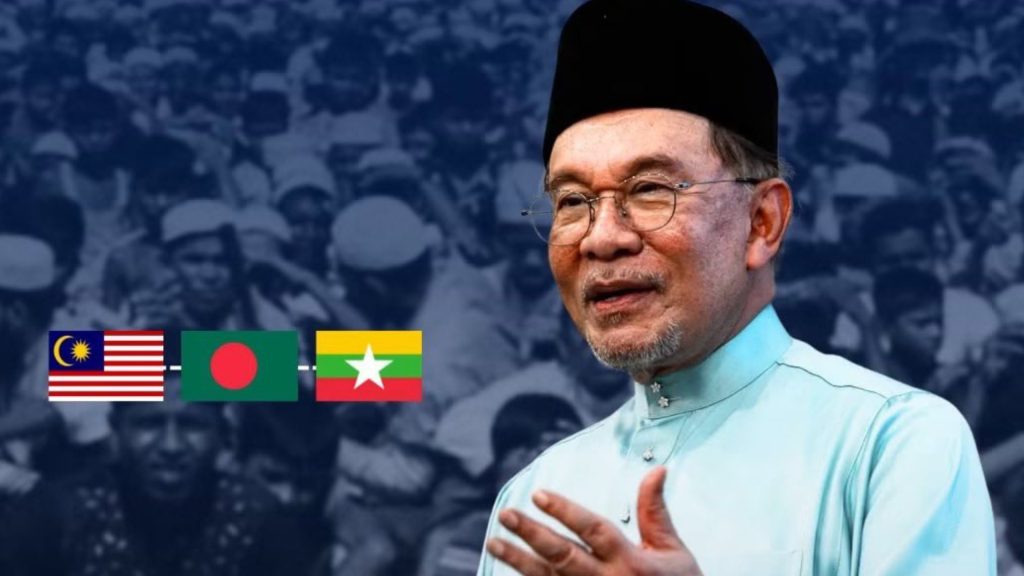
Bangladesh’s government has stopped short of endorsing the proposal. Foreign Minister Khalilur Rahman said in late June that Bangladesh was still examining the corridor and had taken no formal position, adding that any overland connectivity through Myanmar would remain conditional on restored peace in Rakhine State. That caution is closely tied to the Rohingya crisis. Dhaka has consistently linked regional connectivity discussions to the safe and voluntary return of the roughly 1.2 million Rohingya refugees currently in Bangladesh, a population that has kept growing as renewed fighting in Rakhine displaces more people. Rights groups have also reported abuses against Rohingya communities by the Arakan Army itself, complicating any assumption that Arakan Army control of the region might ease repatriation.
Discover More Stories Worth Your Time
Explore What Follows Shahabuddin’s Exit?
Discover how Bangladesh’s leadership could change after the president’s departure.
Check Why Assault Case Filed?
Explore the allegations involving actress Snigdha Chowdhury and the Ashiyan chairman.
See How Microplastics Spread?
Discover why Bangladesh’s rivers, salt pans, and fish markets are raising concern.
Find Why Wetlands Face Threat?
Explore how invasive turtles are disrupting biodiversity in Dhaka’s waterways.
Learn Why Army Took Custody?
Discover the latest developments in the Brig Gen Miftah Uddin tribunal case.
The Likely Timeline
Taken together, these constraints point to a corridor that is more aspiration than near-term infrastructure. Even under favourable assumptions, the Muse-Mandalay railway alone would likely take close to a decade to complete once construction genuinely begins, and the Kyaukphyu port would need several additional years to reach full capacity. Most independent analysis treats a fully integrated corridor as a project more realistically suited to the 2040s than the current decade. In the meantime, Bangladesh’s more immediate connectivity gains are likely to come from projects already under way, including the World Bank-backed expansion of Chittagong’s Bay Terminal and the Japanese-financed Matarbari deep-sea port, both of which do not depend on developments inside Myanmar.
Summary: During Prime Minister Tarique Rahman’s June 2026 visit to Beijing, China proposed the China-Myanmar-Bangladesh Economic Corridor, a transport network linking Yunnan Province to Chittagong and Mongla through Myanmar. Bangladesh has said it is reviewing the proposal without committing to it, since much of the route runs through Rakhine State, where fighting between Myanmar’s military and the Arakan Army has stalled Chinese-backed projects for years.