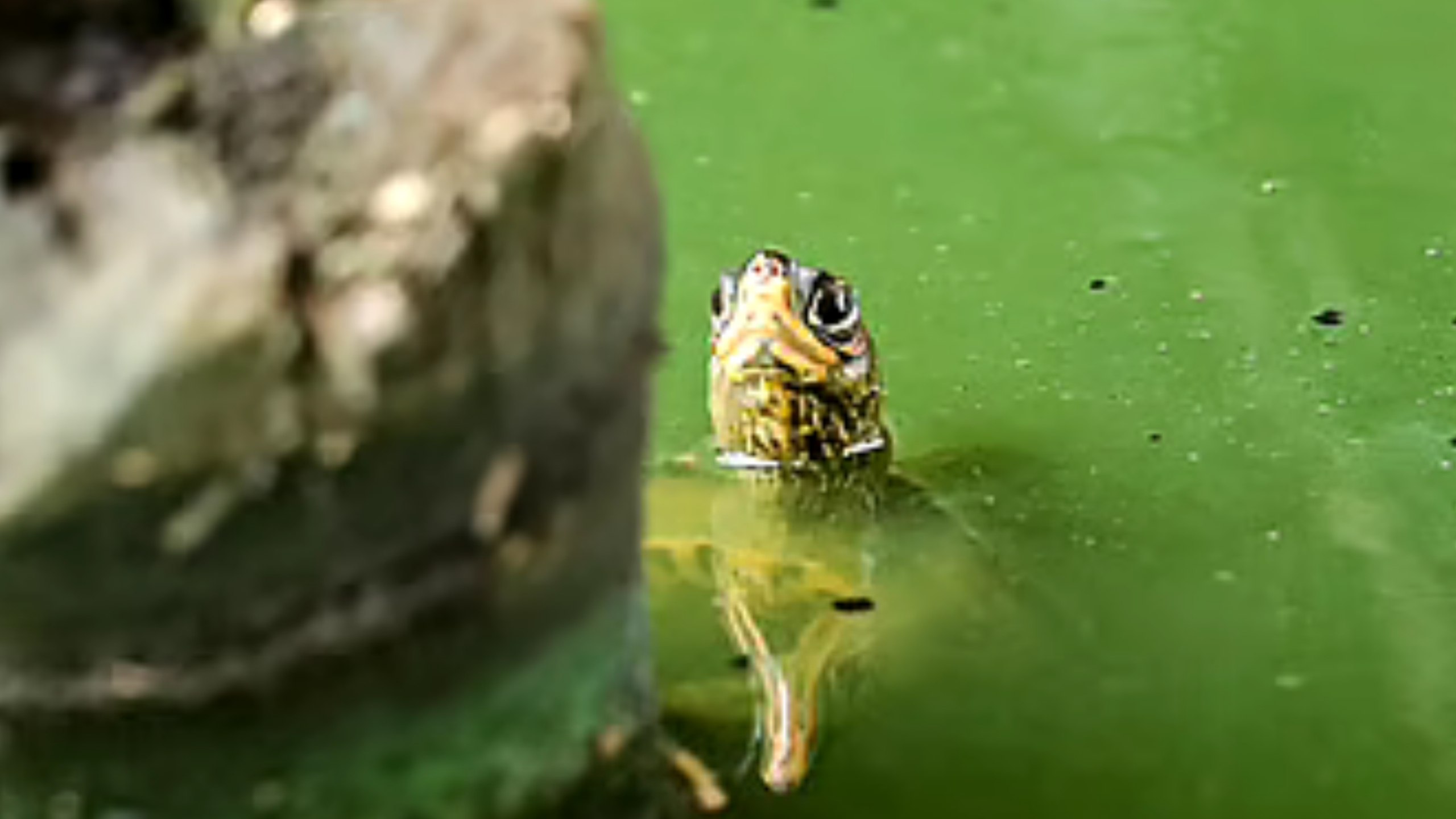
Dhaka’s Hatirjheel, the city’s biggest freshwater retention basin and a popular recreation area since it opened in 2013, is now facing a new ecological challenge. But the presence of red-eared slider turtles (Trachemys scripta elegans) breeding in the lake, wildlife observers and environmental groups say, could have lasting effects on Bangladesh’s native aquatic life.
The red-eared slider is native to the Mississippi River basin in the United States and has become one of the most popular pet turtles traded in the world. It is a popular low-cost pet, often sold to children with brightly painted shells, which has helped it to spread throughout Asia, Europe and beyond. Adult sliders are fast-growing and become too much for owners to care for, and many release the animals into nearby ponds, canals and lakes, including urban water bodies such as Hatirjheel.
Why This Species Is So Disruptive
Unlike native turtles, red-eared sliders reproduce quickly, tolerate polluted or degraded water, and grow aggressively, up to 30 centimetres in shell length. Their characteristics enable them to monopolise feeding areas and basking sites used by native turtles. Bangladesh wildlife officials have previously warned that the species poses a serious threat to local biodiversity as it competes directly with native turtles for food and habitat.
Bangladesh has a number of native freshwater turtle species, many of which are already under pressure from habitat loss, pollution and illegal wildlife trade. Extra competition from an aggressive, fast-breeding invader could accelerate declines in already vulnerable populations.
A Stressed Lake Already
Originally, Hatirjheel was designed to prevent flooding and traffic congestion in Dhaka by serving as a rainwater retention pond. But the lake has struggled to serve that purpose because of poor sewage infrastructure, resulting in chronic water pollution from sewage runoff.
A breeding population of invasive turtles places yet more ecological stress on an already contaminated and encroached water body.
Environmental groups say it’s much harder to contain an invasive species once it establishes a breeding population in an urban lake that’s part of a wider network of canals and waterways. But as Hatirjheel is situated in the larger drainage system of Dhaka, there is a possibility that the sliders may spread beyond the lake if it is left unchecked.
Public Involvement and Regulatory Response
The Bangladesh Forest Department has previously taken action against the illegal import and sale of red-eared sliders, including a raid on a playground in Dhaka where turtles imported from China were being sold to children. Officials have called on pet vendors and the public to stop buying or owning invasive animals, and to report illegal sales.
Experts say raising public awareness is key to managing the issue. Many owners do not realize that red-eared sliders are banned from import in many countries because of the ecological impact they have once released into the wild. Turtles once released in water bodies like Hatirjheel are not easy to recapture, so preventing their release is much more effective than trying to remove them afterwards.
Discover More Stories Worth Your Time
Explore Why Sundarbans Disappear?
Discover how climate change is threatening Bangladesh’s world-famous mangrove forest.
Check How Farmers Benefit?
Explore what the new Farmer’s Card means for growers in Rangpur and Rajshahi.
See Why President May Resign?
Discover the latest political developments surrounding President Shahabuddin’s future.
Find Why Flood Alert Issued?
Explore how a massive monsoon cloud band could affect Bangladesh’s weather.
Learn Which Bangla Series Watch?
Discover three homegrown Bangla web series perfect for your next weekend binge.
Explore Why Beef Turned Green?
Discover what the Khulna incident reveals about meat safety and food handling.
Its Threat to Future Biodiversity of Bangladesh Swamp and Wetlands
The Forest Department, city authorities in charge of the lake and conservation organisations that monitor native turtle populations will have to join hands to tackle the presence of breeding red-eared sliders in Hatirjheel. Further monitoring will be needed to determine the extent of spread of the species and whether removal efforts are feasible.
For now, conservationists say the discovery serves as a reminder that invasive species introduced via the pet trade can quietly alter even a heavily managed urban ecosystem, with impacts that extend far beyond the lake where they first establish themselves.
Summary: Invasive red-eared slider turtles are breeding in Dhaka’s Hatirjheel lake, sparking concern among wildlife officials. The North American species outcompetes native turtles for food and habitat, threatening freshwater biodiversity and putting fresh pressure on an already polluted urban water body.