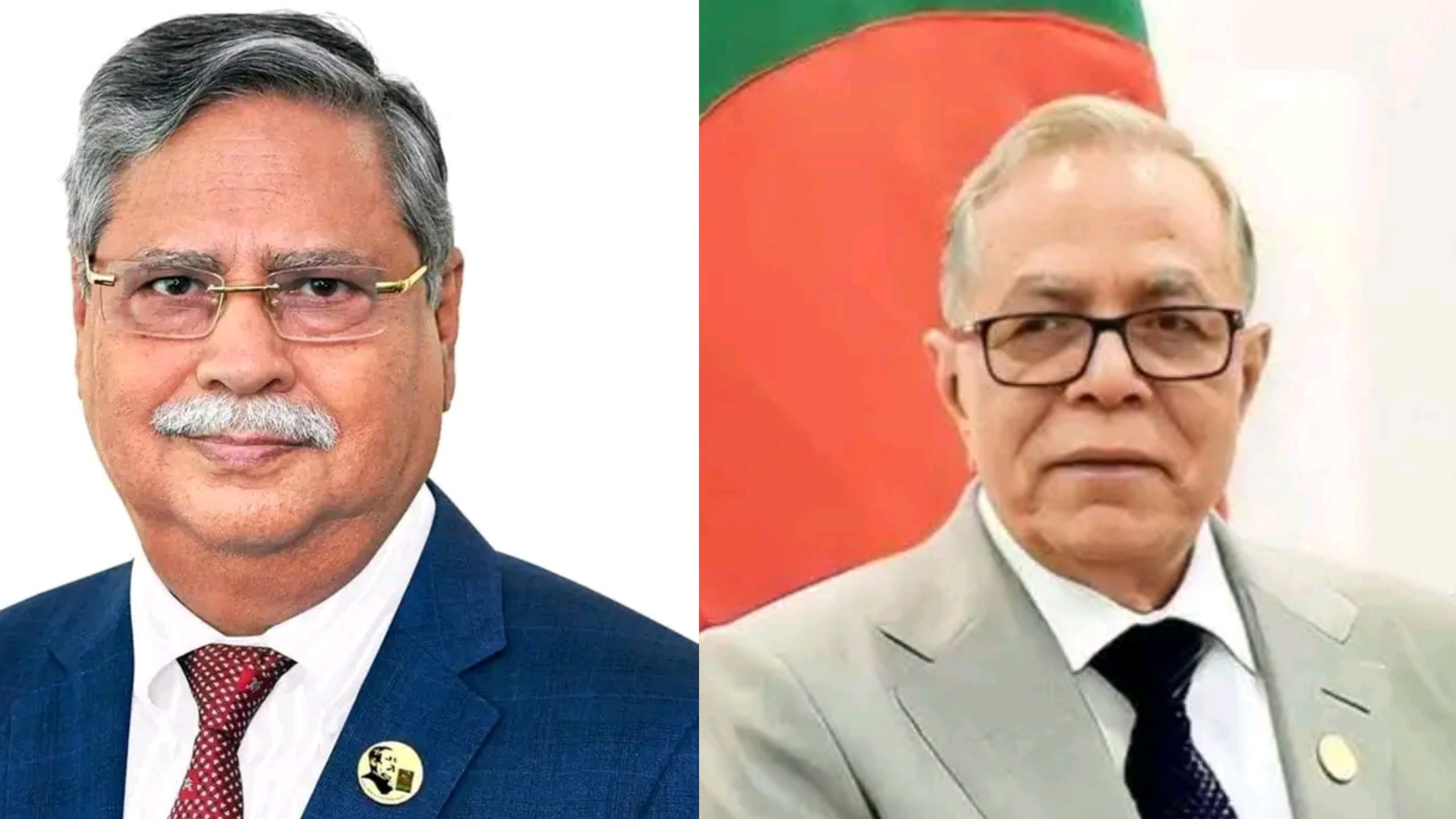
Bangladesh’s transitional justice process has widened to include two of the country’s former heads of state. On Sunday, two political and civic organisations separately lodged complaints against former presidents Abdul Hamid and Mohammed Shahabuddin with the prosecution wing of the International Crimes Tribunal (ICT), accusing them of crimes against humanity tied to their conduct in office.
Until now, the ICT’s prosecutions have mostly centred on Sheikh Hasina, her security chiefs, and senior law enforcement officials. These new complaints target the presidency itself — arguing that silence and inaction can amount to complicity.
What the Complaints Allege
The Bangladesh Azad Party’s complaint covers both Hamid and Shahabuddin jointly. It alleges that enforced disappearances, killings, and detentions at secret facilities known as Aynaghar took place during their tenures while both men stayed silent, effectively giving indirect support to the abuses. Party leaders argued that despite drawing salaries and benefits from public funds, neither president used his constitutional standing — including the ceremonial role of Supreme Commander of the Armed Forces — to intervene or object.
The Rashtra Sanglap Forum’s complaint is narrower, targeting Shahabuddin specifically. Central member secretary Al Noor Mohammad Ayas has asked the ICT to investigate Shahabuddin’s alleged role during the July uprising itself, including allegations tied to shootings, torture, killings, and enforced disappearances. The forum has also sought a separate inquiry into whether Shahabuddin bears legal responsibility connected to Bangladesh’s 2024 national election.
Separately, complaints were also filed against several actors and cultural figures over what complainants called “cultural fascism,” naming individuals including Ferdous Ahmed, Meher Afroz Shaon, Riaz Ahmed, Aruna Biswas, and others.
Where the Process Stands
ICT chief prosecutor Md Aminul Islam confirmed the filings but said he hadn’t yet reviewed either one. He noted that complaints are typically routed to the tribunal’s investigation agency for examination before any further decision is made. That’s an important distinction — a complaint is not an indictment, and it sits several steps behind the formal charges already issued against Hasina and a number of her former officials.
Testing a New Legal Question
Both Hamid and Shahabuddin held what is constitutionally a largely ceremonial office, with executive power resting with the prime minister under Bangladesh’s parliamentary system. That’s what makes these complaints distinct: they test whether a president’s inaction — rather than any direct order — can be treated as prosecutable.
Hamid served from 2013 to early 2023, spanning years when rights groups repeatedly raised concerns about disappearances and extrajudicial actions. Shahabuddin succeeded him and was in office through the July–August 2024 crackdown itself, which the UN says may have killed up to 1,400 people.
Discover More Stories Worth Your Time
Explore Why Sundarbans Disappear?
Discover how climate change is threatening Bangladesh’s world-famous mangrove forest.
Check How Farmers Benefit?
Explore what the new Farmer’s Card means for growers in Rangpur and Rajshahi.
See Why President May Resign?
Discover the latest political developments surrounding President Shahabuddin’s future.
Find Why Flood Alert Issued?
Explore how a massive monsoon cloud band could affect Bangladesh’s weather.
Learn Which Bangla Series Watch?
Discover three homegrown Bangla web series perfect for your next weekend binge.
Explore Why Beef Turned Green?
Discover what the Khulna incident reveals about meat safety and food handling.
Part of a Broader Reckoning
These filings arrive amid a fast-moving set of ICT proceedings tied to the Awami League’s fall. Hasina has been indicted on charges including abetment and failure to prevent mass murder, with her trial proceeding in absentia. Her former police chief has pleaded guilty and agreed to testify. Formal charges have also been filed against a larger group, including Hasina, over a separate crackdown at Shapla Chattar.
Together, the pattern points to a widening circle of accountability — from the officials who carried out the crackdown, to the political leadership that directed it, and now to whether ceremonial officeholders bear responsibility for what they didn’t do while it happened.
FAQ
What are Hamid and Shahabuddin accused of?
Crimes against humanity, for allegedly failing to act while enforced disappearances and killings took place during their presidencies.
Has the ICT filed formal charges?
No — the complaints have just been submitted and will likely go to the investigation agency first.
How does this connect to the Hasina case?
It’s a related but separate strand of Bangladesh’s broader ICT proceedings over the 2024 uprising, focused on presidential inaction rather than direct command.
Summary: Bangladesh’s International Crimes Tribunal has received two separate complaints against former presidents Abdul Hamid and Mohammed Shahabuddin, accusing them of crimes against humanity for allegedly staying silent while enforced disappearances and extrajudicial killings took place under the Awami League government. The complaints, filed by the Bangladesh Azad Party and the Rashtra Sanglap Forum, argue both men failed to use their constitutional powers to intervene. The chief prosecutor says the complaints will now go to investigators, with no charges filed yet.