
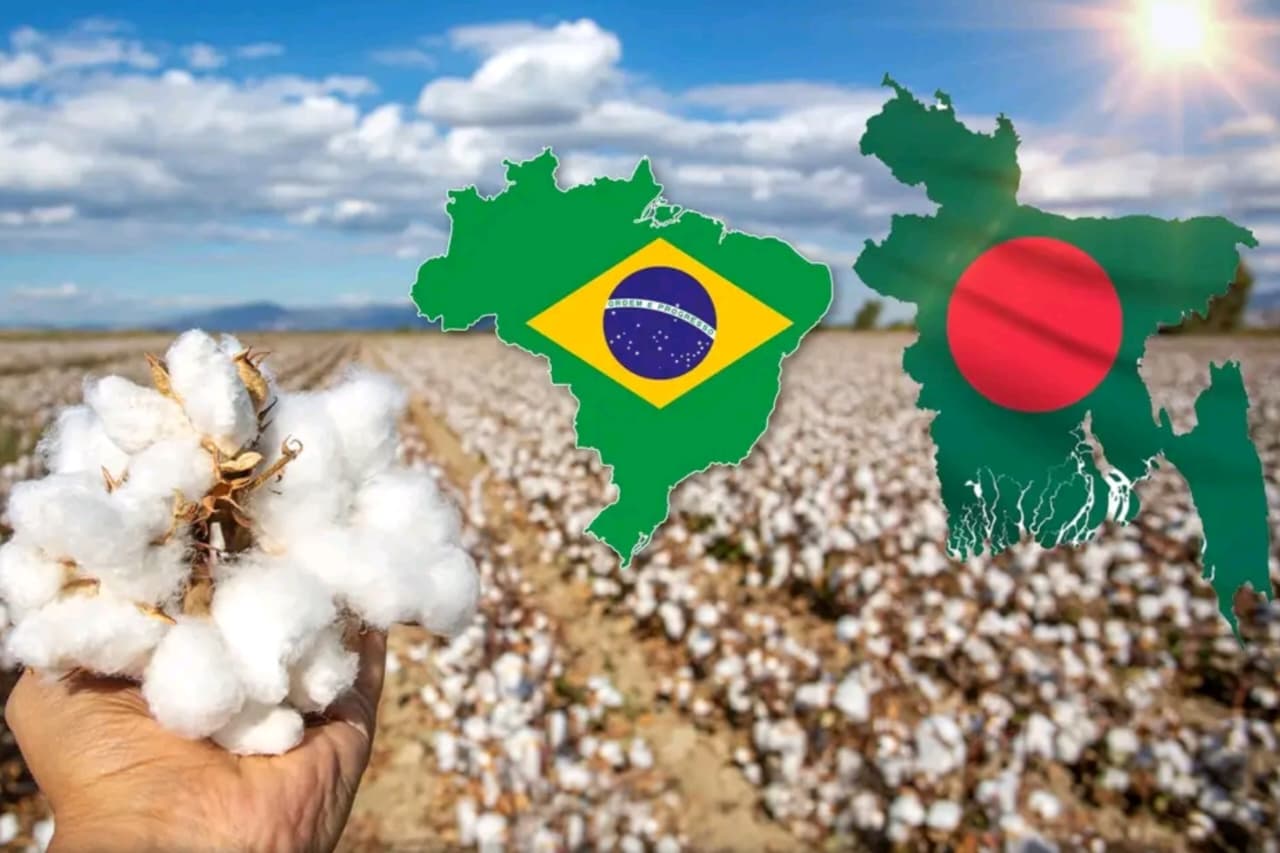
The fast growing textile and garment sector in Bangladesh is still redefining its strategy of sourcing raw materials in the world market. The most recent evaluation conducted by the US Department of Agriculture (USDA) suggests that Bangladesh cotton imports will grow to 8.4 million bales during the 2025-26 marketing year, which is an indicator that the demand will continue to grow steadily despite the ongoing energy, logistics, and financing challenges. Another significant change is in the direction of Bangladesh becoming less reliant on the traditional suppliers in the region and becoming increasingly dependent on more remote yet more trusted suppliers like Brazil and the United States. This change shows how global supply stability is increasingly becoming the making of the procurement decision making as compared to geographical proximity.
USDA Forecast Signals Strong Import Growth
The USDA estimates that Bangladesh cotton imports will rise to 8.4 million bales in MY26 as compared to almost 8.28 million bales in MY25. This increase is a sign of long-term consumption by spinning and weaving industries in the country which are used by the second-largest ready-made garment (RMG) exporter in the world. Though demand is good, there are still challenges in operations like power outages, increased cost of production and limited access to working capital.
India’s Land Port Challenges Reshape Trade
Over the decades, India had taken over the cotton supply in Bangladesh because of rapid and cheap shipments of land across Bangladesh borders like Benapole and transit stations via Kolkata. But with overcrowding, inconsistency in the clearance of customs and increasing trade frictions, these routes have become not as reliable as they used to be. Consequently, the market has lost the share of Indian cotton, despite the fact that Indian cotton is geographically near and competitive in terms of prices. This change signifies a structural change in the sourcing pattern in Bangladesh which is motivated not by distance but by the operational certainty.
Brazil Emerges as the Top Supplier
The very obvious winner of this sourcing realignment has been Brazil. In MY25, Brazil was the largest supplier with about 1.9 million bales, which is just short of one-quarter of Bangladesh imports, replacing India as the largest supplier. Brazilian cotton is appreciated because of the stable quality of fibres, fair prices, and reliable large volumes of shipment. Brazilian exports under long distances of ocean transportation provide predictability which is currently preferred by the export-driven textile industry in Bangladesh on high delivery time frames.
US Cotton Retains Strategic Importance
The US still holds a strategic position in the portfolio of cotton imports in Bangladesh. In MY25, the US had provided approximately 596,000 bales, and imports are expected to increase to approximately 1 million bales in MY26 at an estimated value of about 474 million. US cotton is also chosen by many spinners because it is of high quality, can be traced easily, low in contamination, and same quality, which makes it particularly convenient in producing high-quality apparel, despite the high costs.
Capacity Utilization and Demand Gap
The spinning industry in Bangladesh has the capacity to utilize nearly 15 million bales each year but the current usage is around 55%. The consumption of cotton is approximated at 8.3 million bales in the MY25 and is projected to 8.5 million bales in the MY26. The gap illustrates the prevailing structural limitations that include energy deficiencies, increased importation dependency of yarn and fabrics and rising costs of operations.
Implications for the RMG Value Chain
The country is disastrously import dependent with Bangladesh producing just 153,000 bales of cotton every year, which is less than 2% of the total demand. The increasing dependence on Brazil and constant demand on US supplies are indicative of a larger increase in the trend to supply security and diversified sourcing. Though this enhances the reliability of raw materials, unsolved logistical constraints and cost forces pose the danger of undermining domestic spinning competitiveness in the Bangladesh textile sector.
Read Also: Humanitarian Breakthrough: India & Bangladesh Repatriate Fishermen in Coordinated Exchange