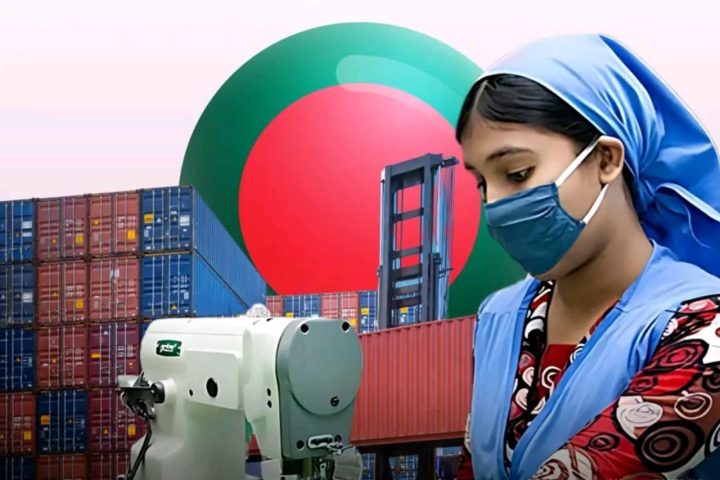
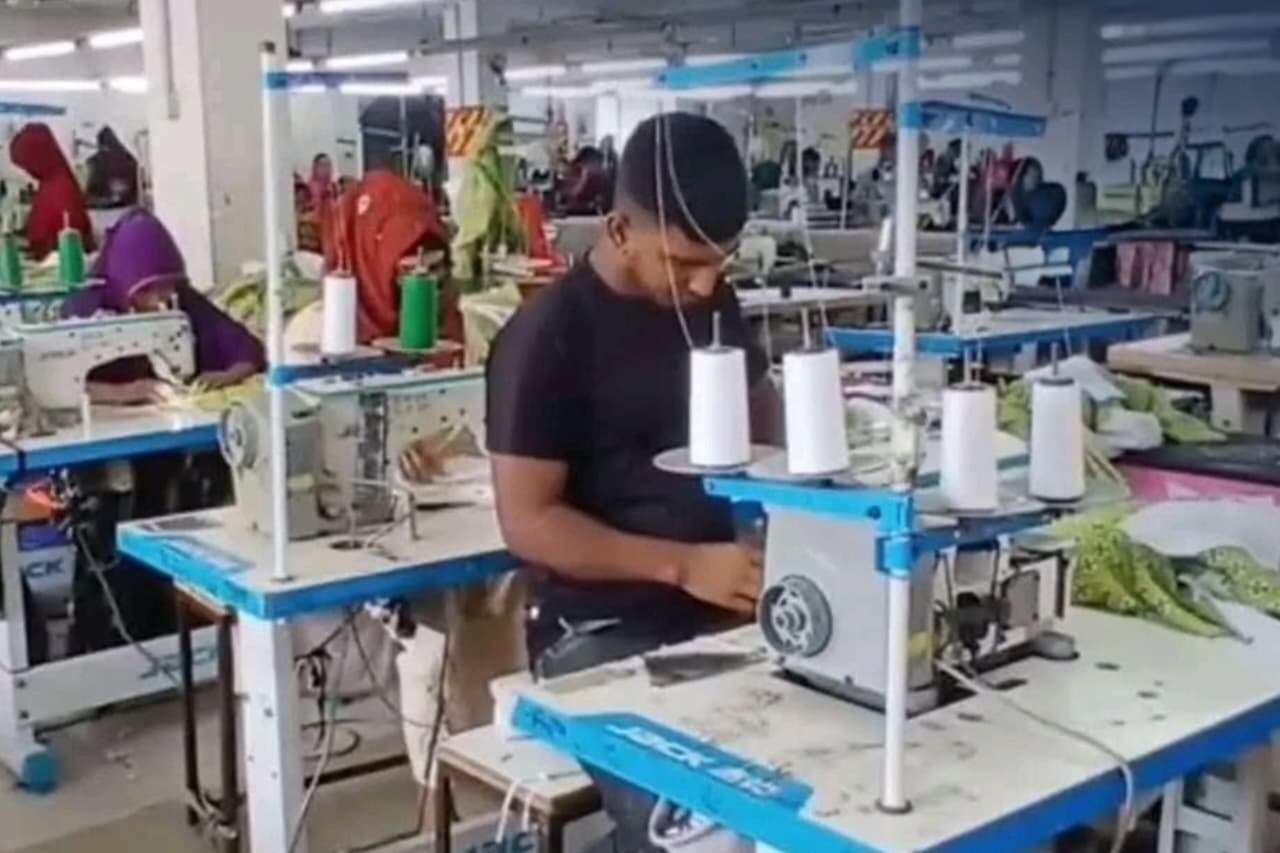
Bangladesh’s ready-made garment (RMG) sector has supported the economy for many years. Once a nation dependent upon foreign aid, Bangladesh is now one of the largest garment exporters in the world. More recently, however, there is an emerging picture of both resilience and fragility in this sector.
Are the foundations of Bangladesh’s economy cracking under strain?
The Backbone of a Nation
The statistics alone make it clear why the garment industry is considered the “engine” of annual gross domestic product (GDP) growth in Bangladesh. The garment industry was responsible for producing 80% of total export revenue in Bangladesh. About four million people are employed in Bangladesh’s garment industry, mostly women. In terms of annual export earnings, it is estimated that $38 -$40 billion in revenue is generated through the manufacture of garments.
Over the past two decades, Bangladesh has gone from having less than 4% of the global market share to dominating the global supply chain for garments. It stands as the second-largest supplier of garments in the world, competing dollar-for-dollar with China and Vietnam. The industry has also been a key factor in the reduction of poverty, urbanisation, and increased participation by women in the workforce.
The Data Tells a Slowing Story
The industry overall looks good by many indicators today (with exports valued at $38.8 billion in 2025 – up slightly from $38.7 billion in 2024), but there are several nuanced reasons to be concerned. For example, growth rates have fallen sharply from over 7% in 2024 to just 0.89% in 2025; export growth in 2025 represents a significant retreat (when examined relative to prior years). In addition, there is clear evidence of warning signs in the data for both growth on a monthly or short-term basis; for example:
(a) There was a decline in exports of 6.31% during June 2025 and
(b) There was a 14% decline recorded during December 2025, which raised serious questions about the sustainability of this trend.
(c) Overall, there was also a 2.63% decline in exports for the first quarter under FY2025-26.
Though not an overall collapse, the slowdown relative to the previous year’s performance is extremely concerning and potentially damaging since any shift—no matter how small—will have repercussions for an industry as important as this one.
What’s Driving the Pressure?
1. Sluggish Global Purchasing
The two top buyers, America and the European Union, are experiencing sluggish sales.
The combination of global inflation, economic uncertainty, and reduced consumer discretionary spending creates a slow apparel market at the moment. Even though export volumes may go up, prices are going down, leaving even lower potential profits.
2. Increasing Competition
Bangladesh is no longer the preferable low-labor cost location for sourcing.
Vietnam is taking over [successfully competing against] China in some areas of the world, including the United States.
India and various other Asian countries are on the rise.
Additionally, buyers are diversifying their supply sources in the post-COVID-19 era.
All of this means that Bangladesh must not only compete on a low-labour cost basis but also on speed, quality and overall sustainability.
3. Increased Costs Domestically
The cost advantage that led to the development of the industry is declining.
The greatest challenges the producers and suppliers face include:
- Increasing minimum wage and labour unrest;
- Higher energy and logistics costs;
- Expensive importing of raw materials;
Thus, producers will be working with thin profit margins as global buyers require no price increases.
4. Political and Economic Instability
Recent political transitions and unrest have outwardly impacted investor confidence and the stability of production. The industry has been negatively impacted by:
Uncertainty in future tariiffs in regard to key markets;
Liquidity issues in the banking sector;
Infrastructure inconsistencies such as factory fires and logistics breakdowns;
Thus, these issues add friction to a sector that relies upon speed and consistency of delivery.
5. Structural Weaknesses
While some of the older issues within the industry have been resolved, many long-standing structural weaknesses exist:
Significant reliance on a limited number of large suppliers.
Not All Doom: Signs of Resilience
Although the industry is currently experiencing considerable pressure, it has some strong positives: Exports to non-conventional markets increased by almost 7%, the US continues to see double-digit growth in volume, and the EU’s demand remains relatively steady. Additionally, Bangladesh is also one of the world’s leaders in developing green garment factories; this could provide Bangladesh with a long-term competitive edge.
The Big Question: Is the Industry’s Model Sustainable?
The real question is not whether the garment industry will collapse, but if the current garment manufacturing model will last.
Bangladesh relied on low-wage labour, producing a high volume of basic products. The industry’s current model is now being challenged by both domestic realities (such as inflation and rising salaries) as well as by buyers (global and domestic). Therefore, garment manufacturers will need to adapt their manufacturing models to produce more high-value goods, have faster supply chains, improve working conditions and, ultimately, diversify their markets. Otherwise, the industry’s future growth may plateau even if it does not ultimately decline.
The Bottom Line
The garment industry of Bangladesh is not collapsing, but it is under extreme stress. Current data indicate the following transitions:
- From fast-paced expansion to relatively slow expansion;
- From having a cost advantage to experiencing cost pressure, and
- From being the largest supplier to being one of many in an increasingly competitive landscape.
However, given the industry’s significant size, experience, and integration into the global economy, it still has a very strong economic base.
The next 10 years will determine if Bangladesh will continue to be a predominant force in the global garment industry or succumb to the pressures of being competitive globally.
Read Also: Gold’s Gym Dhaka: Membership Fees & Timings (Bashundhara City Branch)
FAQs
1. Why is Bangladesh’s garment industry so important?
It contributes over 80% of export earnings and employs millions, making it central to the economy.
2. Is the industry declining?
Not exactly—it’s still growing, but much more slowly than before, which raises concerns.
3. What are the biggest challenges?
Weak global demand, rising costs, competition, and political uncertainty.
4. Is Bangladesh still competitive globally?
Yes, but the gap is narrowing as countries like Vietnam and India grow stronger.
5. What is the future of the RMG sector?
It depends on shifting toward higher-value production, better compliance, and diversified markets.