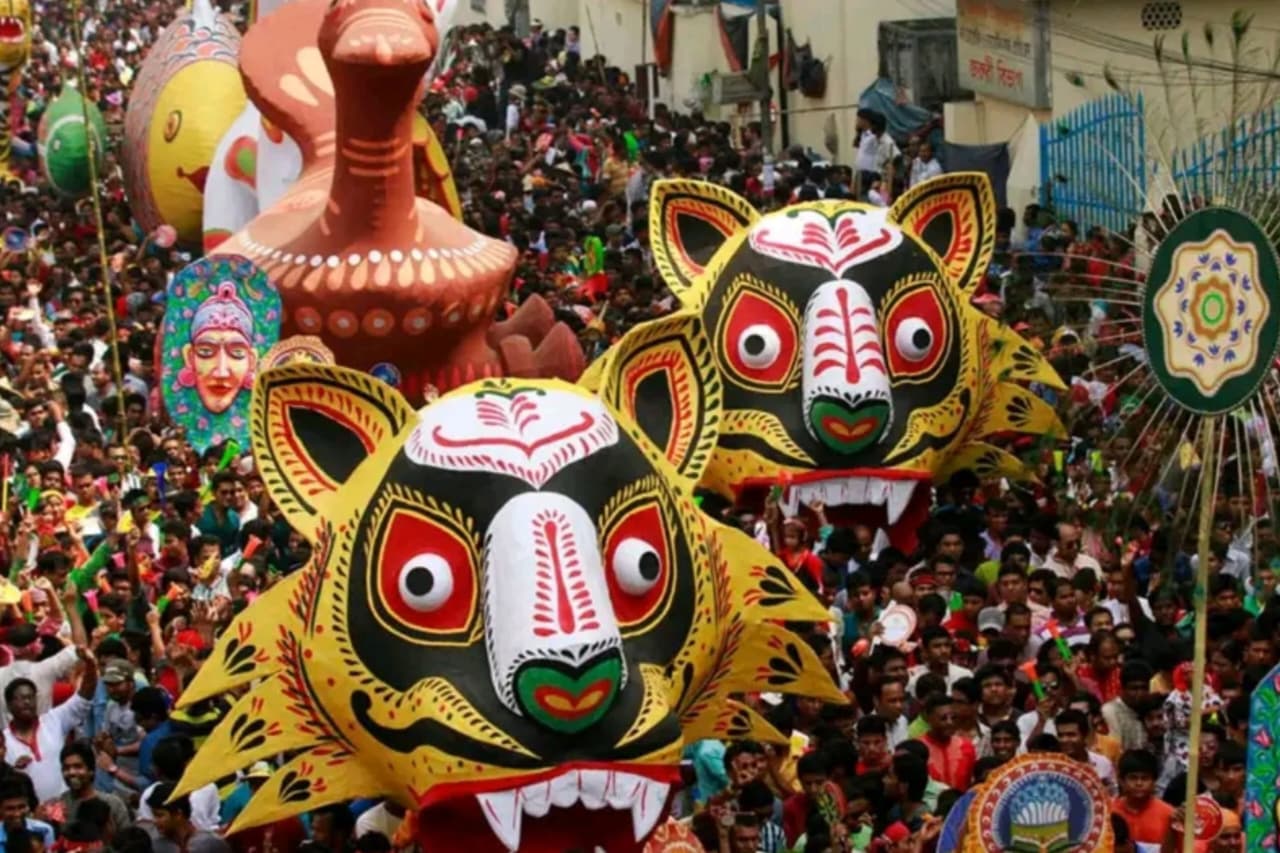
The Borsho Boron Anondo Shobhajatra is a celebration in Dhaka, Bangladesh, that marks the happy arrival of the Bengali New Year, Pohela Boishakh. It combines art, music, and community spirit. This procession, which was renamed from Mangal Shobhajatra to bring back its original 1989 name, stands for resistance to authoritarianism and celebrates cultural unity across hills and plains. The Faculty of Fine Arts at Dhaka University puts on this event, which features colorful masks, floats, and folk art that UNESCO has called Intangible Cultural Heritage. In 2026, there will be more people taking part, with 464 ethnic performers, athletes, and artists joining in on the April 14 celebrations.
Event Timing and Schedule
The procession starts at 9 AM on April 14, 2026 (1433 Bengali year), right after Chhayanaut’s morning music at Ramna Batamul. At 8 a.m., people start getting ready at the Fine Arts Faculty gate. The parade ends in the late morning after going around in a circle. This timing is in line with tradition, which lets families take part in rituals like haldi kumkum and panta bhat feasts after dawn. Security is light and focuses on cultural flow. Roads will reopen after the event. There are traffic changes around Dhaka University that start early, so plan to take the metro or a rickshaw.
Detailed Route Map
The Shobhajatra starts at the front of Dhaka University’s Fine Arts Faculty and goes in a circle: it goes to Shahbag Mor, circles TSC Mor (Teacher-Student Center), passes Shaheed Minar (keeping it right), hits Doyel Chattar, glides in front of Bangla Academy, and then returns to Fine Arts. Important places to see are Raju Sculpture (right turn), DU Square (right), and blocked roads like Bangla Motor, Birdem, Palashi-Aziz Supermarket, and Motsho Bhaban-Dhaka Club for safety. Only the Palashi and Nilkhet gates are open to the public, which makes it easy to walk around but also keeps things under control.
Picture the way: It’s less than 2 km long and full of giant masks, pinwheels, horses, tuhin birds, palm soldiers, Mughal-era fans, and a 100-foot patachitra scroll. The medium-sized motifs make it easy to get to. Expect folk music, ethnic dances, and anti-fascist slogans like “Noboborsher oikatan, fascism-er oboshan.”
Discover More Stories Worth Your Time
Where To Stay Cox’s Bazar?
Explore the best hotels near Laboni Beach from budget to luxury.
Why Are Healthcare Jobs Growing Abroad?
Explore how Bangladeshi healthcare workers can secure opportunities in Saudi Arabia.
Where Find Boishakhi Melas Outside?
Discover top Boishakhi fairs outside Dhaka to visit in 2026.
How To Spot Fake Jobs?
Explore ways to identify fake job offers on Facebook and WhatsApp.
How To Reduce Stress Naturally?
Check a weekly meal plan to lower cortisol and improve sleep.
Highlights and Motifs
This year’s themes are all about being open to everyone: big folk-art animals, birds, and fish; medium-sized Sultani-Mughal masks (10), colorful pinwheels (20), horses (20); and fans, soldiers, and birds. More than 464 people from different ethnic groups show that they are all together, with musicians and athletes adding rhythm. People wave handmade props while wearing traditional saris, punjabis, and tops. This turns the streets into a living museum. It’s not just a walk; it’s a protest for freedom and cultural purity.
How to Participate Safely
Get there by 8:30 AM through Nilkhet or Palashi. Wear comfortable shoes, bring water, and don’t touch the floats. Taking pictures is a good way to share on social media, which makes it more likely to go viral on Google Discover. Families with kids love the happy atmosphere, but stay away from the 9–10 AM rush. After the parade, go to Ramna for cultural events or TSC for food stalls. For real-time detours, check the Dhaka traffic police updates.
Summary:
Borsho Boron Anondo Shobhajatra, Dhaka’s iconic Pohela Boishakh parade, starts April 14, 2026, at 9 AM from Dhaka University Fine Arts Faculty. Explore the full route, motifs, and how to join this UNESCO-recognized cultural extravaganza for a joyous New Year welcome.