
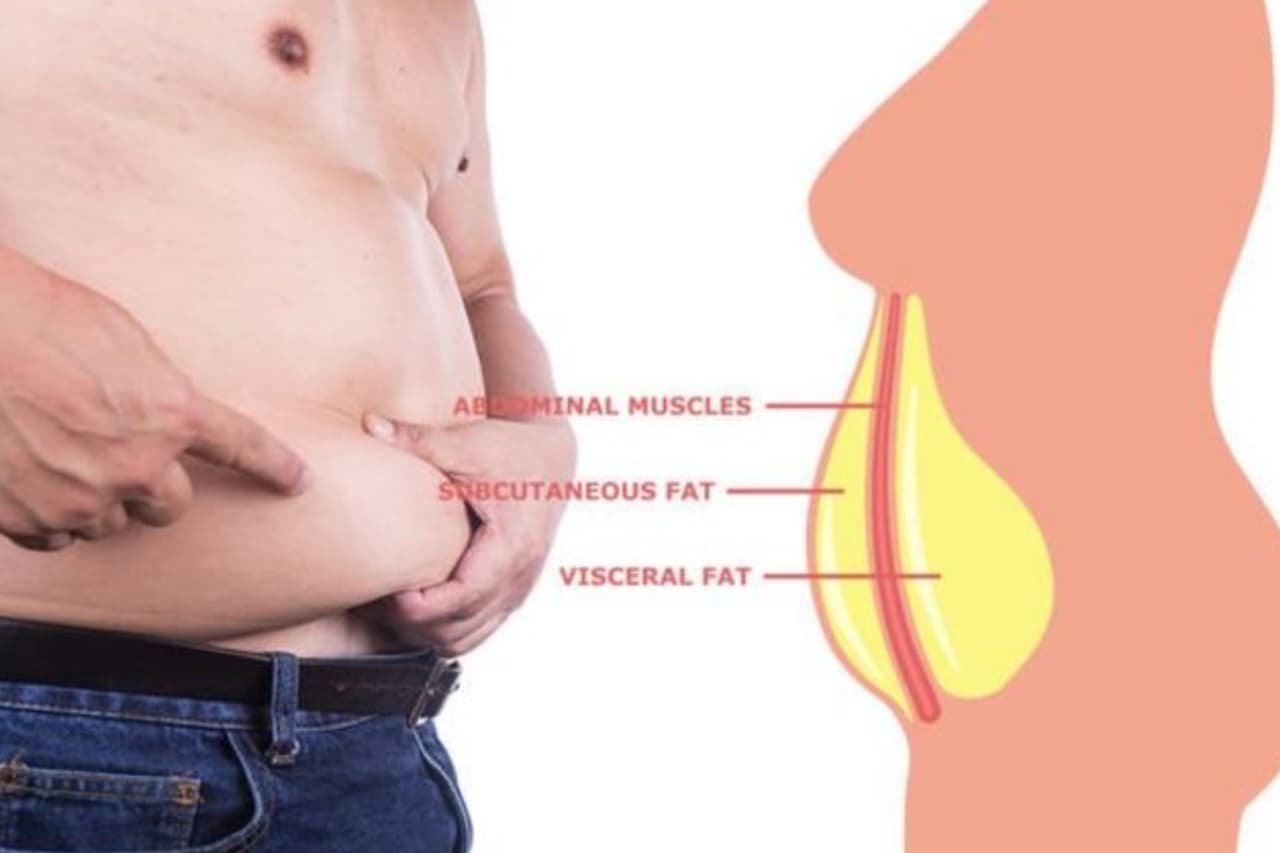
Not all belly fat is the same. Visceral fat lies deep around your organs, unlike subcutaneous fat that sits under the skin. While some fat protects organs, excess visceral fat increases the risk of heart disease, diabetes, and metabolic disorders.
7 Signs You May Have Visceral Fat
- Growing Waistline: Men over 40 inches, women over 35 inches—watch out.
- Apple-Shaped Body: Fat concentrates around the stomach, not the hips or thighs.
- High Blood Pressure: Visceral fat often triggers hypertension.
- Elevated Cholesterol or Blood Sugar: Insulin resistance and poor cholesterol can be a clue.
- Persistent Fatigue or Bloating: Internal fat may cause inflammation or liver stress.
- Difficulty Losing Weight: Belly fat can resist regular dieting.
- Family History: Genetics may make you prone to visceral fat accumulation.
7 Ways to Reduce Visceral Fat
- Eat Smart: Fibre-rich foods, lean protein, whole grains, and healthy fats are key.
- Move Daily: Cardio plus strength training burns fat and builds muscle.
- Manage Stress: Meditation, yoga, or deep breathing lowers cortisol, which stores fat.
- Sleep Well: Aim for 7–9 hours per night to keep hormones balanced.
- Cut Sugar and Refined Carbs: They spike insulin and promote fat storage.
- Limit Alcohol: Even moderate drinking contributes to belly fat.
- Track Progress: Measure your waist and check health markers regularly.
Lifestyle Changes Matter
Even small, consistent changes in diet and activity levels can reduce visceral fat. Monitoring waistline and health markers regularly helps track progress.
Read Also: OPPO Reno15 5G & Reno15 F 5G Launched: AI Portrait Camera and IP69 Durability Take Center Stage