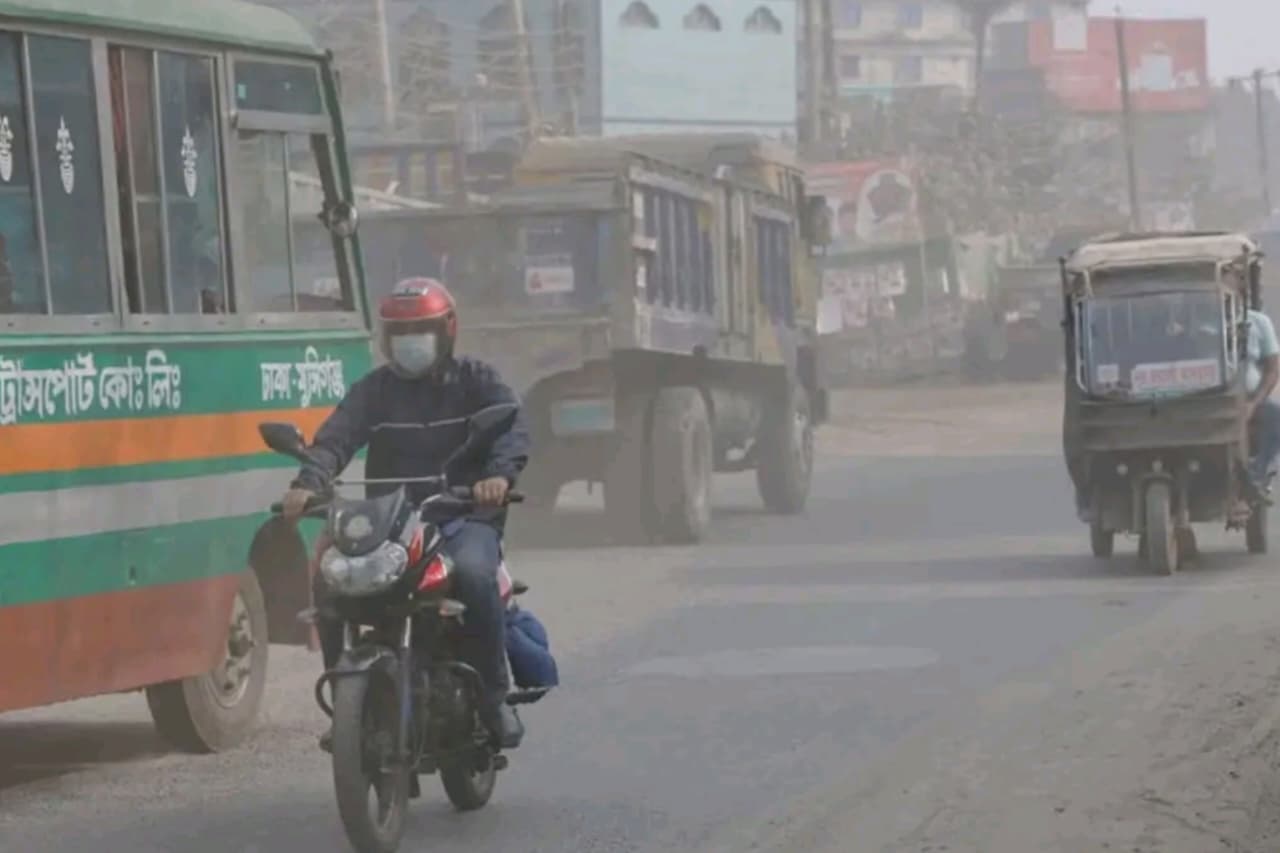
Dhaka’s air quality has taken a worrying turn in early February 2026, with pollution levels surging into the severe to hazardous category. Residents across the capital are breathing air that poses serious health risks, driven largely by high concentrations of PM2.5—fine particulate matter that penetrates deep into the lungs and bloodstream.
Current AQI Status in Dhaka
Real-time monitoring shows Dhaka’s Air Quality Index (AQI) fluctuating between 200 and 400+, placing it among the most polluted cities globally. On February 2, PM2.5 levels peaked at 153 µg/m³, while citywide averages hovered around 83 µg/m³—more than five times higher than the World Health Organisation’s recommended safe limit. Such readings classify the air as very unhealthy to hazardous, especially for children, the elderly, and people with pre-existing conditions.
What’s Driving the Pollution Surge?
The sharp deterioration is mainly linked to:
- Traffic emissions, particularly during peak hours (7–9 AM and 5–7 PM), when thousands of vehicles release exhaust fumes rich in fine particles.
- Construction dust from ongoing urban development projects, which adds large amounts of particulate matter to the air.
- Winter weather conditions, including dry air and low wind speeds, prevent pollutants from dispersing and instead trap them close to the ground.
Together, these factors create a toxic mix that lingers over the city throughout the day.
Health Risks and Expert Advice
Health experts warn that prolonged exposure to such pollution can trigger respiratory illnesses, asthma attacks, heart strain, and reduced lung function. Authorities recommend that residents:
- Limit outdoor activities, especially during peak pollution hours
- Wear N95 masks when stepping outside
- Keep windows closed and use air purifiers indoors if possible
Sensitive groups should be particularly cautious and seek medical advice if symptoms worsen.
Stay Alert and Monitor Air Quality
Citizens are urged to regularly check live AQI updates through reliable platforms like aqi.in and aqicn.org to plan daily activities safely.
As pollution remains stubbornly high, experts stress the need for stronger traffic control, dust management at construction sites, and long-term clean-air policies to protect public health in Dhaka.
Read Also: Bangladesh Earthquake: Mild Tremor Near Kaliakair Felt in Dhaka, No Damage Reported