Everyday life in Dhaka, Bangladesh’s capital city, changes a lot during Ramadan, and traffic is no different. Changes to office hours and other procedural steps are meant to ease traffic, but the city is still very crowded, especially in the hours before iftar.
Changes to office hours affect how traffic moves
During Ramadan, most government and private offices are open from 9 am to 3 pm, and banks are open from 9:30 am to 4 pm, with breaks for prayer. These shorter plans slightly ease the usual stress of the morning rush hour.
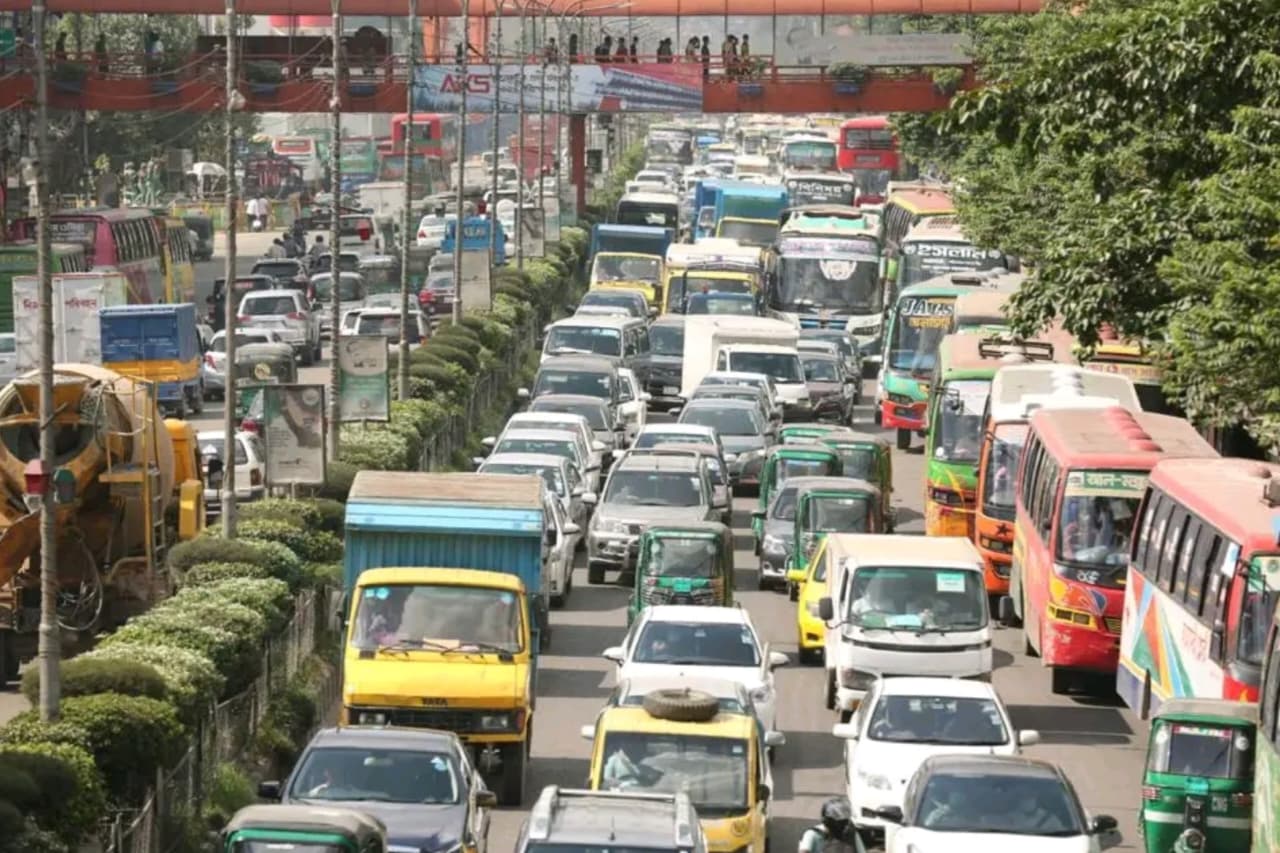
But because workdays are shorter, there are a lot more cars on the road between 3:00 pm and 7:00 pm, when people are rushing home to break their fast. It’s become clear that the pre-iftar window is the hardest time to handle traffic in the capital.
Authorities send in more people to help control the crowds
In order to handle the seasonal rise in traffic, the city has sent out more traffic cops and student volunteers from Scouting and BNCC groups. Special tracking teams are still working, especially in business areas and near shopping centres, where people and cars are moving around a lot more because of Eid shopping.
The goal of these combined efforts is to keep traffic moving more smoothly and avoid traffic jams at key intersections during rush hours.
Heavy traffic jams in key corridors
Even though precautions are taken, Mohakhali, Farmgate, Shahbagh, and Dhanmondi are still very crowded. Traffic is getting worse because of vehicles going slowly, illegal parking, more people walking, and more people shopping for Eid.
A lot of commuters say they get stuck on the roads during iftar, which means a lot of them have to break their fast in their cars. People are told by the government to leave work early, avoid travel that isn’t necessary, and walk short distances when they can.
After Eid, long-term steps will be taken
Long-term solutions that city planners have suggested include banning rickshaws on major roads, limiting vehicles to 500 meters from metro stops, and adding more automated traffic signals. These projects should make it easier to get around cities after Ramadan is over.
Summary
Although shortened office hours during Ramadan ease morning traffic in Dhaka, severe pre-iftar congestion continues to affect major roads. Enhanced traffic management and proposed long-term reforms aim to reduce gridlocks and improve mobility in the capital.
FAQs
1. Why is there more traffic in Dhaka before iftar?
Because working hours are short, a lot of people are rushing to get home before it gets dark.
2. What steps are the officials taking during the month of Ramadan?
Between 3 pm and 7 pm, more traffic cops, student volunteers, and coordinated tracking teams are put in place.
3. Will the traffic get better after Ramadan?
For long-term relief, the government plans to make fundamental changes like limiting rickshaws and making signal systems better.
Read Also: How to Attend Dol Purnima 2026 at ISKCON Dhaka: Complete Devotee Guide