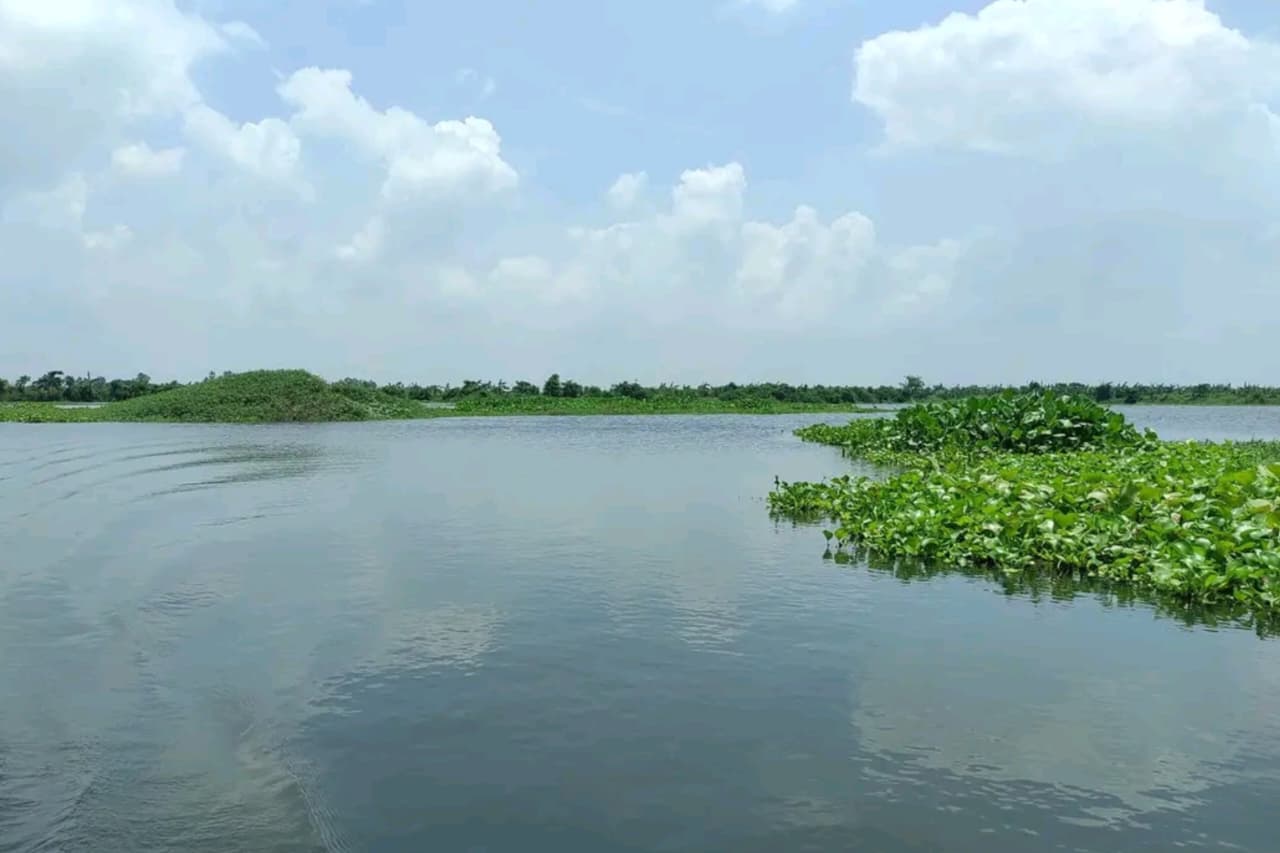
Over the past hundred years, Chalan Beel, the biggest wetland ecosystem in Bangladesh, has changed a lot. The Beel used to be a huge body of water that supported fishing, farming, and a wide range of plants and animals. Now, it is getting smaller because of siltation, land conversion, infrastructure projects, and people moving in.
Research indicates that the wetland’s expanse has significantly diminished since the early 20th century, prompting apprehensions regarding environmental sustainability and the livelihoods of communities reliant on the ecosystem.
The Size of Chalan Beel in the Early 1900s
Records from the past show that Chalan Beel used to be much bigger than it is now.
A survey from 1909 said the wetland was about 1,088 square kilometres, which makes it one of the biggest inland wetlands in South Asia. The beel was a huge network of water bodies that connected several districts in northern Bangladesh at the time.
But the wetland’s size quickly shrank as sediment from nearby rivers filled the basin.
By 1940, the area had shrunk to about 705 square kilometres, which is a 35% drop in just 30 years. Rivers like the Ganges, Gur, and Baral carried sediment that was a big part of this early shrinking.
Changes that happened in the late 20th century
The decline kept going through the second half of the 20th century as more people moved to the area.
To make farmland, big areas of wetlands were drained. Embankments and polders changed the way water naturally flows. The wetland landscape was also broken up by road building and the growth of settlements.
Chalan Beel still had about 800 square kilometres of water in the dry season by 1975, but this started to go down quickly as more land was turned into farms and fish farms.
As time went on, the wetland system got smaller and more seasonal. The water levels changed a lot between the dry and monsoon seasons.
Current Size and Continued Shrinkage
By the early 2000s, studies showed that the area covered by the monsoon season had stayed the same at about 375 square kilometres. But the dry season area kept getting smaller quickly.
Recent estimates say that by 2025, the dry-season water area may be down to just 66 square kilometres. This shows how much wetlands have been lost over the years.
Some local estimates now say that the current effective wetland area is about 168 square kilometres. This shows how much smaller the ecosystem is now than it used to be.
Researchers think that Chalan Beel has been getting smaller by about 1.8% each year on average in the last few years.
Why is the wetland getting smaller?
Chalan Beel is getting smaller because of a number of things that happen to people and the environment.
Siltation is a big reason why this happens. Sediment from nearby rivers slowly fills the wetland basin. This process lowers the water level over time and turns wetlands into land.
The growth of infrastructure has also been a factor. Roads, embankments, and flood-control structures change the natural flow of water and stop seasonal flooding that used to keep the ecosystem healthy.
At the same time, many wetlands have been turned into farmland for farming, housing, and fish ponds.
From 1973 to 2023, satellite studies also show a change from natural vegetation and water bodies to cropland, along with rising land surface temperatures in the area.
Why the Decline Is Important
Fishing, farming, and transportation are all ways that Chalan Beel helps thousands of people. It is also a good place for fish, birds, and plants that live in water.
As the wetland gets smaller, there are fewer plants and animals, and traditional ways of making a living become less stable. Environmental experts say that if wetlands aren’t managed better, the ecosystem could get worse in the next few decades.
So, protecting Chalan Beel is important not only for preserving biodiversity but also for keeping rural communities in northern Bangladesh going.
FAQs
1. What is Chalan Beel?
Chalan Beel is the biggest wetland in Bangladesh. It is in the districts of Natore, Sirajganj, and Pabna.
2. How much smaller has Chalan Beel gotten?
In 1909, the wetland covered about 1,088 km², but some estimates say that the wetland area that is still usable today is only about 168 km².
3. What are the main causes of Chalan Beel’s shrinking?
River siltation, land conversion for farming, infrastructure development, and the growth of fish farming are some of the main causes.
Read Also: India Begins Diesel Supply to Bangladesh Through Friendship Pipeline