Your clothes, whether they be a fresh kurta or a fully adorned lehenga should be taken care of after you have celebrated Eid al-Fitr or Eid al-Adha. Some individuals just wash clothes and store them only to find that they were stained, faded, or their clothes ended up torn after some months. This was the point that storing my Eid clothes well is the only way I would guarantee them to be fresh, colorful, and ready to wear once again next year.
Start With Proper Cleaning Before Storage
This is achieved by the outstanding and the main Do not store your clothes without washing them. However, in spite of your appearance, any sweat, perfume, or food can be deposited in your clothes and lead to permanent damage. In the case of men’s clothes such as cotton kurtas, they can be washed gently at home and women’s clothes such as lehengas, sarees or heavily embroidered dresses are best done under dry cleaners. There exists a strong reason as to why all the pieces should be fully dry prior to storage since a drop of water could cause the formation of mould or cause bad smells or even damage to the fabric during storage.
Storing Men’s Eid Clothes
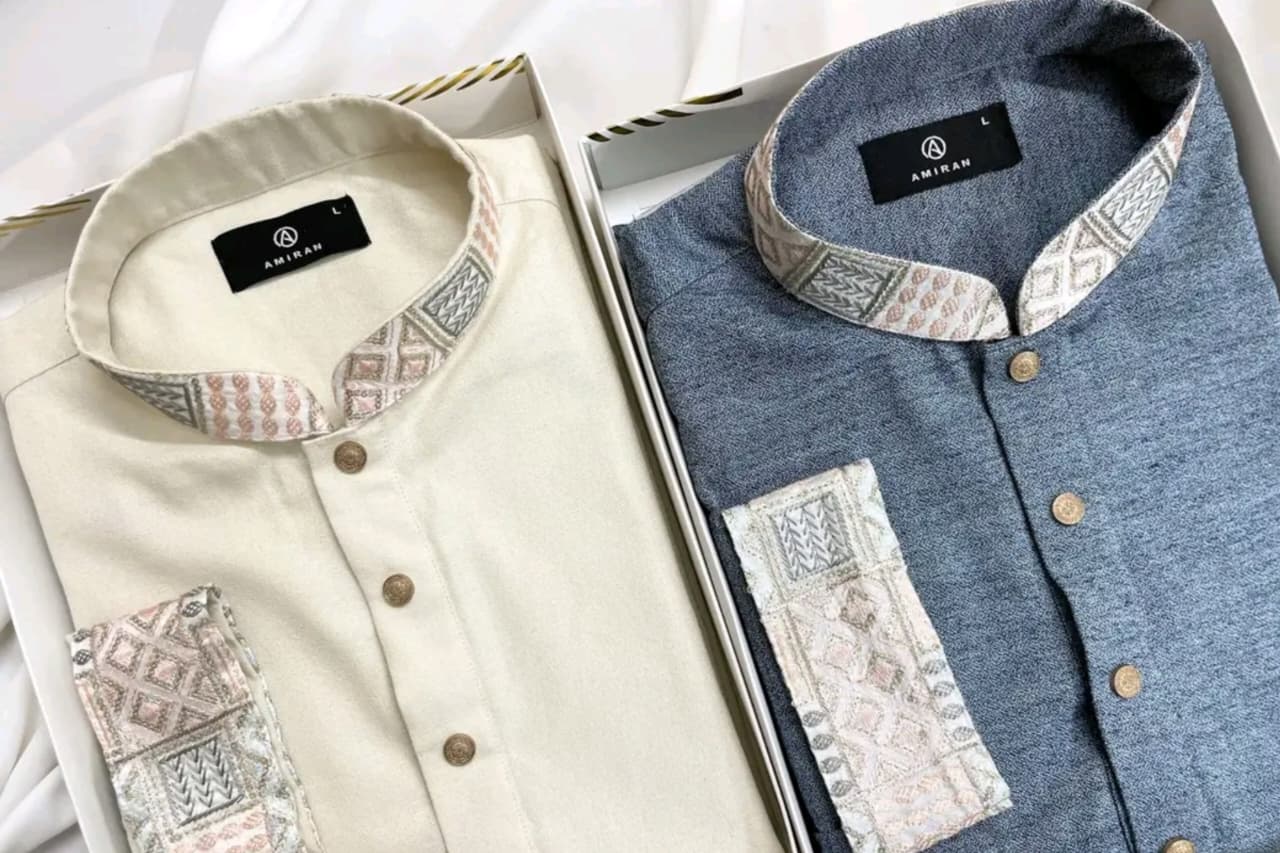
Meanwhile, the dress in Eid among men is not as difficult to handle, yet it needs the attention to detail in order to preserve its appearance and feel. Loose kurtas and pajamas can be burnt in light cotton storage bags to have air flowing through. It is necessary, however, not to put too many clothes into the storage space, since the pressure may lead to wrinkles and weakening of the fabric in the long run.
Stock Kurtas and Pajamas in the right place
They should be folded in neatly made light cotton or a combination of kurtas, which are to be kept in a breathable cotton bag. Not to create wrinkles one should avoid overloading the top. In the case of up-scale materials such as silk or embroidered kurtas, they should be wrapped in a muslin cover and stored in it.
Hang Nice Attires
Garments worn in the form of sherwani or blazers are always hung on wide or padded hangers. This aids in keeping order and it also prevents the distortion of the shoulder.
Keep Away from Moisture
Keep your clothes in a dry wardrobe which has good air flow. You can also add silica gel packets that ensure that there are no moist areas or that there is no accumulated odor.
Eid Clothes Stored with Extravagance: Women.
The outfits of women over Eid are usually made of delicately embroidered and decorated pieces that are more delicate and difficult to handle. Lehengas used as heavy garments are rather supposed to be stored in a flat as opposed to being hung because they are likely to strain the material and cause damage to the stitches.
Store Flat Happy Lehengas and Heavy Dresses
It is no longer necessary to polish heavy lehengas very long because the weight may pull and ruin the cloth. Rather, wrap them with a tissue paper in-between the layers to ensure embroidery is not damaged.
Dupattas and Sarees
The silk sarees would be wrapped under muslin cloth and would have to be refolded after every several months so as not to get permanent creases. Dupattas are very delicate to be kept in one place as they will snag.
Avoid Plastic Covers
Plastic is moisture retentive and results in discoloration. It is always important to use breathable fabric covers, which would help allow airflow.
Protect Embellishments
Store outfits that are highly embroidered inside out. This avoids the rubbing of the beads and stones to the other fabrics.
Insect and Moisture Prevention
It has to do with the environment and the level at which your clothes may be maintained. It is advisable to keep your clothes in a cool dark and dry environment as this will help eliminate even humidity and sunlight which degrade the fabric and colors. Insects repulsion can be provided in the form of natural repellents like neem leaves or cedar blocks that can be kept in areas to repel them without getting your clothes into contact with these rough chemicals. It is also essential to make sure that your wardrobe is properly ventilated since stagnant air may cause the odors to accumulate and destroy your clothes.
Care for Your Clothes
Having an appropriate storage does not stop the moment they have made their place. To guarantee they would not be in bad shape, a simple and efficient method to check them after every few months is acceptable. It can go a long way by airing them out once in a while, folding them again to ensure there are no permanent creases on them and checking them out in case of any evidence of water or insect damage. This continual service contributes to the quality of the fabric and to have your outfits as gorgeous as the day you wore them.
Final Thoughts
Several ideas keep me investing in saving your Eid clothes after Eid al-Fitr or Eid al-Adha as investing in your memory too as well as your clothing. Whether it is a plain kurta or a fancy party costume, the appropriate methods of storing it would ensure that your attire remains new in the span of years. With some care and attention, you can be assured of showing out your favorite Eid outfit next year with the worry of not having it damaged or worn out.
FAQs
1. Shall I clean Eid clothing then put them away?
Yes, cleaning helps to avoid stains and damage of fabrics with time.
2. Can I hang all the Eid clothes?
No, heavy outfits must be stored flat, so as not to be damaged.
3. What do I do to clothes to keep off insects?
Neem leaves or cedar blocks should be used.
4. Can plastic storage be used on the clothes?
No, it is capable of catching water and ruining it.
5. How frequently do you check the stored clothes?
Once every 2-3 months in order to keep them in shape.
Read Also: How to Avoid Traffic After Eid Holidays in Bangladesh