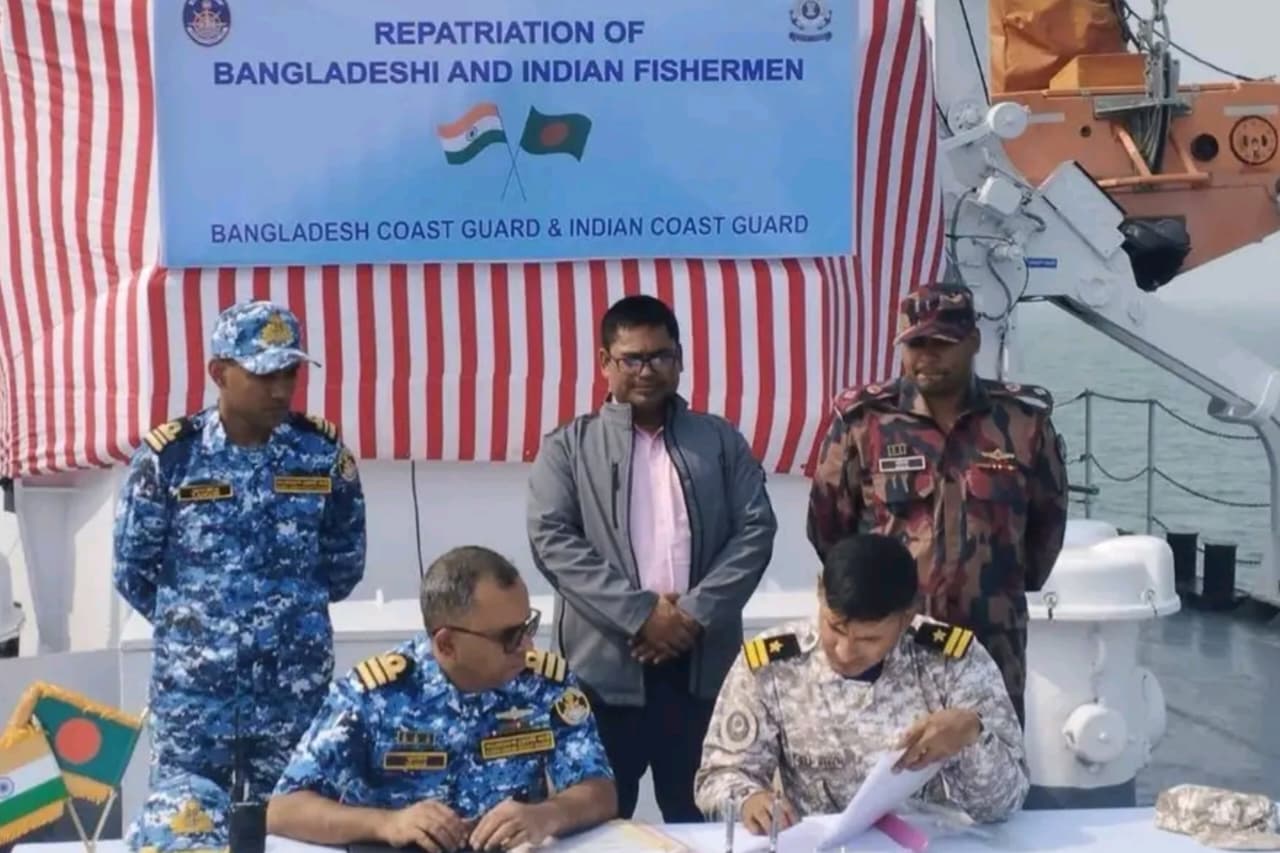
India and Bangladesh worked together to send fishermen back to their home country after they were arrested for crossing maritime borders. This showed how countries can work together to do the right thing. The humanitarian swap shows that both countries are committed to protecting weak fishing communities and avoiding unnecessary legal problems.
A Trusted Sign Between Two Neighbours
Every year, hundreds of fishermen from India and Bangladesh end up in each other’s territorial seas without meaning to because they can’t see clearly, are caught in storms, or don’t have GPS devices. Arrests, long detentions, and mental problems for families at home are common after things like this happen.
The latest repatriation is a big step forward. This is because diplomacy has improved, verification processes have gotten faster, and teamwork between border and maritime agencies on both sides has gotten stronger.
The Repatriation Process: What Happened
The exchange included joint verification by foreign ministries, coastal cops, and immigration officers. After confirming who the fishermen were, both groups worked together on transportation plans to make sure the fishermen got home safely.
The officials called the process “swift and cooperative.” This shows that people can be good toward each other even when they don’t agree on politics.
Human Impact: Bringing Families Back Together and Restoring Livelihoods
For the fishermen’s families, the exchange was more than just a success in foreign relations; it was the return of sons, husbands, and dads. A lot of people who were freed talked about how hard it was to be in detention, including not being able to see their families. Their return has given people who live on the coast and rely on fishing to stay alive new hope.
Increasing bilateral relations by helping people in need
Coordinated talks like this are very important for lowering tensions in maritime zones. India–Bangladesh ties have changed a lot in the last ten years. These decisions show that they have grown up.
Both governments have openly said they want to protect groups that need help, encourage safe fishing, and look into working together to keep people from breaking the rules at sea.
Creating a Safer Future for Shipping
The goal is to keep fewer fishermen in the first place as both countries increase coast guard cooperation and real-time communication tools. GPS distribution, training programs, and awareness campaigns on maritime borders are all efforts that have already started.
The latest repatriation reminds us that working together to help people can improve diplomatic ties and give real help to people whose livelihoods depend on the sea.
Read Also: BNP Attempts to Adopt Hasina’s Liberal Identity Ahead of Elections