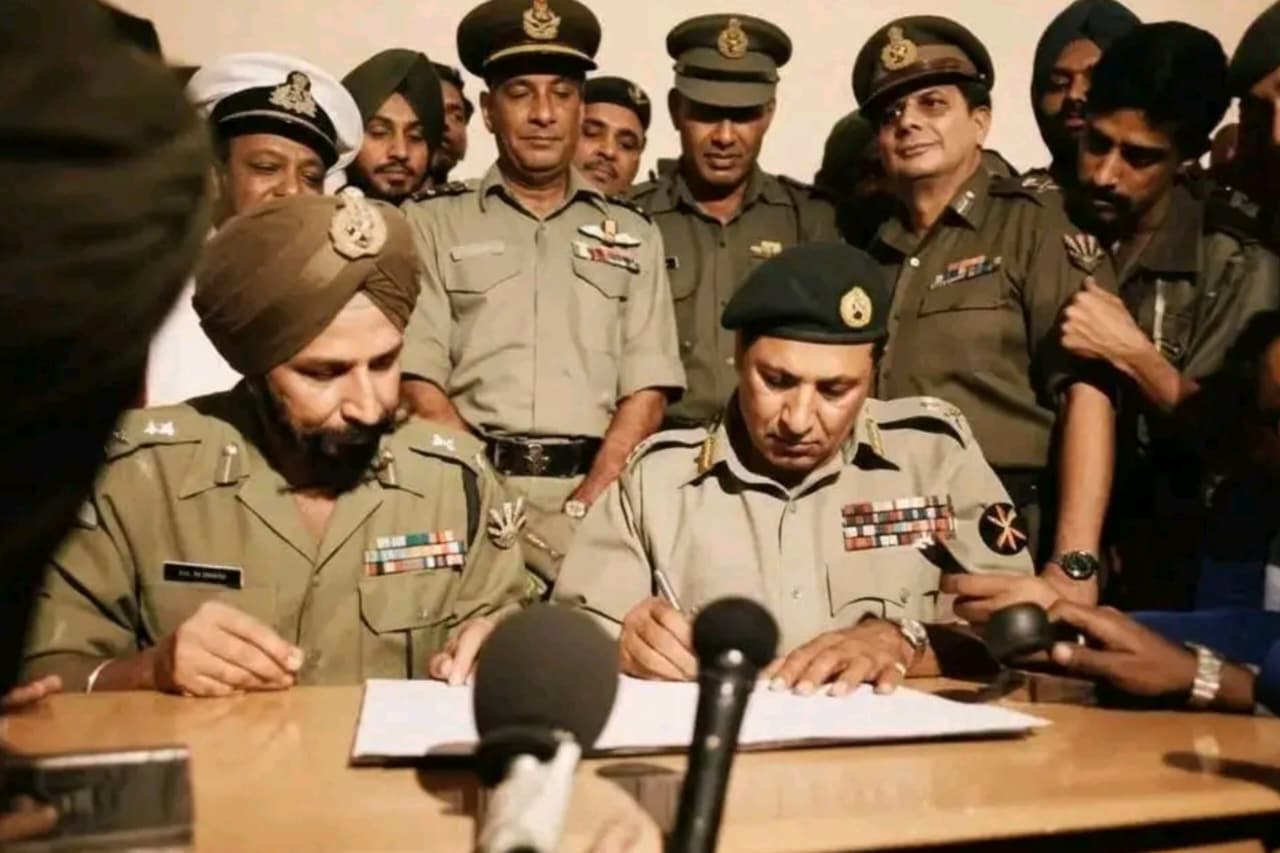
Bangladesh achieved its independence in 1971, following a violent conflict, which saw serious violations of human rights committed, including genocide and systematic sexual assault of women in this instance. Jamaat-e-Islami and some other factions opposed the independence of the country, and fought alongside the military of Pakistan using various paramilitary groups to do so, including Razakars, Al-Badr, and Al-Shams. Various commissions and tribunals have documented this activity, which raises doubts as to the authenticity of their contemporary claims regarding supporting human rights and democratic processes.
Opposition to Independence
Jamaat-e-Islami Pakistan and the Jamaat-e-Islami East Pakistan branch adamantly opposed the creation of Bangladesh so that the country could continue to exist as a single Islamic state. Ghulam Azam and other leaders encouraged their members to publicly oppose the independence of Bangladesh by making speeches and writing editorials in their publication, The Daily Sangram. This opposition to the creation of Bangladesh was contrary to the desires of most Bangalis for self-determination following the results of the 1970 general elections.
Collaboration with Pakistani Forces
They formed pro-Pakistan groups and gathered with General Tikka Khan to support the destruction of the Mukti Bahini. They created auxiliary forces that assisted military activity linked through recordings of the Hamoodur Rahman Commission and accounts of Pakistan’s history that were linked to them because of their involvement with the pro-Pakistan groups as an aide to the military operations perpetrated by the Army in Pakistan.
Role in Arrests and Killings
With their military-backed forces, Razakar and their affiliates rounded up and arrested—’ handed intothe Army’s hands’—freedom fighters, intellectuals and civilians, for which were subjected to torture, execution and conviction for their mass slaying and murder of villagers; this was a significant ‘result’ of the War crimes of the Jamaat leadership on behalf of the Pakistan Government. Al-Badr targeted over 100 intellectuals the day before their surrender on December 14, 1971.
Massacres and Regional Violence
Islamist Militia groups engaged in the systematic hatred and killing of civilians, with the goal of creating terror among those supporting independence. The International Crimes Tribunal (ICT) investigated these killing activities, which resulted in convictions against several militia leaders (such as Delwar Hossain Seyedi and Motiur Rahman Nizami) for the genocide of approximately 3 million Bengalis and the subsequent pogroms targeting Hindus.
Impact on Women’s Rights
Women were raped by Pakistani Forces and Collaborators in the War and this number is estimated to be between 200,000 and 400,000. This is considered to be a weapon of war. Additionally, certain militias supported these crimes of sexual violence against women, including AL-BADR. Because these militias have now formed a gender equality advocacy, postwar responses have dealt with war babies that are a result of these crimes, and as such, illustrate the continuing trauma.
Contemporary Relevance
Since 2010, ICT V convictions have led to the conviction of Jamaat leaders for War Crimes committed in 1971, which strengthens the call for the truth about what happened historically. If the truth of what took place is not accepted, then the human rights discourse will be less credible. Bangladesh’s national identity is based on the 1971 struggle, and therefore accountability is critical for the legitimacy of this democracy.
Read Also: Spirulina Protein Power: Why This Superfood Supplement Is Taking Health Circles by Storm