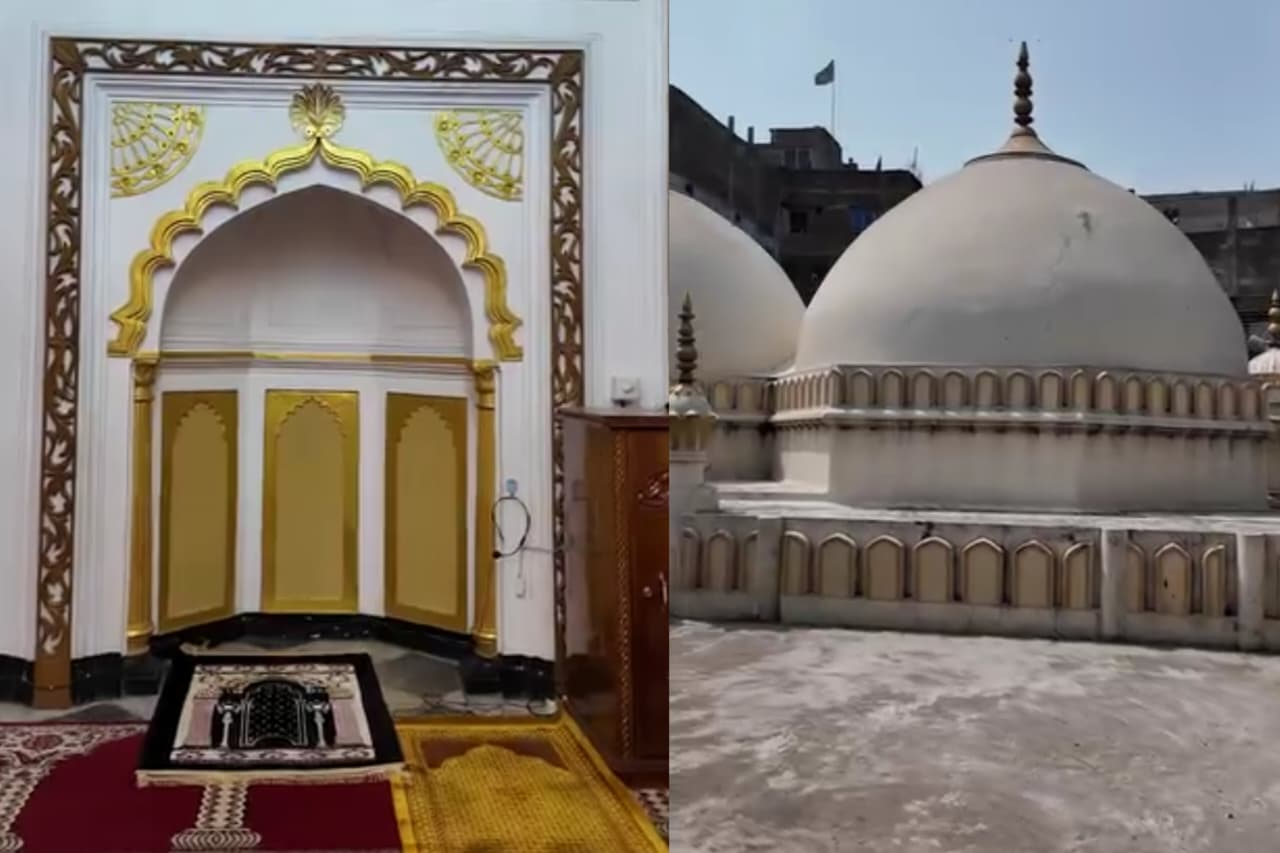
The Kartalab Khan Masjid, commonly referred to as the Begum Bazar Mosque, is one of the most exemplary pieces of Mughal architecture from the early 18th century in Bangladesh. This mosque is situated in the historical Begum Bazar of Old Dhaka and is a fascinating amalgamation of the imperial Mughal architectural pattern and the regional Bengali style.
The mosque was constructed between 1700 and 1704, and it was built by Murshid Quli Khan, who was also known as Kartalab Khan. He was the Diwan of Bengal during the Mughal Empire and the first Nawab of Bengal. This mosque is also his final resting place, which makes it historically important beyond its architectural significance.
Historical Significance
In 1777, the mosque came under the control of a Begum who was related to Naib-e-Nazim Sharfaraz Khan, which resulted in the naming of the area Begum Bazar. Later, in the 19th century, the mosque underwent renovation under Mirza Golam Pir, helping preserve its original grandeur.
Architectural Features
One of the most remarkable aspects of the mosque is its raised platform, or tahkhana. The building is about 28.65 meters by 8.23 meters in size and topped with five domes resting on octagonal bases—a rather unusual feature, especially when compared to the more common three-dome design of Mughal mosques in Bengal.
The eastern frontage has five arched entrances, each topped with half-domes and turrets. The northern and southern sides have single arched doorways, while the western side has five elaborately carved mihrabs and a pulpit.
One of the most remarkable features is the “dochala” annex on the northern side, which is modelled on the traditional Bengali hut-style roof. This is a testament to the perfect blend of Mughal and local architectural styles.
The eastern side of the platform contains Bengal’s only known baoli (stepped well), which is probably a result of the Deccan architectural influence introduced by Murshid Quli Khan. This is a feature that is rather rare in mosques and thus gives the mosque a unique historical and cultural significance.
Today, the Kartalab Khan Masjid is more than just a place of worship; it is a timeless monument that symbolises the architectural ingenuity and administrative acumen of the Mughal period in Bengal.
FAQs
1. Where is the Kartalab Khan Masjid situated?
The Kartalab Khan Masjid is situated in Begum Bazar, Old Dhaka, in Bangladesh.
2. Who constructed the Kartalab Khan Masjid?
The construction of the masjid took place between 1700 and 1704, under the supervision of Murshid Quli Khan, also known as Kartalab Khan, a renowned Mughal administrator and later the Nawab of Bengal.
3. What is special about the Kartalab Khan Masjid?
The masjid is famous for its five domes, elevated tahkhana with shops below, a unique Bengali-style dochala annex, and a baoli (stepped well), which is the only one in Bengal.
Read Also: Sweet Balance: Fasting Smart Diabetic in Bangladesh during Ramadan