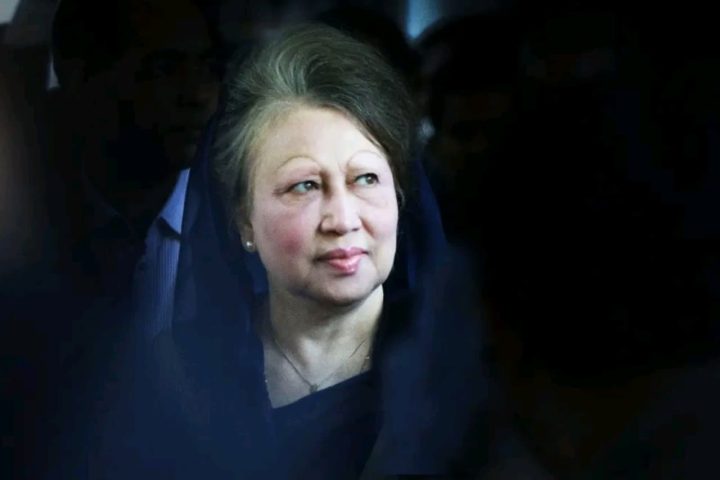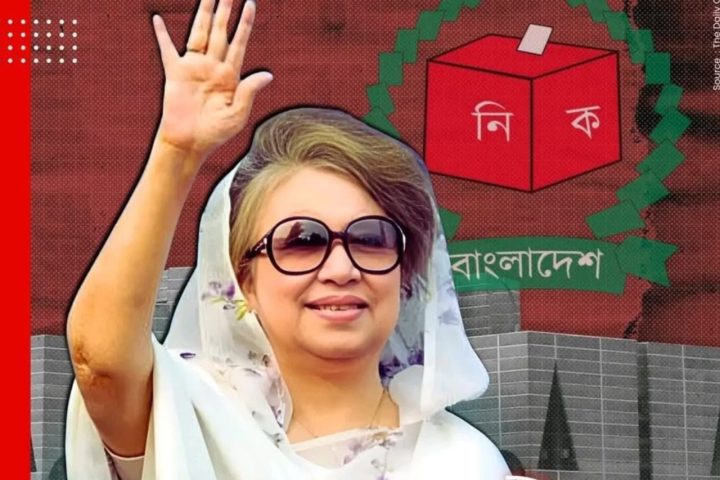
Begum Khaleda Zia has been one of the most prominent and controversial leaders in Bangladesh’s political history. As Bangladesh’s first female Prime Minister, she played a crucial role in establishing Bangladesh as a parliamentary democracy. She has lived through an era of considerable political upheaval and personal loss, as well as an extensive rivalry with the Awami League Party.
Khaleda Zia was right in the middle of the struggle for power in Bangladesh. She is known for her accomplishments, her controversies and her enduring strength.
Khaleda Zia was born in Dinajpur on August 15, 1945
She never intended to enter the political arena. Following the assassination of her husband, Ziaur Rahman, President of Bangladesh in 1981, she became involved in the public eye as a result of him being a Major General in the Mukti Bahini and the founder of the Bangladeshi Nationalist Party (BNP).
After his assassination, some BNP leaders encouraged Khaleda Zia to take the lead in uniting the party and its leadership in Bangladesh. At the beginning of her political career, she was extremely reluctant to do so. However, she quickly gained popularity within the party and was elected chairperson of the BNP in 1984.
Timeline: Key Political Milestones
Chairperson of the BNP on April 5, 1984; played a major role in ending the military dictatorship in Bangladesh in 1990. As prime minister of Bangladesh in 1991, she led the BNP to victory in the General Election, thereby becoming the first female prime minister in the history of Bangladesh.
(1991-1996) During this same time period, Sheikh Hasina restored parliament as the framework for Bangladesh to continue as a democracy. (2001-2006) After returning to power for a second time as prime minister from 2001-2006,
She was arrested by the military-backed caretaker government in Bangladesh in 2007. (2008-2020) in 2018 Sheikh Hasina was charged and found guilty of corrupt activities, and sentenced to prison; however, beginning in 2020 until today, continues to remain free outside of prison due to serious health concerns, yet with noticeable issues.
All these events take place against a backdrop of a rapidly changing political landscape that has consistently changed throughout time as a result of and through multiple different methods, including elections, civil protests, and civil unrest.
Rivalry with Sheikh Hasina: The Battling Begums
To provide a comprehensive understanding of Khaleda Zia’s life, it is important to discuss her intense rivalry with Sheikh Hasina, as Khaleda Zia offers a representation of the more Nationalist and Center-Right wing view of politics and Sheikh Hasina represents the more “secular” and “state-led” development options for Bangladesh. This rivalry has dominated the Bangladeshi political scene over the last thirty years, resulting in confrontations that have led to parliamentary boycotts and violent protests between the two groups.
While political instability has arisen from this rivalry, it has also provided a historical framework for the growth of democratic competition in Bangladesh, placing Bangladesh at the forefront of the South Asian political arena.
Governance, Criticism and Controversy
Khaleda Zia’s government placed its main emphasis on a private sector-driven economy and liberalised, and expanded opportunities for individuals in the economy through infrastructure building and development of regional and Middle Eastern trade and economic relationships. Khaleda Zia was widely appreciated and respected by her supporters for her political stance against authoritarianism while many of her opponents believed her governments lacked the necessary institutionalisation of reforms and an effective government.
Legacy and Historical Significance
Khaleda Zia has a complicated legacy that is nonetheless an undeniable fact. She was instrumental in breaking down gender barriers within dominated societies, leading Bangladesh through major periods of change, and continuing to be a prominent opposition leader for much of her lifetime.
Her life serves as a reminder of Bangladesh’s ongoing fight to achieve its dreams of democracy while overcoming deep-seated social divides; this is an ongoing challenge that will continue to define Bangladesh in the future.
Read Also: UAE’s Quiet Role as South Asia’s Economic Stabiliser in 2025