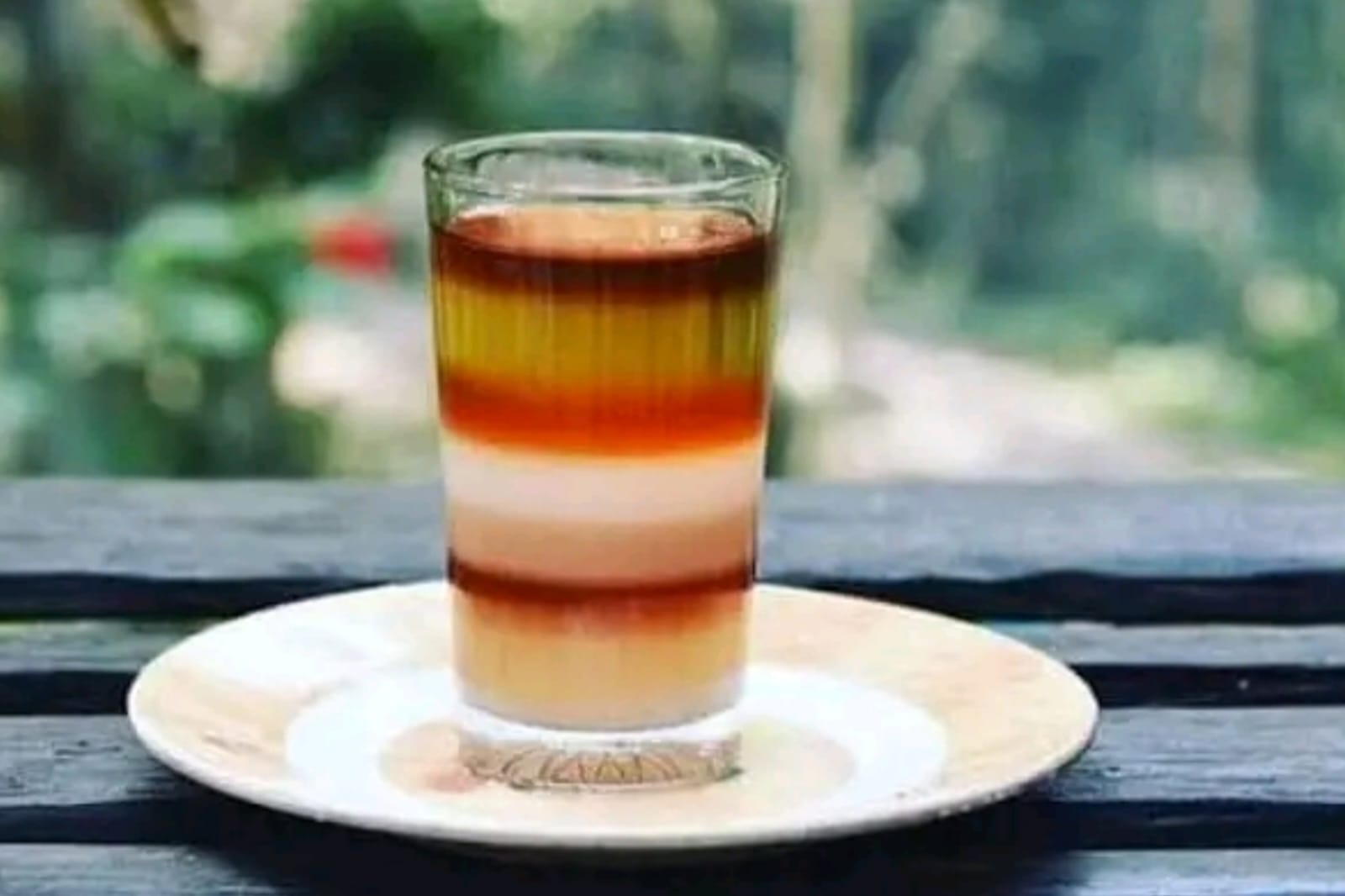
In the lush tea gardens of northeastern Bangladesh, a simple roadside experiment turned into a global curiosity. Seven-layer tea, also known as Saat Rung Cha or seven-colour tea, was born in Sreemongol (Srimangal) in the Moulvibazar District of Sylhet Division. Today, it stands as one of the most unique beverages in South Asia — both a visual spectacle and a flavour journey in a single glass.
The Inventor Behind Seven-Layer Tea: A Local Tea Seller’s Brilliant Experiment
The story of seven-layer tea begins with Romesh Ram Gour, a tea stall owner in Ramnagar near Sreemongol. Nearly a decade ago, Gour began experimenting with local tea leaves from nearby plantations. By blending three varieties of black tea and one green tea — sourced from four specific tea bushes — and carefully adjusting milk, sugar, spices like clove, and density levels, he achieved something extraordinary.
When poured slowly into a tall glass, the liquids naturally separated due to differences in density. The result? Seven distinct, colourful layers stacked perfectly on top of each other. Each band carried a different flavour profile — from syrupy sweet at the bottom to lightly spiced and aromatic at the top.
From Local Stall to National Fame: How Seven-Color Tea Went Viral
What started as a local novelty quickly attracted attention. Visitors were fascinated by the striking dark-to-light colour bands and the layered taste experience. Gour’s Nilkantha Tea Cabin became a must-visit destination in Sreemongol.
According to reports, Gour turned down lucrative offers — including large sums from Bollywood personalities and even a cash reward from a Qatari ambassador — choosing instead to remain in his hometown and protect his closely guarded recipe. His decision strengthened the tea’s authenticity and deepened its cultural value.
Cultural Impact: Boosting Tourism in Bangladesh’s Tea Capital
Seven-layer tea transformed Sreemongol into a bucket-list destination for tea lovers. Often called Bangladesh’s “tea capital,” the region already boasted rolling plantations, but this colourful innovation added a new tourist magnet.
Today, variations of the drink — ranging from three to ten layers — are found across Bangladesh. Yet, many believe the original version in Sreemongol remains unmatched. More than just a beverage, seven-layer tea represents creativity, local pride, and Bangladesh’s rich tea heritage.
FAQs
1. What is seven-layer tea?
Seven-layer tea, or Saat Rung Cha, is a colourful layered beverage from Sreemongol made with different tea blends that naturally separate by density.
2. Who invented seven-colour tea?
It was invented by Romesh Ram Gour, a tea stall owner in Sreemongol, Bangladesh.
3. Why does seven-layer tea form separate layers?
The layers form due to differences in density created by varying tea blends, sugar, milk and spices.
4. Where can I try the original seven-layer tea?
The original version is served at Nilkantha Tea Cabin in Sreemongol.
5. Why is Sreemongol called the tea capital of Bangladesh?
Sreemongol is known for its vast tea plantations and innovative tea culture, including the famous seven-layer tea.
Summary
Discover the story of seven-layer tea from Sreemongol, Bangladesh. Invented by Romesh Ram Gour, this colourful seven-colour tea blends unique flavours and natural density layering, boosting tourism in the country’s tea capital.
Read Also: AI Wildlife Tracking in Teknaf Wildlife Sanctuary: What We Know