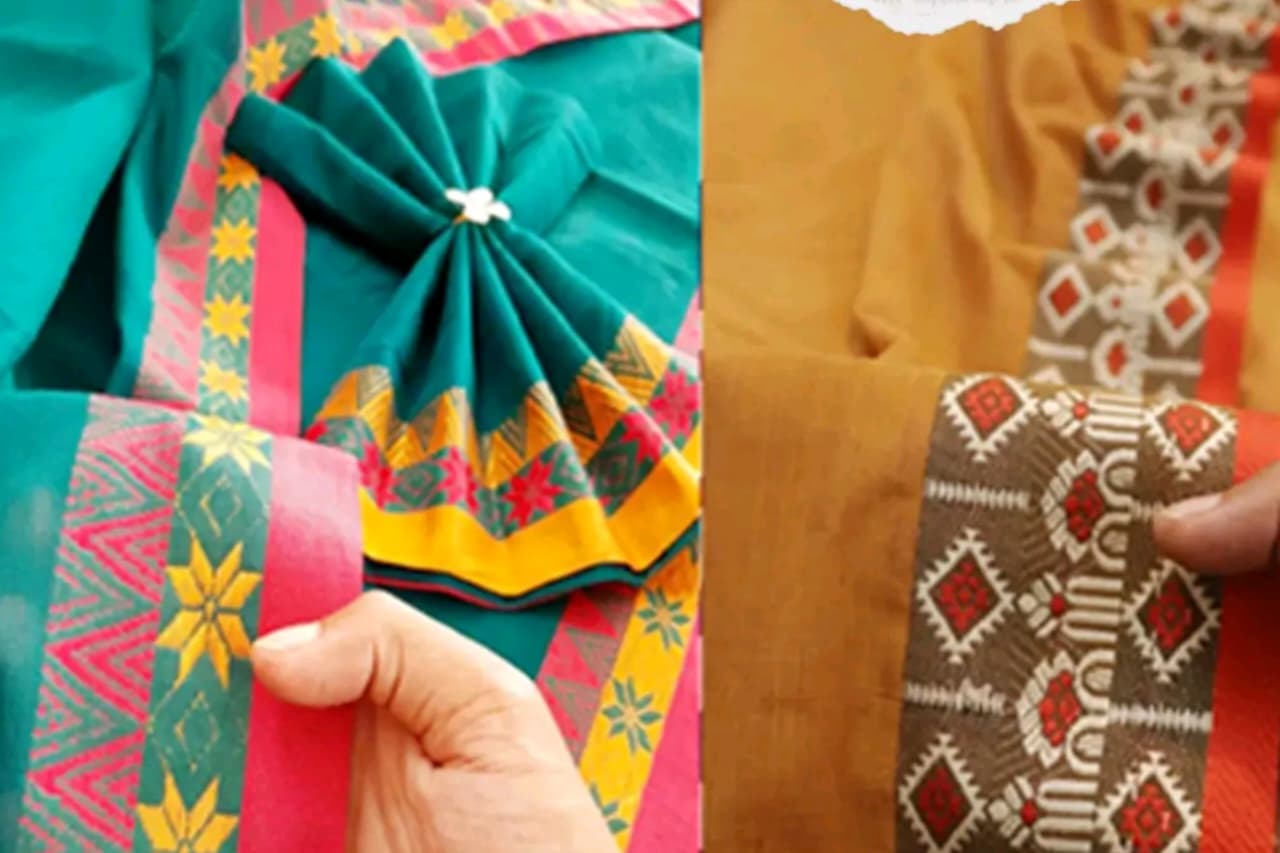
UNESCO Honours Bangladesh’s Tangail Saree Tradition
Bangladesh can be happy that the Tangail saree was added to UNESCO’s list of the world’s “Intangible Cultural Heritage.” The statement was made in a UNESCO committee meeting. It talks about the artistry, history, and social identity that are part of this famous handloom practice. The Tangail saree has long been a sign of Bangladeshi craftsmanship. It is known for being fine, lightweight, and decorated with complex patterns.
A Cultural Treasure That Has Been Passed Down Through the Years
The history of the Tangail saree is based on the Tangail district’s history of spinning that goes back a hundred years. Using wooden looms and hand techniques, skilled artists make designs that are inspired by history, folklore, and nature. UNESCO’s recognition makes it even more important to protect this skill. It will ensure that weavers make a living and that Bangladeshi handloom culture gets more attention around the world.
How Bangladesh’s Weaving Community is Affected by UNESCO Recognition
Putting the site on the UNESCO list will help artists in the area in the long run. More attention around the world may raise the demand for exports, make people want to visit Tangail, and motivate young people to keep the craft alive. Along with being honored, government agencies and NGOs see this as a chance to give people more training, make working conditions better, and boost efforts to protect handlooms.
Why Tangail Saree Deserves UNESCO Heritage Status
| Heritage Element | Description | Cultural Importance |
| Traditional Handloom Weaving | Handmade using wooden looms and time-intensive techniques | Preserves generational craftsmanship |
| Unique Motifs & Patterns | Inspired by flora, fauna, and folk art | Represents Bangladeshi artistic identity |
| Community-Based Craft | Entire villages rely on saree weaving | Sustains rural economies |
| Historical Legacy | Origin traces back over a century | Holds deep social and cultural roots |
| Global Recognition | UNESCO’s inclusion elevates its status | Promotes international preservation efforts |
FAQs
1. Why is the Tangail saree unique?
The Tangail saree is special and important to the culture because it is made with traditional handloom weaving and features light fabrics and fine patterns.
2. Why did UNESCO put it on the list of Intangible Cultural Heritage?
Because the Tangail saree is a beautiful, useful, hand-made item that connects people with their history and their culture.
3. How will the award help workers in the area?
It may boost demand around the world, bring in tourists, get the government to support the practice of handloom weaving, and make preservation efforts stronger.
Read Also: Bangladesh’s Cotton Imports Projected to Reach 8.4 Million Bales