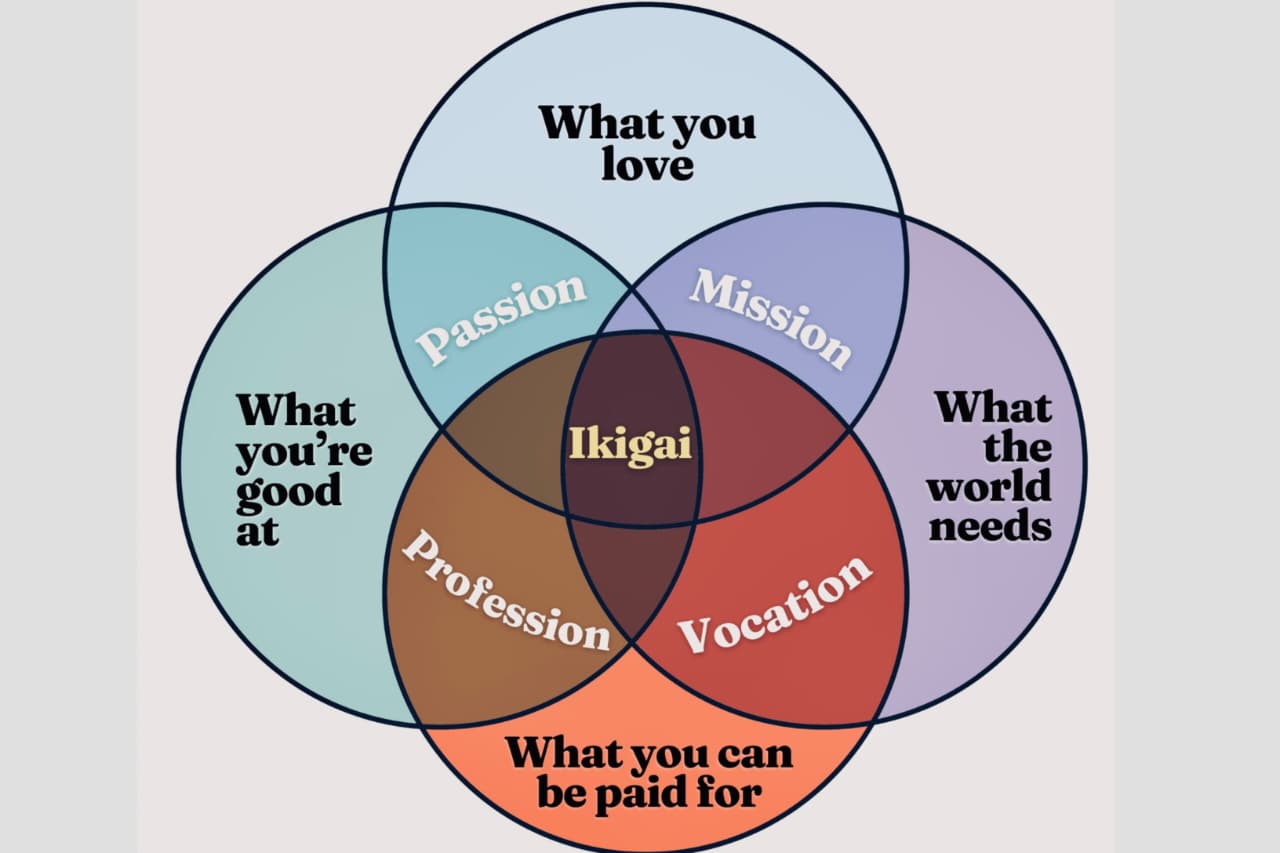
Ikigai is explained in Japanese philosophy as “reason enough to get out of bed in the morning,” and although it has been linked with passion and vocation, as well as personal fulfilment, there is an equal emphasis on human connectivity, particularly friendship. It could never be complete without this.
Purpose in Japan is never sought alone. It emerges gradually through shared experiences and deep-rooted ties. The nature of true friendships is not about being together all the time but about being there, and that is one of the core fundamentals of Ikigai.
The Meaning of Ikigai Revealed
While modern interpretations of Ikigai have led to understanding it as productivity or finding meaning through occupation, the more balanced understanding from Japanese philosophy includes:
- Joy in the ordinary moments
- Emotional Equilibrium and Inner Peace
- Emotions are
- Belonging to a community
WHAT MAKES FOR RELATION MEANINGFUL
In Japanese society, the influence of “friends” plays an important role in finding one’s Ikigai, as it provides emotional security, motivation, and consistency amid the changes of life. Japanese researchers have discovered the importance of social connections among the population of the Japanese province of Okinawa, where the world’s longest-lived people reside.
True Friendship as Emotional Stability
“In Japanese philosophy, friendship is not something that calls attention to itself. It is based on “shinrai” (trust) and “anshin” (emotional security). “A true friend is someone who:”
- Listens without judgment
- Provides quiet support in times of need
- Celebrates growth without comparison
Friendships like these keep one’s life well-balanced during uncertain times. When things go south, whether it’s with regard to one’s profession, when one gets older, or when faced with loss, the best friendships serve as one’s emotional anchor.
Jumping Over the Rooftops
Studies of the Blue Zones in Japan have identified the value of moai, which are small groups of lifelong friends that are often a source of social, emotional, and even economic support. Unlike other friendships, they are based on shared responsibilities.
“People in Mo’a often say:”
- Lower levels of loneliness
- Lowered stress-related illness
- Higher Life Satisfaction
This corresponds with Japanese philosophy, which recognises the importance of friendships as nutritional needs for the brain and the body.
Cultivating Ikigai Through Friendship
What the Japanese know is that quality is more important than quantity when it comes to relationships. Having one or two people that you trust completely is more important than having lots of relationships that lack depth. Building such relationships entails:
- Ever-present, silent presence
- Respect for personal space – This is where the individual
- Long-term commitment vs. convenience
This philosophy reminds us that, indeed, fulfilment will rarely be found at the speed of technology. This philosophy can be taken practically by slowing down and identifying what one needs to do
CONCLUSION
Ikigai is not something pursued alone. In the Japanese tradition, a deep and abiding friendship is a major component in the discovery and maintenance of purpose. Such a relationship, based on trust and mutual values, can be a silent but potent source of meaning.
Ultimately, Ikigai is not just what you do in your life, but also who you do it with.
FAQs
Q1. What is Ikigai’s definition in simpler words?
Ikigai is a Japanese word that literally means “reason for living.” It refers to that activity that gives meaning and
Q2. Why is the concept of friendship important in Ikigai?
It should be noted that the main factor provided by friendship for the believer is friendship itself.
Q3. What are moai in Japanese culture?
Moais are lifelong buddy groups that serve to promote emotional and social well-being. Traditional Japanese philosophy maintains that Ikigai cannot be realised in isolation.
Read Also: Alzheimer’s Disease Explained: A Guide for Caregivers and Families