
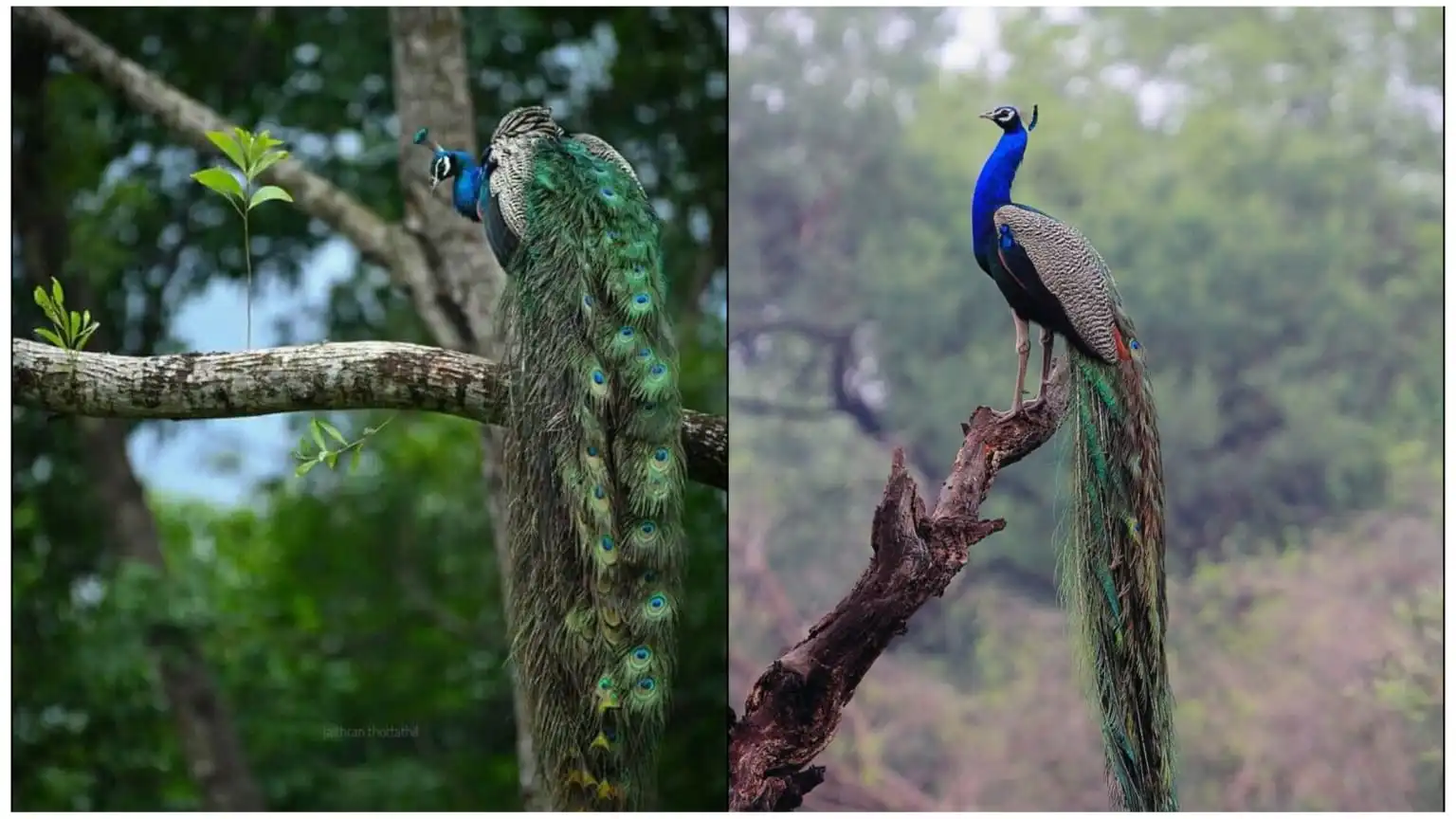
For many Bangladeshis, the peacock lives only in a feather tucked into a childhood book or a drawing of a bird with its tail spread. Now wildlife biologists say wild peacocks have been seen on Bangladeshi soil again, in Panchagarh near the Indian border, after a wait of 52 years.
What Was Seen
On 6 November 2026, wildlife biologist Reza Khan and his team saw Indian peafowl (Pavo cristatus) in the border area of Panchagarh. They were there for a wildlife survey run by IUCN Bangladesh, after local bird lovers photographed peacocks around Tetulia. On the first evening, four peacocks gathered near a roosting tree. The next morning, five came down, but landed on the Indian side. On the third morning, seven peacocks landed on Bangladeshi ground and foraged calmly, until an alarm call sent them flying into two trees.
Where the 52 Years Comes From
The number is the biologist’s own wait. Khan first saw a wild peacock in 1974 at a national park in India, while in Mumbai for a doctoral programme, and waited 52 years to see one free in his own country. There is no reliable record of when peacocks last lived wild in Bangladesh. The birds are believed to have once lived in the Madhupur Sal forest, possibly until the 1940s, though other accounts place the last sighting there in the early 1980s.
Visitors or Residents?
Every spot where peacocks were reported lies close to the Indian border fence. Peahens with chicks have been seen entering Bangladesh for food from time to time. Khan says the birds’ movements show they use the area regularly rather than appearing by chance, but researchers still need to confirm whether they are only crossing the border or have a home on the Bangladeshi side.
That matters because the peacock was assessed as extinct in both the 2000 and 2015 national Red Lists. The sightings raise the question of whether the bird should now be listed as extinct in the wild, or even critically endangered, when the lists are next updated.
Rewilding Efforts Elsewhere
Separately, ten peacocks, five pairs, were released into the Madhupur Sal Forest on 26 May 2025. The Forest Department expects more chicks from its breeding group and plans to release them gradually into Madhupur National Park. Conservationists warn that releasing captive-bred birds has a high chance of failure and could spread disease to wild species.
A Note on Bangladesh Wildlife
Seeing one flock does not mean the species has returned for good. Khan says the birds’ roosting trees and grazing land must be protected, and farmers and tea workers should be brought in to help prevent hunting and pesticide harm. He also calls for controlling tourist crowds and for joint conservation work with India, since the birds cross the border freely.
For now, the sight of seven peacocks on Bangladeshi ground is a hopeful sign, and a reminder of how much work remains to keep them there.