
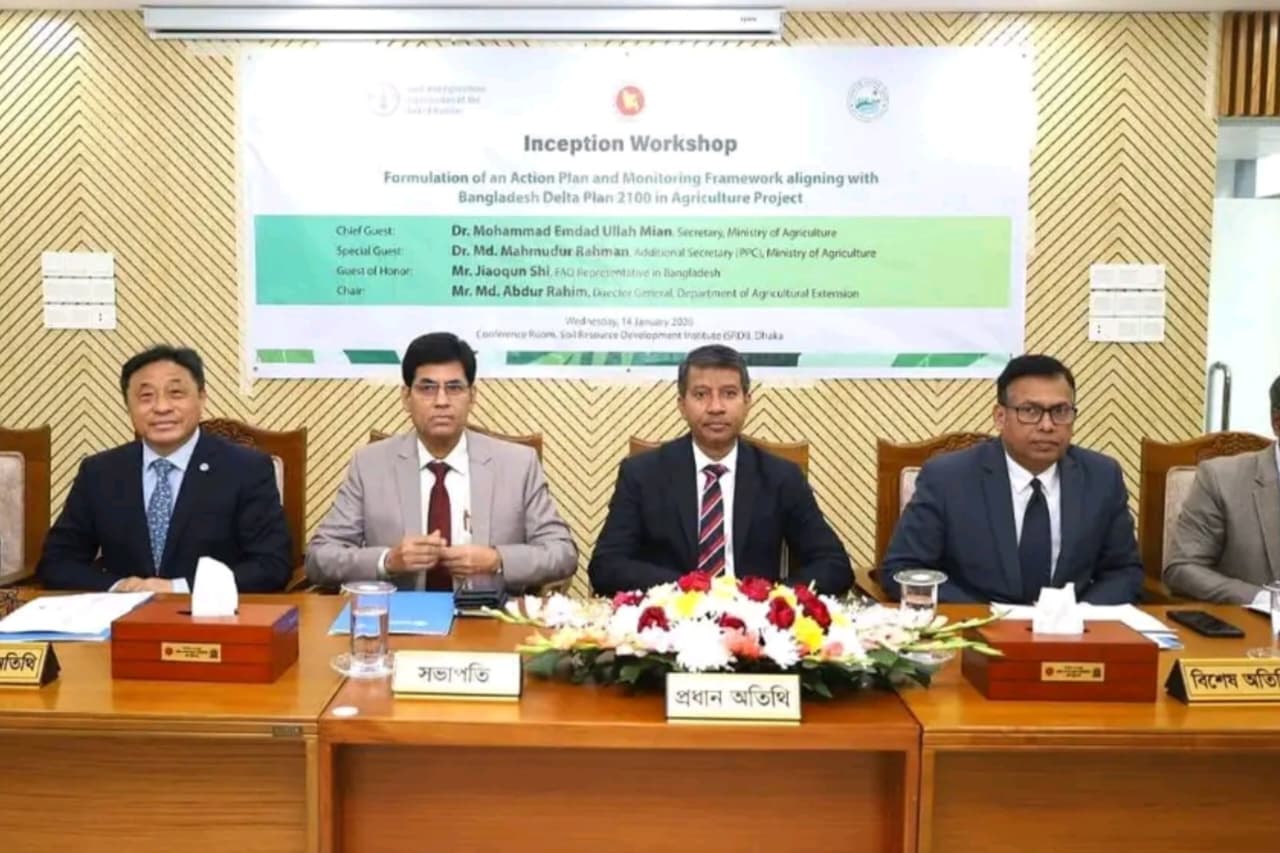
The BDP 2100 is a comprehensive plan for the protection of Bangladesh from the effects of climate change, flooding, storm surges and seismic hazards. The plan was developed for Bangladesh’s deltaic geography and tectonic vulnerability to merge flood management with resilience to earthquakes into a long-term integrated strategy.
The BDP 2100 is based on the principles of adaptive delta management to prepare for multiple disasters, such as earthquakes creating landslides that will block river flow, which, in turn, will cause flash floods.
Floods continue to be one of the most significant risks to the people of Bangladesh. The BDP 2100 has outlined a phased approach to strengthen embankments and other protective infrastructure from floods.
Some of the major components of the BDP 2100 regarding flooding are shown below:
Embankment upgrades:
The levels of protection provided by embankments will gradually increase from providing protection against floods occurring once every 100 years by 2030, to providing protection against floods occurring once every 1000 to 2500 years by 2100.
Buildings constructed in flood-prone or coastal areas are designed to withstand both the effects of floods and cyclones.
Zoning and Spatial Planning:
All flood hazard maps and land-use regulations will prohibit settlement in all flood-prone areas.
Early warning systems for floods will increase the lead time for flooding and modernization of forecasting systems.
Drainage systems will be improved by increasing the capacity of drainage systems throughout urban and coastal areas in order to reduce waterlogging.
Nature-based solutions such as multifunctional dikes and green infrastructure will be tested to reduce the impact of waves on the coast.
Seismic Risk Mitigation in Earthquake-Prone Regions
Bangladesh has several active tectonic plate boundaries nearby as well, making regions such as the Chittagong Hill Tracts very susceptible to earthquakes.
Earthquake Specific Measures
- Earthquake Resistant Infrastructure: All barrages, sluices, embankments, bridges, roads and buildings should meet the Bangladesh National Building Codes.
- Fault Line and Epicentre Studies: Geological mapping in detail to determine where a fault line is located or where an earthquake has occurred.
- Land Use Planning in Municipal Areas: Zoning in a strict manner to prevent construction on unstable slopes and on areas subject to landslides.
- Flash Flood Protection: Precautions to protect towns as well as flood plains from landslides occurring, which can block riverways and cause sudden floods.
The design of water infrastructure, including cities, will have provisions for the possibility of flooding; therefore, even if an earthquake occurs, these provisions allow flood protection to still function properly.
Integrated Hotspot Strategies
As outlined in the BDP 2100, there are six priority hotspots at the greatest risk. These are:
- Coastal zones that have high exposure to storm surge
- Floodplains and riverbanks that are at risk of overflowing
- Estuaries that are susceptible to cyclones
- Hilly terrain, which may experience landslides and flash floods
There is an increase in drainage capacity to accommodate both sea level increases and rainfall volume at the hotspots along the coast. The flooding from rivers and from the cyclonic surge will be managed together at the estuarine hotspots by means of adaptive embankments and durable water management systems.
To ensure long-term resiliency, the strategy will include a flexible planning approach with ongoing monitoring and regular reassessment.
Why BDP 2100 Matters
Bangladesh is subject to natural disasters such as climate change and tectonic plate failure. An earthquake in the mountainous regions creates landslides, which can plug rivers, causing flooding downstream. BDP 2100 recognises these cumulative risks and seeks to provide interrelated solutions rather than isolated solutions to the same problems. It accomplishes this by bringing together structural upgrades, advanced warning systems, spatial planning, and ecosystem-based approaches to achieve water safety, infrastructure stability and community resilience throughout 2100.
Frequently Asked Questions
1. What is BDP 2100’s purpose?
To provide long-term water safety, food security, economic development and resilience to the impact of flooding, storm surges or seismic activity through an integrated planning approach.
2. How does BDP 2100 address earthquake risk?
It requires earthquake resistant infrastructure, detailed seismic mapping and studies, compliance with national building codes, and adherence to land use planning standards for areas that are prone to earthquakes.
3. What are the identified compound risks?
Compound disaster risks are when one disaster causes another disaster, as in the case of an earthquake causing landslides which in turn cause blockages to river systems, resulting in flash flooding.
4. Who are the most vulnerable populations identified under BDP 2100?
The most vulnerable to designated high risk areas are located in coastal zones, river floodplains, estuaries, and the Chittagong Hill Tracts.
Read Also: Mystic Legacy: Masjid-e-Jameh Abdullah Jinn Mosque and the Story behind the three domes