Each year, hundreds of thousands of Bangladeshi graduates sit for ultra-competitive civil service exams, hoping to land one of the coveted but shrinking number of jobs in the public sector. To many, the game has felt rigged for a long time. What began as a process of honouring freedom fighters and empowering marginalised sections in the early years of the republic has, over the years, become one of the most polarising institutional questions in the recent history of the country. That friction was the spark for the historic mass revolt that overthrew the administration in 2024. Grand judicial intervention does not remove structural anxieties. The merit vs quota debate will continue to be the talk of the nation.
Historical Context: Evolution of the Quota System
The quota system was introduced in 1972 after the independence of Bangladesh. The first allocation was 30 per cent for freedom fighters (Mukti Bahini), 40 per cent for residents of under-represented geographical districts and 10 per cent for women affected by the Liberation War. Of this, only 20 per cent was to be based purely on academic and examination merit.
Over the next decades, the framework was changed several times:
- 1985 adjustment: War-affected women component was integrated into a general quota for women and the merit pool was raised to 45%.
- Other carve-outs: Structural quotas for the disabled (1%) and indigenous ethnic groups.
- Freedom fighter: 30% quota extended to children/grandchildren of veterans. 2010 Expansion of generational lifespan by a lot.
The Heart of the Matter System Vital
By early 2024, when public anger reached a crescendo, over 55% of the sought-after civil service positions had been reserved, with only 44% available to the general body of candidates. Critics pointed to a huge demographic imbalance: registered freedom fighters and their descendants make up less than 0.15% of the total population, but they hold nearly a third of all government jobs.
And the system was structurally inefficient. Oversized quotas, government reports including a landmark commission study in 2008 warned, had eroded public trust and hampered administrative efficiency. The veteran quota, ironically, was rarely met in actual recruitment (under 10%) due to the fact that there was a shortage of qualified candidates in some legacy pools and positions were often left unfilled rather than being efficiently reallocated to strong general performers.
The Counter-Argument: How Supporters Answer
The supporters of the quota system say that it is missing the point on purely mathematical grounds. The proponents of quotas argue that they are needed to correct deep-rooted regional and socio-economic imbalances. So, the district and gender quotas stop the public administration from being flooded with too many rich graduates from a few elite urban universities in Dhaka.
Such a meritocracy, based solely on examination, would in this sense reproduce rather than redress the inequalities of generations. “Rural applicants encounter substantial obstacles to getting access to quality primary and secondary education. Proponents of quotas argue that they are the only policy tool to ensure regional representation and diversity in the state institutions.
The Pivot & Ramifications in 2024
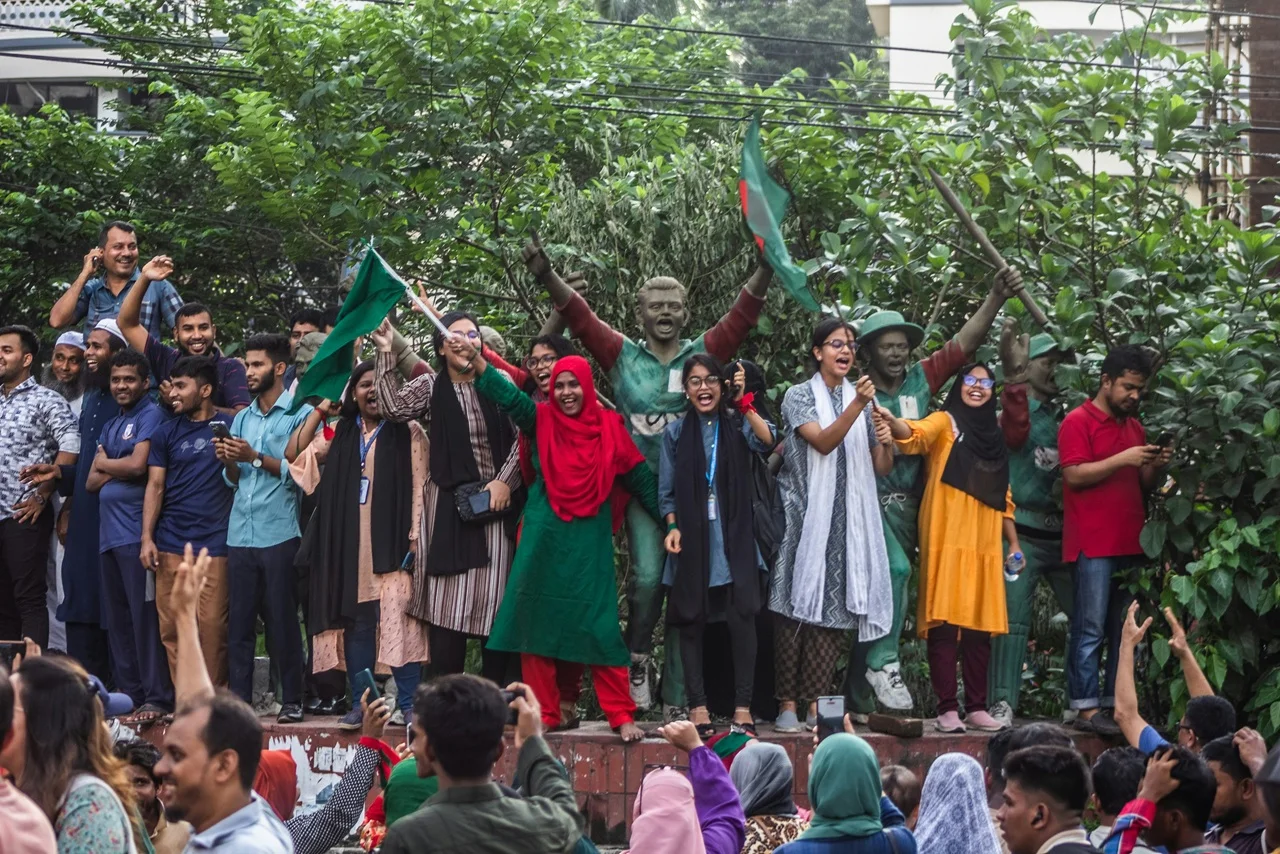
In June 2024, the High Court reinstated the pre-2018 quota allocations that had been temporarily frozen by an earlier executive decision, upsetting this delicate balance. The July Uprising was the product of the intensive demonstrations by the student groups, which were in turn triggered by the sudden drop in meritocratic opportunities. The protest soon grew into a civil disobedience movement, turning a protest of a university policy into historic paralysis, mass curfews and sweeping organisational changes.
On July 21, 2024, the Bangladesh Supreme Court intervened to end the crisis. A landmark ruling transformed the framework for allocation to emphasise merit.
| Allocation Category | Pre-2024 System (%) | Post-July 2024 Supreme Court Reform (%) |
| Merit-Based Open Pool | 44.0% | 93.0% |
| Freedom Fighters & Descendants | 30.0% | 5.0% |
| Ethnic Minorities | 5.0% | 1.0% |
| Individuals with Disabilities / Third Gender | 1.0% | 1.0% |
| District & Regional Reservations | 10.0% | Abolished / Integrated |
| Women’s General Quota | 10.0% | Abolished / Integrated |
Institutional Gaps: Critiques of the Supreme Court “Cure”
The 93% merit allocation has radically changed the mathematical landscape but not solved structural concerns. Legal scholars and civil society analysts point out that a court ruling made under intense political pressure is not a substitute for a comprehensive codified legislative policy backed by long-term institutional consensus. There are historical precedents where quotas have been abolished and then suddenly resurrected, so graduates are always concerned that future administrations might take advantage of legal loopholes to roll back the 93% open-pool threshold.
Labour economists also note that focusing only on quota ratios hides a more pressing economic reality: the absolute scarcity of jobs. The formal job market in Bangladesh creates far fewer corporate and public sector jobs than needed to absorb its enormous well-educated youth demographic. This places extreme pressure on public civil service positions, and the pressure is unsustainable irrespective of structural frameworks.
Discover More Stories Worth Your Time
Why Are Healthcare Jobs Growing Abroad?
Explore how Bangladeshi healthcare workers can secure opportunities in Saudi Arabia.
Which English Test Should You Choose?
Discover whether Duolingo or IELTS suits Bangladeshi students planning to study abroad.
How Can You Beat Phone Distractions?
Check how Forest App helps improve focus and reduce screen addiction effectively.
Why Is Sylheti Food So Unique?
Explore what makes Sylheti cuisine different from traditional Dhaka dishes.
Who Is Protecting Birds in Bangladesh?
Discover how Jashodhon Pramanik became a grassroots hero for bird conservation.
Current Prospects for Grads
The massive growth of the merit pool is a major legislative victory for today’s job seekers. But the emotional and institutional scars of the 2024 crisis are deep. Until the structural ambiguities that surround the exercise of executive discretion in the context of hiring policies are fully cemented through permanent legislative protections, the civil service examination pipeline will forever carry large symbolic weight – that of an ongoing, deeper fight over equity, institutional fairness, and economic security in Bangladesh.
FAQs
1. What is the present distribution of government jobs in Bangladesh?
July 2024: Supreme Court decision that 93% of all public sector positions are granted on the basis of exam merit only. The remaining 7% is divided among descendants of freedom fighters (5%), ethnic minorities (1%), and persons with disability or third gender candidates (1%).
2. What caused the escalation of the 2024 quota protests?
Protests erupted after a High Court ruling that threatened to revive the legacy quota system, which had reserved as much as 56% of civil service jobs for some groups. Students felt that this unfairly penalised qualified applicants in an already crowded and highly competitive job market.
3. Is the merit distribution of 93% constant?
Although legally binding, critics say the policy could still theoretically be subject to executive changes or future reversals by the courts, as has happened in Bangladesh’s policy history, unless permanent legislative frameworks or constitutional changes are in place.
4. What reasons do some groups still support the continuation of quotas?
Advocates say quotas foster diversity in the institution and guard against systemic exclusion. They point out that in the absence of regional or socio-economic reservations, the lack of a level playing field puts students from poor and educationally backward areas of rural districts at a distinct disadvantage while competing with students from rich urban centres.