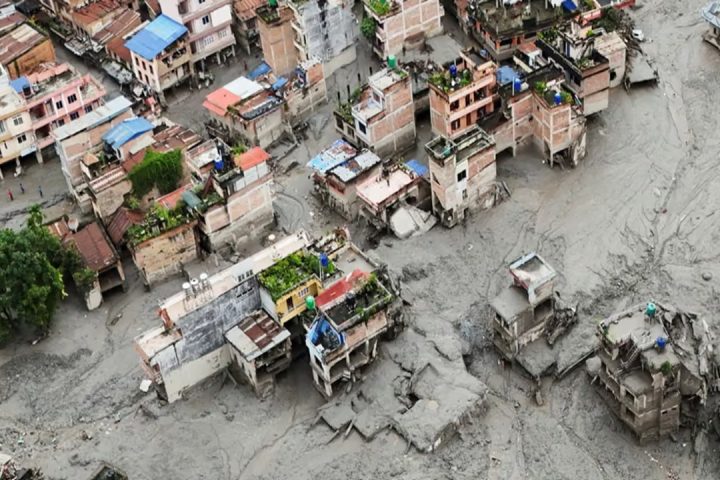


At least nine people, including women and children, have been killed after a series of landslides triggered by heavy rain hit Rohingya refugee camps in Ukhiya and Cox’s Bazar town within a few hours. The incidents occurred from Sunday night to Monday morning in the Balukhali, Kutupalong and Jamtoli Rohingya camps in Ukhiya Upazila, along with the Sattar Ghona area of Cox’s Bazar town. Eight of the victims died in three separate landslides in the camps, while another person was killed in Cox’s Bazar town, all occurring between 1 am and 4 am.
Rescue Operations Through the Night
The Fire Service and Civil Defence, Armed Police Battalion, local residents and Rohingya volunteers conducted overnight recovery operations, retrieving bodies from the debris. One of the worst incidents saw four members of a single family killed when a hill collapsed at Balukhali Rohingya Camp-11 around 3:30 am.
“Continuous rainfall has increased the risk of landslides, and residents on risky hillside areas are being urged to relocate to safer places.” — Mohammed Mizanur Rahman, Refugee Relief and Repatriation Commissioner
Weather Forecast: More Rain Ahead
Rainfall data behind the disaster and ongoing outlook:
- Over 250mm of rain fell in Cox’s Bazar in the 24 hours before the landslides began
- The Bangladesh Meteorological Department has forecast heavy to very heavy showers through July 9
- Heavy rainfall is expected to continue through 9 July, with an elevated landslide risk across the region
- Local Cautionary Signal No. 3 remains hoisted at all four of the country’s maritime ports
The situation has continued to worsen since the initial toll was confirmed. UNHCR later reported that 10 people had died since July 4, with 10 more injured and 3,182 residents displaced as flooding and unstable hillsides made large sections of the camps unsafe.
Safety Warnings for Residents
Authorities are making loudspeaker announcements across the camps, and roughly 1,000 people have been relocated from vulnerable hillside settlements in Cox’s Bazar town, Ramu, Ukhiya and Teknaf. Residents in hilly or low-lying areas are advised to move to designated shelters immediately if heavy rain continues, avoid returning to damaged homes until officials confirm it is safe, and stay alert to local administration announcements over the coming days.
This is a fast-developing situation, and the toll may rise further as rescue teams continue clearing debris in the camps.
FAQs
What caused the landslides in Cox’s Bazar?
The landslides were triggered by torrential monsoon rain linked to a well-marked low-pressure area over the Bay of Bengal combined with an active monsoon. Over 250mm of rain fell in the 24 hours before the collapses, softening hillside soil until sections gave way, mostly while residents were asleep.
Why are Rohingya camps so vulnerable to landslides?
The camps sit on cut hillsides and steep slopes cleared of trees, with shelters built from bamboo and tarpaulin. This construction offers little resistance to saturated soil, making the settlements especially dangerous during heavy monsoon rainfall every year.
Is the death toll expected to rise further?
Yes. Later assessments from UNHCR put the toll at 10 deaths since July 4, with more injuries and thousands displaced, as heavy rain and unstable slopes continued to threaten the region.
What is being done to protect residents now?
Authorities have relocated roughly 1,000 people from high-risk hillside areas, issued loudspeaker warnings across the camps, and kept maritime warning signals active. Fire services and volunteers remain on standby for further incidents.
How long will the heavy rain continue?
The Bangladesh Meteorological Department has forecast heavy to very heavy rain through at least July 9, with landslide and flash flood risks persisting across Cox’s Bazar and Chattogram division during this period.
Summary
Nine people, including several children, died in landslides across Cox’s Bazar’s Rohingya camps and hillside neighbourhoods after torrential rain. Rescue teams worked through the night as forecasters warned of more heavy rainfall and continued landslide risk in the days ahead.