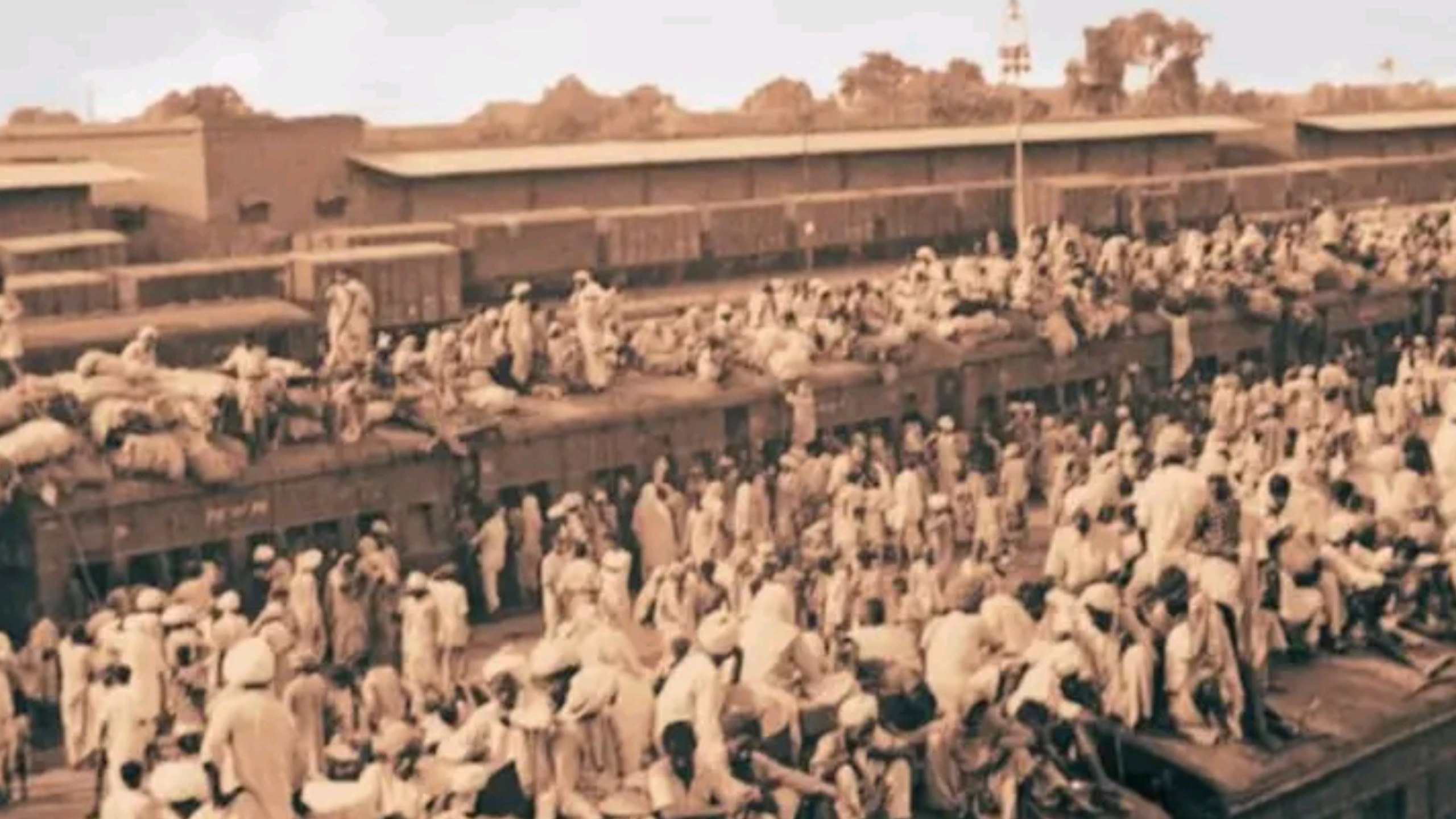
When people talk about the Partition of 1947, the story that usually comes to mind involves Punjab: trains crossing borders soaked in blood, families split by a line drawn in a hurry, Lahore and Amritsar torn from each other overnight.
Bengal’s partition rarely gets the same attention, yet it reshaped the lives of tens of millions of people and created a country, East Pakistan, that would not survive a quarter century before splitting apart again to become Bangladesh. That earlier, less remembered chapter deserves to be understood on its own terms.
A Province Divided For The Second Time
Bengal had already been partitioned once before, in 1905, when Lord Curzon split the province along administrative lines, a move so unpopular it was reversed within six years. The 1947 partition was different.
This time the division was drawn almost entirely along religious lines, separating Bengal into a Hindu-majority west that would join India and a Muslim-majority east that would become part of Pakistan. The boundary was drawn by Cyril Radcliffe, a British lawyer with no prior experience of India, who was given roughly five weeks to determine the fate of tens of millions of people. His line, now known as the Radcliffe Line, split not just a province but families, farmland, and river systems that had never respected any such division.
A Decision Bengal Itself Never Fully Embraced
What often gets lost is how divided Bengal’s own leaders were about partition in the first place. Before the province split, its legislative assembly held a preliminary vote in which a majority favoured staying united and joining Pakistan’s constituent assembly as a whole. It was only in separate follow-up sessions, one among legislators from Muslim-majority East Bengal and another among those from Hindu-majority West Bengal, that the province’s fate was effectively settled.
West Bengal’s legislators voted decisively for partition and for joining India, while East Bengal’s legislators actually voted against partition, preferring a united Bengal, before a separate vote determined that if the province did split, the eastern half would join Pakistan. There was even a serious push by some Bengali leaders, both Hindu and Muslim, for a third option: an independent, united Bengal that belonged to neither India nor Pakistan. That vision never gained enough political traction to survive the partition process, but it is a reminder that the region’s division was contested, not inevitable.
A separate referendum added one more twist to the map. In July 1947, voters in Sylhet, then part of Assam, chose by a narrow but clear margin to leave Assam and join East Bengal, folding what is now a significant part of northeastern Bangladesh into the new Pakistani province.
Born As East Bengal, Renamed East Pakistan
When power transferred on August 14 and 15, 1947, the eastern half of divided Bengal became a province of the new Dominion of Pakistan, initially known as East Bengal. Khawaja Nazimuddin, a senior Muslim League leader and close associate of Pakistan’s founder Muhammad Ali Jinnah, became its first chief minister.
The province would not be formally renamed East Pakistan until 1955, but the identity was effectively set from the very beginning: a Muslim-majority Bengali region, geographically cut off from the rest of Pakistan by more than a thousand miles of Indian territory, expected to function as one half of a single nation state.
A Union Built On A Shaky Premise
The idea underpinning East Pakistan’s creation, that shared religion could bind together two regions separated by language, culture, geography, and nearly two thousand kilometres of hostile territory, was tested almost immediately. East Pakistan had a larger population than West Pakistan and generated a disproportionate share of the country’s export earnings through jute, yet political and military power remained concentrated firmly in the west.
The region’s Bengali, Hindu, Buddhist, and syncretic cultural influences sat uneasily alongside a West Pakistani elite more oriented toward Middle Eastern and Arab Islamic identity. Within just a few years, attempts by West Pakistan’s leadership to impose Urdu as the sole national language, sidelining Bengali despite it being spoken by the majority of Pakistan’s population, ignited the Language Movement of 1952, an early and unmistakable sign that religious unity alone could not hold the country together.
Find Which Airport Hotels Fit?
Discover convenient hotels near Dhaka Airport for short layovers and overnight stays.
Learn How Rohingya Youth Lead?
Explore how young Rohingya are advancing education and gender equality in refugee camps.
Find Which Airport Hotels Fit?
Discover convenient hotels near Dhaka Airport for short layovers and overnight stays.
Learn How Rohingya Youth Lead?
Explore how young Rohingya are advancing education and gender equality in refugee camps.
Why This Chapter Matters
The two decades that followed East Pakistan’s creation were marked by growing economic disparity, political marginalisation, and cultural resentment, all of which fed into the rise of the Awami League and the political leadership of Sheikh Mujibur Rahman.
What began as a movement to defend the Bengali language evolved into a broader push for autonomy, and eventually into the Bangladesh Liberation War of 1971, out of which the independent nation of Bangladesh was born. In a sense, the very logic that created East Pakistan, that religion alone could define a nation, was quietly disproven by the region it had absorbed. Bangladesh’s founding was rooted not in religious identity but in language and culture, a rejection of the premise that had justified Partition in the first place.
A Forgotten Prologue
Bangladesh’s history is most often told starting from 1971, with the war of independence, the atrocities committed during it, and the birth of a new nation. But that story has a prologue that deserves more attention than it usually receives: a province carved out of Bengal in 1947, named East Pakistan eight years later, and governed for nearly a quarter century as the distant eastern wing of a country that never quite understood it.
Remembering East Pakistan is not just an exercise in historical completeness. It is a reminder that Bangladesh’s identity was forged twice, first by the line Cyril Radcliffe drew across Bengal in 1947, and then by the rejection of everything that line was meant to represent.