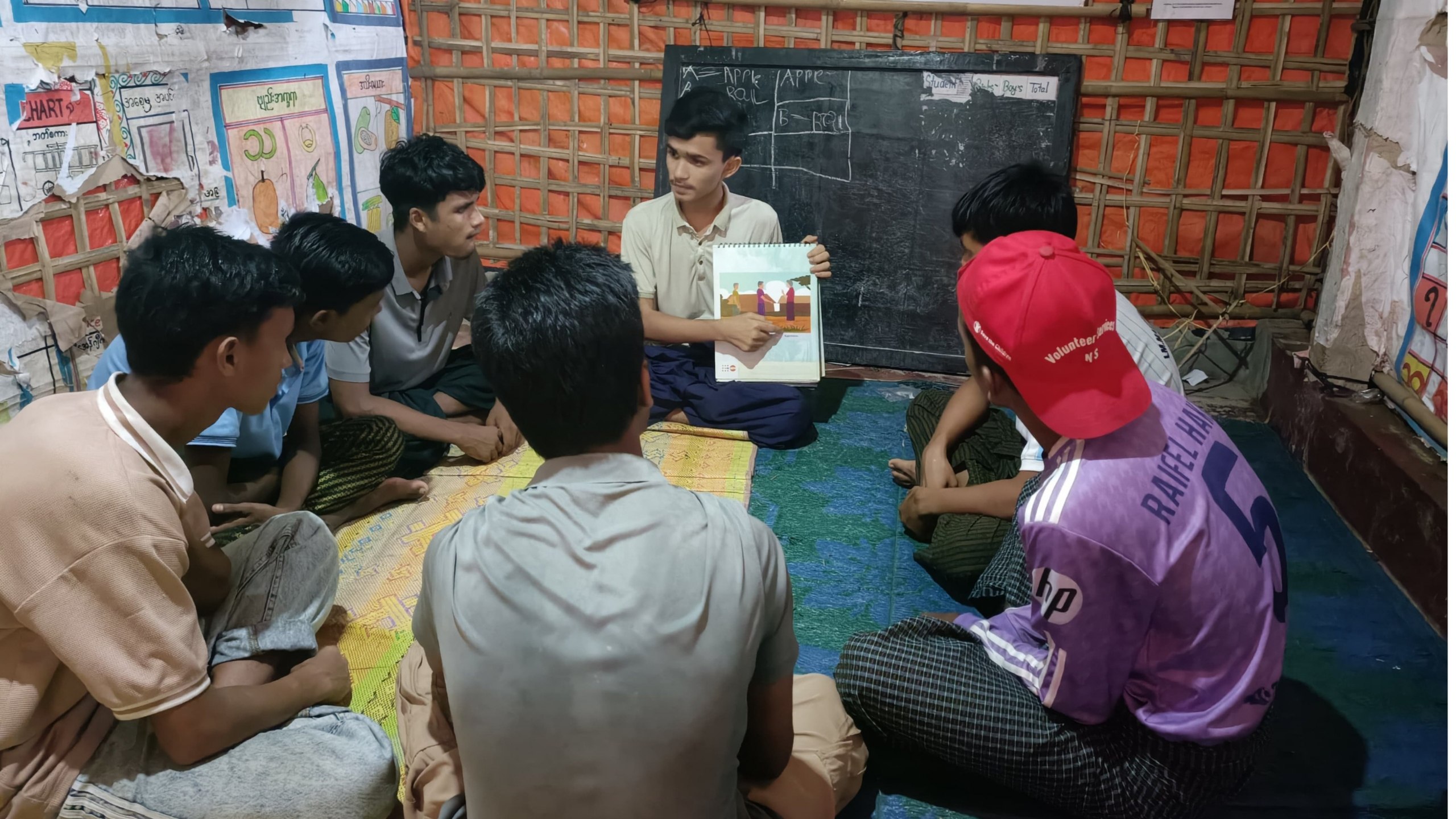
In the sprawling Rohingya refugee camps of Cox’s Bazar, a quiet but determined transformation is taking place, not by international agencies but by young Rohingya themselves. The Rohingya Youth Union and other groups are running community-driven education, leadership and peacebuilding programs to close learning gaps and challenge long-standing gender norms in the settlement, home to about one million refugees.
Youth-Led Learning Fills Crucial Gaps
The Rohingya Youth Union runs informal learning sessions in English, basic literacy, digital skills and life skills to fill education gaps for young people who often have limited access to formal schooling. As well as the classes, the group also runs leadership workshops, teaching the young people skills in communication, teamwork and project management and encouraging them to develop small initiatives around themes such as gender equality, mental health awareness and community engagement.
Organisers say the approach has helped young women build confidence to participate more actively in both education and community life, while strengthening relationships between Rohingya youth and host communities in Cox’s Bazar.
Girls Have the Steepest Climb
Adolescent girls are still the group most likely to drop out of the education system as they age, however. UNICEF surveyed nearly 22,000 out-of-school girls and found that while about 75 per cent of children aged 5 to 14 are enrolled, this figure falls sharply to just 8 percent of girls aged 15 to 18.
Among the biggest barriers cited by families are early marriage, household responsibilities and cultural expectations around girls’ safety once they reach puberty. Programs like Girl Rising’s RISE initiative have sought to do this head-on, working with at-risk adolescent girls and their parents at dozens of learning centres to shift attitudes and keep girls engaged in learning.
Teachers and Mentors Developing Their Skills
Empowerment efforts also benefit the educators. With support from UNESCO, Rohingya teachers in the camps have been trained in language to improve their Burmese language skills, allowing them to connect better with students who are now learning under the Myanmar curriculum introduced in 2021. Teachers in the program say it’s a constant process of building confidence and competency, which pays off in the quality of instruction their students receive.
Funding pressures are a threat to progress
The gains made by youth-led programs come against a challenging backdrop. Aid officials have warned that the wider Rohingya response is staring at a dire funding shortfall heading into 2026, with some projections estimating that contributions could be halved. Some kindergarten and grade one learning facilities have already closed because of reduced funding, and an estimated 350,000 children in the camps are out of school altogether.
But youth organisers say the community-driven model offers a way to keep momentum going on gender equality and education even as formal humanitarian aid faces cuts, by leaning on peer leadership and local ownership to keep programs going.
In the sprawling Rohingya refugee camps of Cox’s Bazar, a quiet but determined transformation is taking place, led not by international agencies, but by young Rohingya themselves. The Rohingya Youth Union and other groups are running community-driven education, leadership and peacebuilding programs to close learning gaps and challenge long-standing gender norms in the settlement, home to about one million refugees.
Youth-Led Learning Fills Crucial Gaps
The Rohingya Youth Union runs informal learning sessions in English, basic literacy, digital skills and life skills to fill education gaps for young people who often have limited access to formal schooling.
As well as the classes, the group also runs leadership workshops, teaching the young people skills in communication, teamwork and project management and encouraging them to develop small initiatives around themes such as gender equality, mental health awareness and community engagement.
Organisers say the approach has helped young women build confidence to participate more actively in both education and community life, while strengthening relationships between Rohingya youth and host communities in Cox’s Bazar.
Girls Have the Steepest Climb
Adolescent girls are still the group most likely to drop out of the education system as they age, however. UNICEF surveyed nearly 22,000 out-of-school girls and found that while about 75 per cent of children aged 5 to 14 are enrolled, this figure falls sharply to just 8 percent of girls aged 15 to 18. Among the biggest barriers cited by families are early marriage, household responsibilities and cultural expectations around girls’ safety once they reach puberty.
Programs like Girl Rising’s RISE initiative have sought to do this head-on, working with at-risk adolescent girls and their parents at dozens of learning centres to shift attitudes and keep girls engaged in learning.
Teachers and Mentors Developing Their Skills
Empowerment efforts also benefit the educators. With support from UNESCO, Rohingya teachers in the camps have been trained in language to improve their Burmese language skills, allowing them to connect better with students who are now learning under the Myanmar curriculum introduced in 2021. Teachers in the program say it’s a constant process of building confidence and competency, which pays off in the quality of instruction their students receive.
Explore Why Sundarbans Disappear?
Discover how climate change is threatening Bangladesh’s world-famous mangrove forest.
Check How Farmers Benefit?
Explore what the new Farmer’s Card means for growers in Rangpur and Rajshahi.
See Why President May Resign?
Discover the latest political developments surrounding President Shahabuddin’s future.
Find Why Flood Alert Issued?
Explore how a massive monsoon cloud band could affect Bangladesh’s weather.
Learn Which Bangla Series Watch?
Discover three homegrown Bangla web series perfect for your next weekend binge.
Funding pressures are a threat to progress
The gains made by youth-led programs come against a challenging backdrop. Aid officials have warned that the wider Rohingya response is staring at a dire funding shortfall heading into 2026, with some projections estimating that contributions could be halved.
Some kindergarten and grade one learning facilities have already closed because of reduced funding, and an estimated 350,000 children in the camps are out of school altogether. But youth organisers say the community-driven model provides a way to maintain momentum on gender equality and education as formal humanitarian support suffers cuts, leveraging peer leadership and local ownership to keep programs going.
Summary: Rohingya youth in Cox’s Bazar are leading informal education, digital literacy and gender equality initiatives inside the camps, helping girls stay in school longer and building leadership skills despite funding shortfalls and limited resources.