
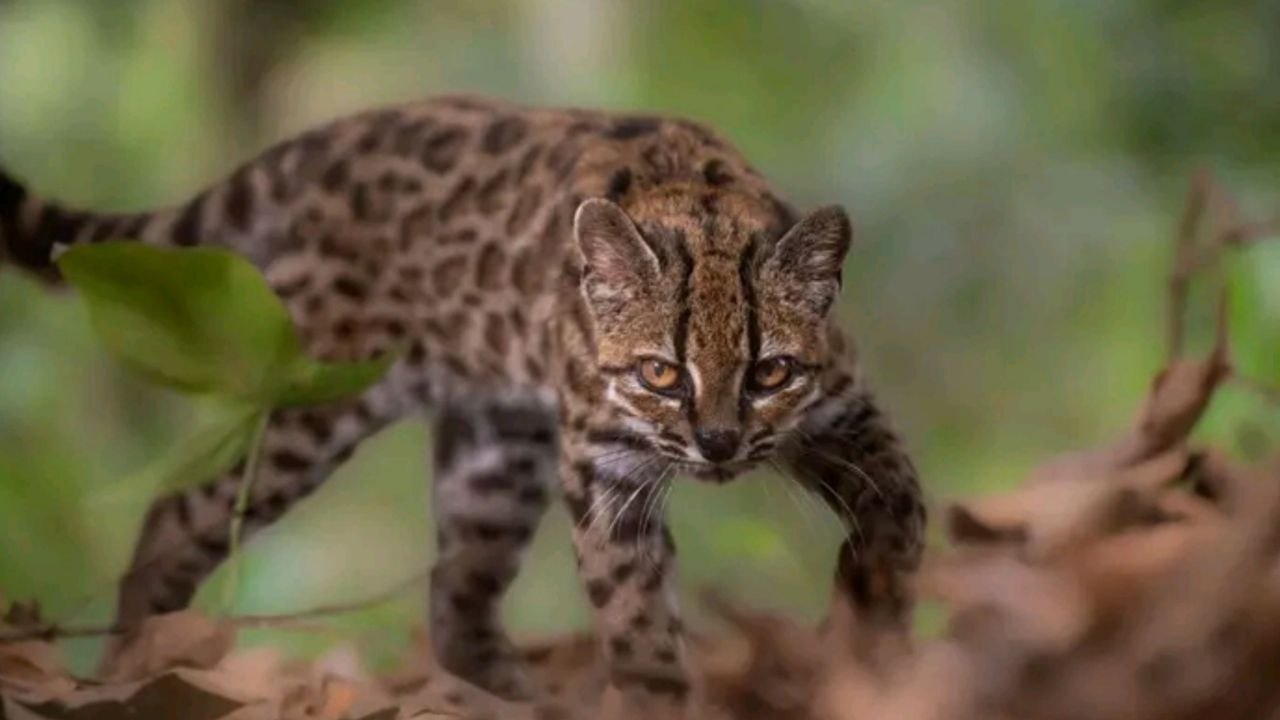
One of the smallest species of wild cats living in Bolivia’s Yungas cloud forests has officially been declared a new species, the first new living cat species in over a century to be named. The researchers named the new animal Leopardus tilcayo, keeping its indigenous name.
New species found in Bolivia’s forests
The newly discovered cat is part of the tiger cat family inhabiting South America. This species was discovered in the Yungas forest, which is a mountain range located to the east of the Andes. The climate here is characterised by its humid, cloud-covered forests. This animal is rather small, measuring about 46 centimetres and weighing around 1.4 kilograms. The light-brown fur of the animal is characterised by irregular rosette-like spots.
Discover More Stories Worth Your Time
Explore Why Dengue Cases Rising?
Discover what is driving Bangladesh’s latest dengue surge and the health concerns emerging nationwide.
See Why Rising Seas Threaten Dhaka?
Discover why the UN warns millions across Mumbai, Kolkata, and Dhaka face immediate coastal risks.
Find Why Trump Praised Tarique?
Explore what the US president’s letter says about the Boeing aircraft deal.
Learn How Adani Supply Returns?
Discover how Bangladesh’s payment settlement helped restore full electricity supply from the Godda plant.
Check How Sylhet Border Watch Improves?
Explore how the new facility strengthens Bangladesh’s border surveillance and drone capabilities.
Proof of the discovery via genetics
Scientists have used genetics to confirm the existence of this Bolivian tiger cat as a species distinct from the others. The research team examined the DNA of 38 cats living in various parts of South America, with the samples including eight specimens preserved in museums. Scientists found that previously combined tiger cats include five genetically distinct species. Scientists believe that the lineage of Leopardus.
A rare find in the world of cats
The official description of Leopardus tilcayo is rare since new species of living cats are rarely found. Scientists have claimed that the finding proves that unknown species can always be concealed even in animals that have been studied extensively. This particular discovery explains how genetics can be used to find out biological distinctions that can otherwise not be visible through physical appearance.